Parishae Adnan says fashion industry dismissed her ideas before New York recognition
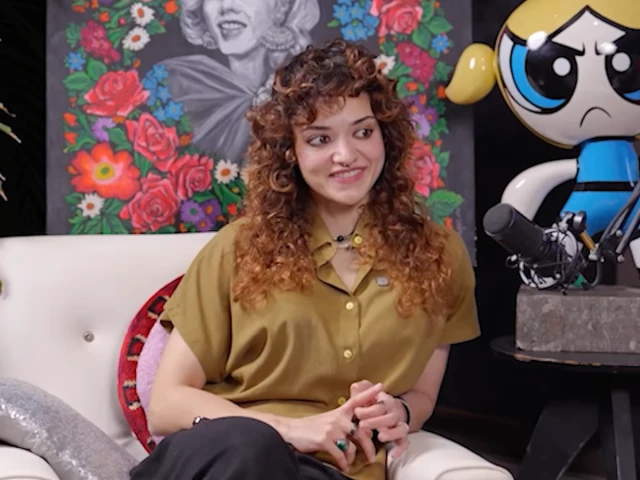
“Parishae Adnan said Pakistan’s fashion industry had been slow to embrace her unconventional ideas, recalling how senior designers dismissed her plans for a public beach fashion show before internation…”
Speaking to Frieha Altaf on herpodcast, the designer discussed the resistance she had faced throughout her career, the reception of her experimental approach to fashion and the economic anxieties confronting younger generations. She also spoke about growing up as the daughter of renowned designers Amir Adnan and Huma Adnan.
“I have been doing this for years, and everyone looked at the clothes and thought, ‘That’s weird.’ Now that it’s in New York and people over there think it’s cool, people here think it’s cool too,” she said.
“The funniest question I have been asked this entire time has been, ‘How did you come up with this for the first time?’ And I’m like, ‘I have been doing this for 10 years; you guys just noticed.
"Stay connected with Aman-e-Pakistan for ongoing live reporting and verified investigative updates."
You used to bash me before.’”Adnan recalled attending a gathering of senior designers a week before her first public beach fashion show, where her mother was discussing the upcoming event. “My mother is, of course, my biggest fan.
She was telling people about my show. What I thought was wild was that these extremely senior designers were like, ‘Haha, that won’t happen.’ I was there.
I was like, ‘Okay, fine, got it.’ But is that a thing to say to someone?” she said. For Adnan, the encounter reflected a wider problem in an industry she believes remains reluctant to support unconventional ideas, particularly when they come from younger designers.
“If a young designer comes to me now and says, ‘What’s the plan?’, I’d say, ‘Guys, this is the plan.’ And there are so many cool designers starting now,” she said. Taking her work to New York.
Adnan also discussed her approach to her recent international outing, where she closed the Flying Solo show at New York Fashion Week in September, debuting her brand. House of Parishae’s sustainable collection, Second Skin. “I’m not stupid.
I have done way too many shows to know what I need,” she said, explaining that she had planned her social media content around the event and its timeline. “The minute I got there, it was content and content for social media.
I was posting. So many people in New York interacted. I interacted with agencies and models.
My team was all in it.”View this post on Instagram. Her comments come after a recent interview with. Nadia Khandrew attention to the scrutiny surrounding her appearance and creative choices.
In the video, Khan questioned Adnan about her clothes, gym videos and parental approval, overshadowing a discussion of the achievement of presenting her collection at the show. Adnan’s frustration with the fashion industry was also rooted in years of experimenting with styles that challenged conventional ideas about how women should dress.
She recalled launching. Awami, a brand that championed co-ord sets at a time when the concept was unfamiliar to many consumers. “Awami was the revolution of co-ord sets that was brought in at a time when nobody thought women could wear co-ord sets.
Like, I wear a black shalwar kameez,” she said. After opening a store for the brand, she found that customers were not always receptive to its designs. “We had a store.
We were so ahead of our time that people used to come into the store and laugh. People used to be like, ‘These are men’s clothes, not for women.’ I used to stand and listen from the back and try not to be at the forefront, or I’d say something,” she said.
Adnan admitted that she had also questioned whether society was ready for the designs. “This was before. Manto.
Now it has become a thing,” she said, referring to the growing acceptance of gender-fluid and unconventional styling. Over time, however, her clientele evolved. Many of the women who had worn.
Awami’sdesigns in its early days now approached her for wardrobe styling. “Even back then, the clients I had for. Awamiare now my wardrobe clients,” she said.
Younger generations embrace individuality. Adnan believes younger consumers are increasingly willing to experiment with their personal style, with thrift culture playing a significant role in the shift. “I think the younger generation is moving.
The rise of thrifted culture has played a massive part in this. Your Gen Z and Gen Alpha don’t want to look like anyone else, and because of that, they are going one-on-one,” she said.
For a designer who has spent years working outside conventional expectations, the growing appetite for individuality was encouraging. However, she remained unconvinced that the fashion industry itself had undergone a comparable transformation. Economic uncertainty and the cost of living.
Beyond fashion, Adnan discussed the economic pressures shaping everyday life, particularly for millennials and Gen Z.Asked about inflation, she initially preferred not to comment before recounting an experience that illustrated her frustration with how businesses treated creative professionals. “The other day, I was approached by a brand that wanted me to make a reel.
They said, ‘Do this and that, and we will have the rights.’ I said, ‘All is fine, but when will the payment come?’ They said, ‘After 200 days,’” she recalled.
“And I’m like, ‘I don’t even know if I’ll be alive tomorrow. Are you paying me in gold?’ The least you can do is not tell me you are a global brand.”The anecdote led her to a broader critique of the economic uncertainty facing her generation, from property prices to the difficulty of planning for the future.
“I’m a millennial. We are in doom perpetually. Our generation can’t buy a house or car.
We get happy over small things. We don’t want kids because we don’t know the future,” she said. “So, asking me how we can fix this issue, I ask myself, ‘Why did you even give birth to me?’”Adnan also questioned the gap between wages and the cost of living, arguing that the problem extended beyond those struggling to find work.
“A lot of people don’t follow minimum wage as well. My point is that money’s worth isn’t there,” she said. She pointed to renting becoming a more practical option than buying property, something she believed previous generations had not faced in quite the same way.
“We are just thinking renting is better than buying property, but that was never a concern in previous generations,” she said. Embracing change. Adnan also spoke about people moving in and out of her life, describing change as something to accept rather than resist.
“I will always have transitional people who come in and out of my life, and that’s fine. You have to embrace that,” she said. She recalled a time when her friendship group felt she had changed.
“The biggest qualm my group had at one point was, ‘You’ve changed.’ And I was like, ‘That’s the biggest compliment someone can ever give you.’”For Adnan, change was not necessarily a departure from who she was.
Instead, it was part of growing, experimenting and refusing to remain confined by other people’s expectations. Her frustration with Pakistan’s fashion industry, however, suggested that while she had continued to evolve, she was still waiting for the industry around her to do the same.
Continue Reading: More in Business
Swipe or click arrows to explore Business desk coverage

 Business
Door. Dash strikes $17 billion deal for US rival Instacart in mega grocery delivery bet
 Business