Ishaq Dar calls for stronger multilateral system, rejects bloc politics and unilateralism
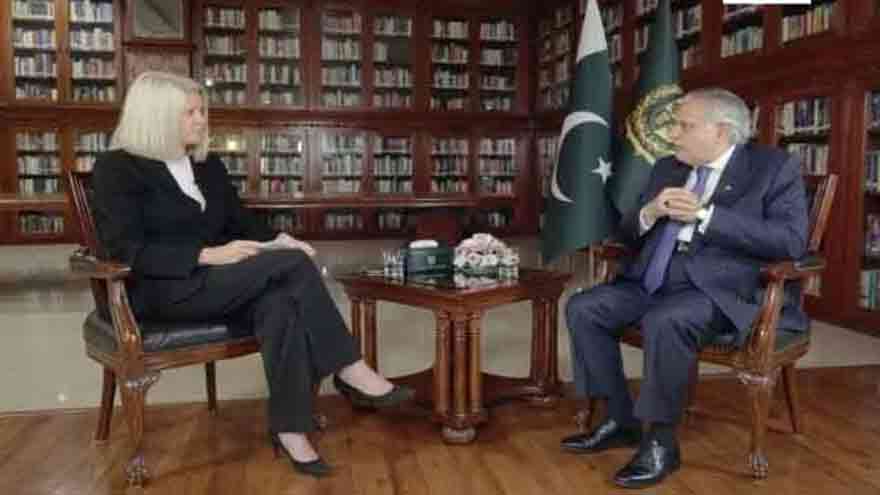
“Ishaq Dar rejects bloc politics and unilateralism, calls for stronger multilateral diplomacy, and highlights Pakistan’s efforts for regional peace, balanced tie…”
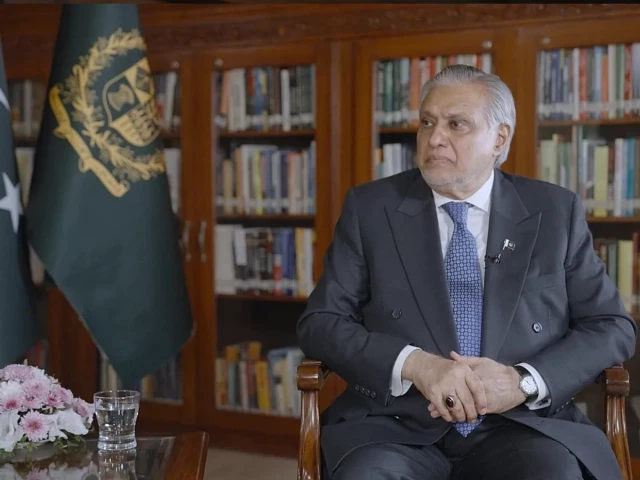
IISLAMABAD —Deputy Prime Minister and Foreign Minister Mohammad Ishaq Dar has said Pakistan believes in maintaining balanced relations with major global powers and can strengthen its partnerships with both the United States and China without compromising either relationship.
In an interview with international broadcaster Euronews, Dar expressed hope that the ongoing conflict between the United States and Iran would be resolved soon, stressing that Pakistan was continuing its diplomatic efforts to reduce tensions and encourage negotiations between the two sides. He said Pakistan supported multilateral diplomacy, respect for national sovereignty, territorial integrity and equality among nations.
He said bloc politics and unilateral actions would not deliver lasting solutions, making it necessary to strengthen the international multilateral system. Pakistan's diplomatic efforts to ease US-Iran tensions.
"Stay connected with Aman-e-Pakistan for ongoing live reporting and verified investigative updates."
Discussing Pakistan's role in reducing tensions between Washington and Tehran, Dar said Islamabad had condemned the Israeli attack on Iran on the first day of the conflict while urging Tehran to exercise restraint. He added that Pakistan had also conveyed a message to Iran against targeting Middle Eastern and Gulf countries.
Dar said Pakistan had the opportunity to participate in direct negotiations between the United States and Iran after several decades. The talks, held on April 10 and 11, continued for approximately 21 hours. Although progress was made on several points, the negotiations could not move forward because both sides maintained their respective positions and priorities, he said.
Pakistan continued its diplomatic engagement following the talks, eventually leading to an agreement on an Islamabad memorandum of understanding,. He also highlighted a five-point initiative presented by Pakistan in cooperation with China to promote peace in the Middle East.
Dar said Pakistan, Saudi Arabia and other countries had worked to reduce regional tensions, while Islamabad also maintained contacts with European countries, including Britain, France and Germany, to encourage a diplomatic resolution. War's economic impact and need for regional security framework.
The foreign minister said the conflict had disrupted energy supplies and pushed up prices, creating difficulties for people in Pakistan and other parts of the world. He noted that the Pakistani government was providing subsidies to low-income groups to help them cope with rising petroleum and energy costs, although the capacity to continue such support was limited.
Dar stressed the need for a new regional security framework to ensure lasting peace and stability, saying the economic consequences of the conflict required countries to work together. Pakistan's relations with Washington and Beijing. Addressing Pakistan's relations with the United States and China, Dar said the two partnerships were not mutually exclusive and Islamabad could continue cooperation with both countries.
He acknowledged that Pakistan-US relations had experienced ups and downs over the years but said the current government was maintaining active engagement with Washington, particularly in economic cooperation. At the same time, he described Pakistan's 75-year partnership with China as a longstanding relationship that had endured various challenges.
Dar also called for reforms in international institutions, including the United Nations, World Bank and International Monetary Fund, arguing that global cooperation was essential for peace and economic development. He said economic diplomacy remained an important component of Pakistan's foreign policy, with a focus on attracting investment, promoting economic interests and expanding international cooperation.
Pakistan's economic potential and need for policy continuity. Speaking about Pakistan's economic prospects, Dar highlighted the country's mineral resources and investment opportunities.
He referred to the third Pakistan Minerals Investment Forum, which was attended by representatives from 16 countries., Pakistan's overall mineral resource potential was estimated at approximately $130 billion, while opportunities in rare minerals could range between $6 trillion and $10 trillion.
Dar also discussed Pakistan's debt-to-GDP position, arguing that the country had the potential to achieve economic sustainability if it effectively utilised its available resources.
Recalling the period between 2013 and 2017, he said Pakistan's economic indicators had improved during those years, with economic growth reaching 6.3 per cent, inflation standing at 3.2 per cent and the policy rate at 5.25 per cent.
He identified inconsistent economic policies as a major obstacle to sustained growth and called for a Charter of Economy to ensure continuity in economic decision-making despite changes in government., such reforms would also send a positive signal to international investors. CPEC enters a new phase.
Discussing economic cooperation with Beijing, Dar said the first phase of the China-Pakistan Economic Corridor (CPEC) had brought approximately $25 billion in investment to Pakistan. He said both countries had now entered the second phase, known as CPEC 2.0, which would expand cooperation into new sectors.
The next phase would focus on technology, artificial intelligence, agriculture and employment generation, potentially opening a new chapter in Pakistan's economic development, he added. Pakistan's concerns over Afghanistan. On relations with Afghanistan, Dar said Pakistan wanted to see its neighbour become stable, economically strong and prosperous.
He said Pakistan had undertaken several visits to Afghanistan during the previous year, during which discussions covered trade, economic cooperation, refugees and political issues. However, he stressed that Islamabad's primary demand was that Afghan territory should not be used for terrorist activities against any country, particularly Pakistan.
Dar said Pakistan had shared evidence relating to terrorism with international organisations and called for action against militant groups operating from Afghan territory. He emphasised that restoring trust between the two countries required verifiable actions rather than verbal assurances., Pakistan had lost more than 100,000 lives and suffered approximately $150 billion in economic losses in its fight against terrorism.
Dialogue with India and Kashmir dispute. Regarding the possibility of resuming talks with India, Dar said the decision depended on New Delhi. Referring to India's August 5, 2019 actions, he said Pakistan rejected those measures and continued to support the United Nations resolutions on Kashmir and the right to self-determination of the Kashmiri people.
He maintained that lasting peace in the region could only be achieved through dialogue and diplomatic engagement to resolve outstanding disputes. Pakistan rejects unilateral changes to Indus Waters Treaty. On the Indus Waters Treaty, Dar said Pakistan would not accept any unilateral changes to the agreement.
He noted that the treaty contained established mechanisms for resolving disputes and referred to a decision by the relevant international arbitration body affirming the agreement's continued status. Dar said the livelihoods, agriculture and food security of Pakistan's approximately 260 million people depended on water resources, making the protection of the country's water rights essential.
He argued that water should not be used as a tool of political pressure and stressed that compliance with the treaty was in the interests of both countries.
Continue Reading: More in National
Swipe or click arrows to explore National desk coverage
 National
Fazl calls for transparent elections, criticises government over provincial rights
 National