Singapore pushes deeper Pak trade ties
“Singapore's Foreign Minister Dr Vivian Balakrishnan on Friday called for translating its strong political relationship with Pakistan into a much broader economic partnership, acknowledging that trade …”
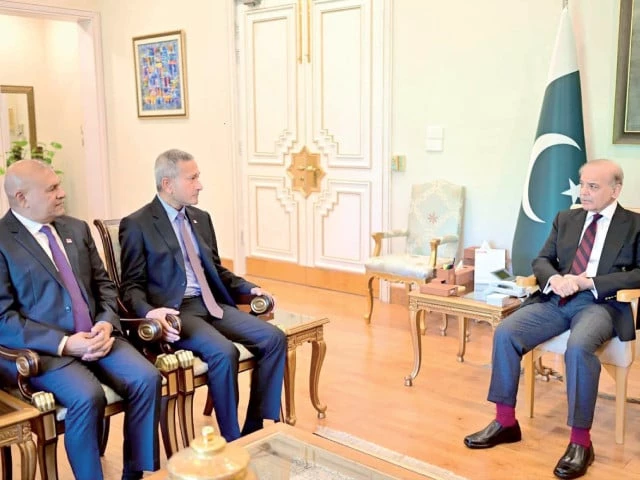
Balakrishnan pushed for greater economic ties during his visit to Islamabad where he held talks with Deputy Prime Minister and Foreign Minister Ishaq Dar, called on Prime Minister Shehbaz Sharif and later met Chief of Defence Forces and Army Chief Field Marshal Syed Asim Munir.
The visit, the first by a Singaporean foreign minister since 2005, coincided with the 60th anniversary of diplomatic relations between the two countries and came months before Singapore assumes the chairmanship of ASEAN in 2027.
Speaking at a joint news conference with Dar after their talks, Balakrishnan was candid about the gap between the two countries' close diplomatic relationship and their limited economic engagement. "To be very candid, at a diplomatic level, we've got excellent ties," the Singaporean foreign minister said.
"Stay connected with Aman-e-Pakistan for ongoing live reporting and verified investigative updates."
"In fact, they are so good that it makes it even more obvious that our trade relations - looking at the numbers and the data - ought to be much higher. "He described greater trade and investment flows as the "first order of business", calling for stronger links between businesses, particularly small and medium enterprises, in the two countries.
Dar said the two sides had agreed to encourage business delegations and closer interaction between their chambers of commerce. Pakistan has also reopened its Trade and Investment Office at its High Commission in Singapore to facilitate greater business-to-business engagement.
The two foreign ministers also discussed the possible resumption of direct air links between Pakistan and Singapore to facilitate business travel and people-to-people contacts. Prime Minister Shehbaz, meanwhile, accepted in principle an invitation from Singaporean Prime Minister Lawrence Wong to visit Singapore, providing another potential opening for high-level engagement between the two countries.
During his meeting with Balakrishnan, the prime minister identified the digital economy, fintech, infrastructure development, logistics, SMEs and the services sector among areas where the two countries could expand cooperation. Balakrishnan said Shehbaz's acceptance of the invitation had injected "an additional sense of urgency" into efforts to identify practical areas of cooperation.
One such area is the carbon market, which the Singaporean minister said could provide a new avenue for attracting investment into Pakistani projects aimed at reducing emissions while supporting sustainable development. The two countries also exchanged a memorandum of understanding between Pakistan's National Disaster Management Authority and the Singapore Civil Defence Force.
The agreement envisages cooperation in disaster preparedness and response, including early-warning systems, search and rescue capabilities, sharing of best practices and possible joint training and exercises. Balakrishnan said Singapore could learn from Pakistan's experience in dealing with large-scale natural disasters, particularly floods and extreme weather events.
Education, artificial intelligence and skills development also featured prominently in the discussions. The two sides are exploring stronger links between Nanyang Technological University and the National University of Singapore and Pakistan's National University of Sciences and Technology.
The Singaporean foreign minister also visited the National Center of Artificial Intelligence at NUST during his one-day visit. Beyond bilateral relations, the two sides discussed the rapidly changing regional security environment, including the crisis in the Gulf and its implications for maritime trade and energy supplies.
In a significant endorsement of Islamabad's recent diplomatic efforts, Balakrishnan praised what he described as Pakistan's "unique, but very constructive and valuable role" in dealing with the Gulf crisis.
He noted that much of the energy passing through the Gulf was destined for South Asia, Southeast Asia and Northeast Asia, making stability in the region important well beyond the Middle East. "We commend you for, and we wish you every success because if you succeed, it's good for all of us," he.
Dar said Pakistan remained engaged with key regional and international partners and believed dialogue and diplomacy were the only viable means of addressing outstanding disputes.
He also raised the situations in Palestine and Kashmir, reiterating Pakistan's support for an independent Palestinian state based on the pre-1967 borders with Al-Quds Al-Sharif as its capital and calling for a settlement of the Jammu and Kashmir dispute in accordance with UN Security Council resolutions. Maritime security was another area where Islamabad and Singapore appeared to find common ground.
Balakrishnan stressed the importance of international law and the UN Convention on the Law of the Sea, given Singapore's dependence on maritime trade. The two ministers also discussed closer engagement between Pakistan and ASEAN. Pakistan is one of ASEAN's earliest sectoral dialogue partners, while Singapore is due to take over the grouping's chairmanship next year.
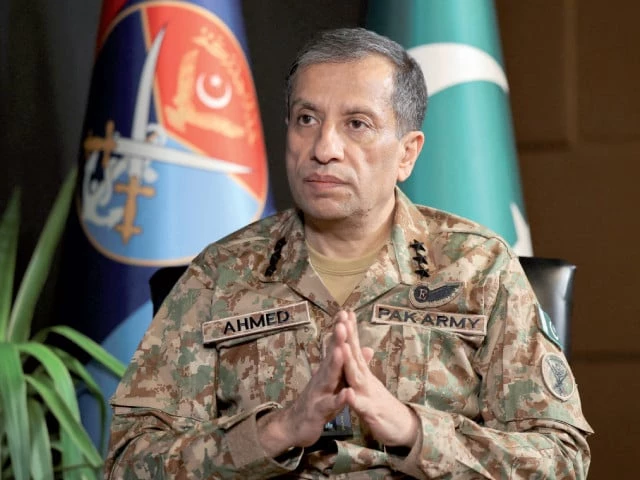
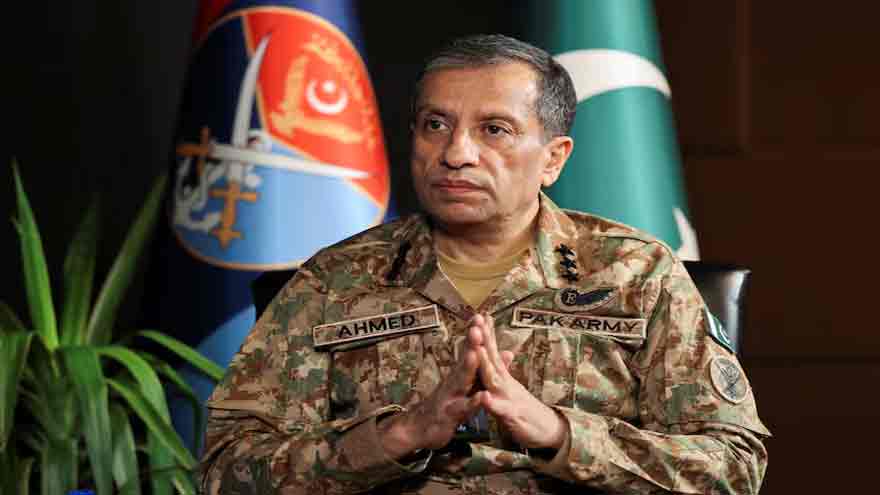
Later, Balakrishnan met Field Marshal Asim Munir at the General Headquarters in Rawalpindi, where discussions focused on evolving regional and global security dynamics, regional peace and stability and avenues for strengthening bilateral cooperation., Field Marshal Munir reaffirmed Pakistan's commitment to stronger ties with Singapore and stressed greater institutional linkages and constructive engagement.
The Singaporean foreign minister appreciated the professionalism of Pakistan's armed forces and acknowledged Pakistan's contribution to regional peace and stability. Balakrishnan's visit marked an effort by both sides to give fresh momentum to a relationship that has remained politically cordial but economically modest despite six decades of diplomatic ties.
As the Singaporean foreign minister put it at the end of his visit, "60 years is an important milestone, but what matters more is what we do in the next 60 years. "
Continue Reading: More in National
Swipe or click arrows to explore National desk coverage