Energy riches but poor masses of Sindh
“Sindh is geographically 29% larger than South Korea. However, its economy with GDP of around $135 billion is at least 14 times smaller than that country. This is despite that South Korea has hardly an…”
Only last year its energy import bill amounted to $140 billion. On the other hand, with its extensive hydrocarbon production over the past six decades, Sindh has proven to be Pakistan's pivotal energy basket. Still, it is no way even near to South Korea in development and well-being of the masses.
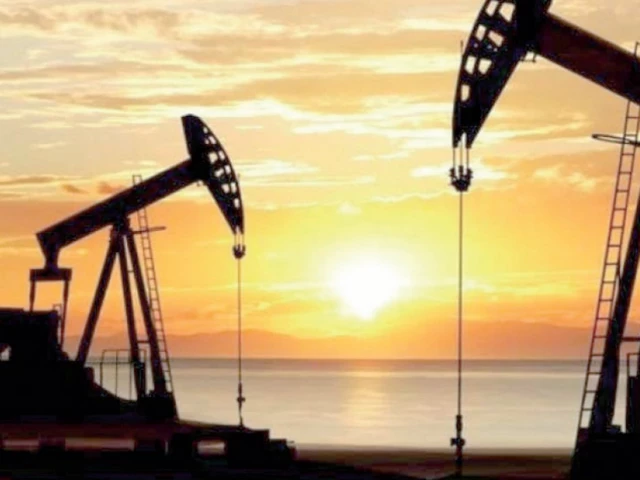
As to Sindh's role in oil and gas production, out of around 1,250 exploratory wells drilled in Pakistan since inception, at least 66% fall in Sindh.
As a result, after the commencement of production in 1967 from the historic discovery at Mari, by 1980 the field was already contributing 6% of the aggregate indigenous gas production, which by 1985 had increased to 23%.
"Stay connected with Aman-e-Pakistan for ongoing live reporting and verified investigative updates."
After commissioning of a few other discoveries in the province, by 1995 around 58% and 37% of our indigenous oil and gas production, respectively, was being contributed by Sindh. It had further risen to 60% for oil and 66% for natural gas by 2005.
By 2015, after the addition of other fields from the north, Sindh's share had gotten adjusted to 38% for oil; though with no change in the contribution of gas. It continues till now in same proportions and Sindh keeps on adding new hydrocarbon reserves to its portfolio.
The recent sizeable discoveries at Soho-1, Bobby Deep-1 and Shams-1 are only a few examples. The province still remains highly underexplored. Therefore, all signs are there that it would continue to serve its above role for the next several decades.
In fact, an intensive campaign comprising advanced geological studies, 3D seismic mapping and deep and ultra-deep exploratory wells can further enhance this role. In spite of the above vital role, it is indeed a pity that hardly 10% to 15% of the houses in interior Sindh are connected to piped gas.
Similar signs of neglect of the masses' well-being can also be observed in other aspects. For example, a study, about Multidimensional Poverty Index (MPI), conducted by the government a few years ago, found at least 40% of Sindhis to be multi-dimensionally poor.
MPI is an elaborate tool comprising multiple socioeconomic indicators associated with health, education and living standards. Furthermore, the latest Pakistan Economic Survey tells us that since FY 2019 till FY 2025, an additional 8.1% of Sindhis got pushed below the poverty line.
It is based on assuming the minimum daily consumption on food, clothing, shelter, etc of an adult falling in this category to be less than $1 per day. Similarly,, 44% of the population between the ages of 5 and 16 is out of school in the province.
Moreover, of Hari Welfare Association, out of 1.7 million bonded labourers in Sindh, at least 0.7 million are children. Even in the oil and gas producing districts, a few individuals may have benefitted from the associated riches, but the masses largely remain as deprived as they were when the pertaining fields started.
For example,, among Sindh's bottom five districts in terms of Human Development Index (HDI), two are major E&P districts ie, Badin and Sujawal with HDI scores of 0.385 and 0.308, respectively. They are also accompanied by Tharparkar, the world's famous coal district, with an HDI score of 0.251.
HDI is a statistical tool used for measuring a geographical entity's socioeconomic average status with respect to education, health and living standards. Similarly, the literacy rate of Ghotki, the district which hosts the second and third largest gas fields of Pakistan ie, Mari and Qadirpur, is only around 42%.
Also, the above SDPI study placed it at 57 in an HDI ranking list of a sample of Pakistan's 116 districts. It's given HDI score barely qualifies for the category of "Medium Human Development". The same list has assigned a ranking of 11 notches further below at 68 to Jacobabad, another major gas district.
Badin, which gave Sindh its first oil discovery in 1981, is ranked at 93, thereby falling in the category of "Low Human Development". Islamabad, with an HDI score of 0.92, is at the top of the list.
Sindh has more than 120 oil and gas fields. This could easily support a diversified model of development with clusters of industrial and commercial hubs spread all across the province. Therefore, it is indeed surprising that we have ended up establishing most of the major industry in Karachi.
As a result, more than 80% of Sindh's GDP is contributed by Karachi. It appears that this factor is also casting some influence over the current political discourse about the possibility of Karachi becoming a province on its own.
Probably, given the overwhelming concentration of industry and commerce in Karachi has so far been, at least partially, by design too. It helped the dominant feudal class to prevent the social awareness, which industrialisation entails, from reaching the interior.
As to the feudal hegemony, Pakistan Institute of Education and Research, 76% of rural families in Sindh are landless and working as tenants on land owned by large landowners.
The control is so pervasive that, despite persistent pressure by the IMF to tax the big landlords, even in FY25-26 all the four provinces could together collect only Rs5.62 billion of agricultural income tax. What is to be done.
It is high time that the development strategy of the province is reset to ensure that the benefits of energy riches truly start reaching the masses. The easiest course is to start this change from the districts that are currently producing oil and gas.
Only in FY24-25, the royalty collected from the oil and gas fields in Sindh was around Rs60 billion. Strategic investment of these amounts in the pertaining districts can transform them into thriving economic centres in less than five years.
For example, skilling lies at the root of all modern economies. Therefore, the government can start by deploying funds for imparting skills-based technical education to youngsters. In addition, community-based industrial cooperatives consisting of factories targeted towards food processing and import substitution for the energy industry may also be developed.
In parallel, it is also essential to complete the long outstanding agenda of land reforms. Since the advent of the industrial age, no country has achieved any meaningful development without this step. South Korea was done with this step by the early 50s, while capping the maximum landholding of a household to 7.4 acres.
The above measures can genuinely lead Sindh and Pakistan both towards an era of inclusive prosperity. THE WRITER IS A PETROLEUM ENGINEER AND AN OIL AND GAS MANAGEMENT PROFESSIONAL
Continue Reading: More in National
Swipe or click arrows to explore National desk coverage