Elite survival pact
1727268465-0/Untitled-design-(42)1727268465-0-640x480.webp)
“Have you ever wondered why the supposedly principled, ideological and conviction-driven power elite publicly denounce and try to sideline each other, yet at the end of the day rescue and reinstate one…”
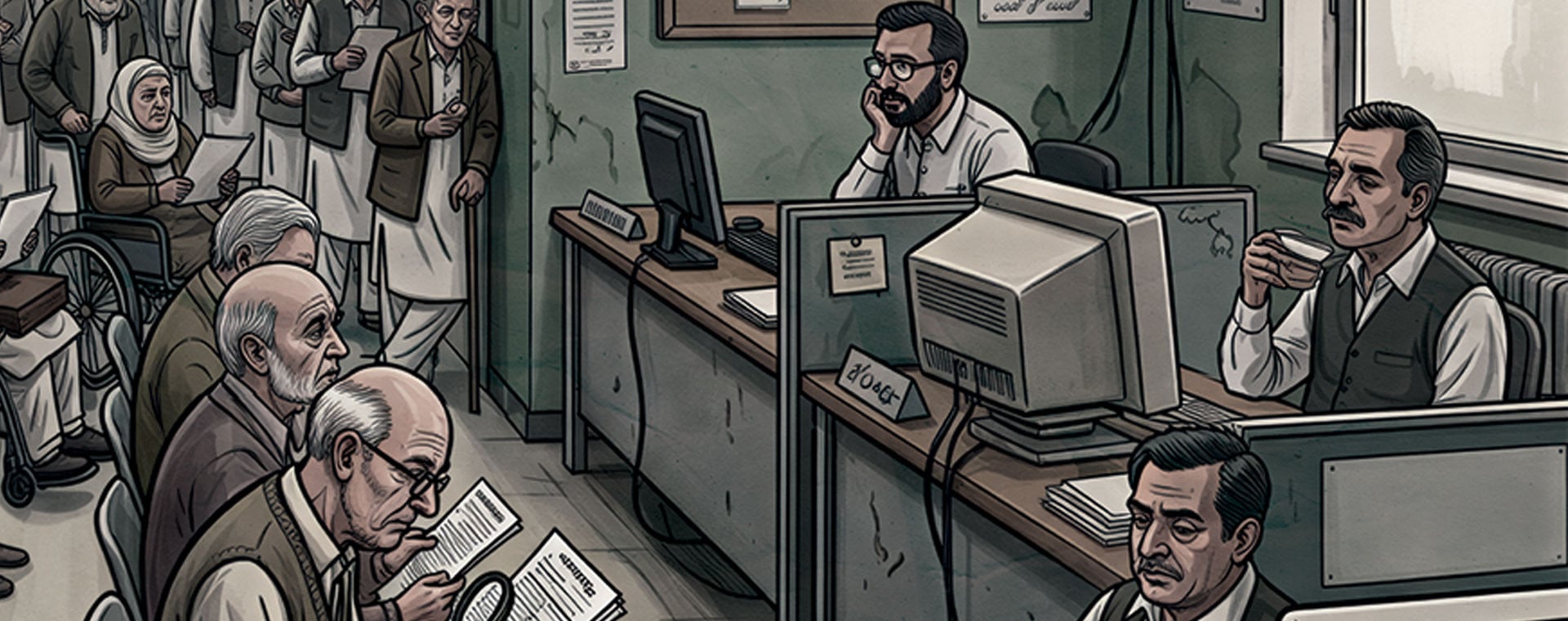
Why do the same breed of politicians, media persons and the ethnic, tribal, feudal and bureaucratic elite are able to recycle themselves in national affairs for decades without fail? Are they the only ones potentially capable in a country of 244 million?
What is it that has maintained their relevance for three quarters of a century now?
In almost every locality, a well-worn politician's child, a spoiled protégé, a bureaucrat's kid, an ethnic leader's pampered son, and a feudal lord's shrewd lad wait in the wings to replace their infirm parents and assume their role as the arbiters of the people's fate - and to experiment with the country's fate.
"Stay connected with Aman-e-Pakistan for ongoing live reporting and verified investigative updates."
Also, in every locality, many patronised local strongmen and fixers, backed by bureaucrats, continue to lord over the country's fate at the grassroots level for decades.
Therefore, the real question is no longer whether they lord over the country's fate, but why they keep clashing, calling each other names, and blaming one another for the country's ever-deepening quagmire, only to co-opt and rescue each other from irrelevance - often deceptively and forcefully.
They have traded barbs, recorded and justified one another's malicious acts, and called each other rivals, yet they sit together, cozying up with one another. The way Pakistan's elite co-opt one another is certainly not to serve democracy, the country, or its people.
Instead, it is to serve their vested interests, their fear of retribution, and their desire to sustain their ill-gotten stakes indefinitely. In their mutual support and survival lies their salvation. And in what ways do they sustain each other's relevance?
The answers lie within a continuous cycle of name-calling, co-option and preservation, which proves three things. First, that larger public and national interests matter little - except to the extent that they help maintain a system on which the elite can continue to prey.
Second, having a long history of sins against the Constitution, the people and the country, these actors are averse to the consequences that would follow should the system collapse. Third, possessing a shared repository of mutual dirt, they are wary of sacrificing any of their number or turning on their antagonists in earnest.
For if one falls, all the dirt risks being exposed. Why do they trade barbs? Because the blame for this mayhem lies neither with the public nor the divine, but with the system, its architects, and its beneficiaries.
Thus, aside from occasionally scapegoating a powerless public, they shift the blame onto one another - only to later reward the accused with a greater share of the spoils for playing along. In the end, their ultimate fates remain tightly interwoven.
How do they keep each other relevant? Among other methods, one is cultivating crises of their own making, and another is manufacturing engineered crises. In the former case, the elite nurture an existing crisis by offering a façade of resolving it and then taking the credit.
In the latter, entrenched groups propose new illegitimate initiatives that provoke public reaction, prompting the fading faction to seize the moment, oppose the initiative, stand with the people, and thereby regain - however deceptively and momentarily - the public's trust. In the end, every crisis becomes less a threat to the elite than a fresh opportunity to renew their relevance.
What appears to be scripted messaging or a political and institutional clash is, more often than not, merely the elite's survival pact - an exercise in renegotiating shared fates. Irrespective of their practical rationale, the catastrophic warnings, administrative debates and proposed structural amendments carry implied bargaining proposals - renewed survival and relevance pacts - for those at the ruling elite.
Written by Sheheryar Munawar
Aman-e-Pakistan Senior Journalist & Bureau Reporter
Continue Reading: More in National
Swipe or click arrows to explore National desk coverage