Bilawal urges Naqvi to debate new provinces issue in parliament
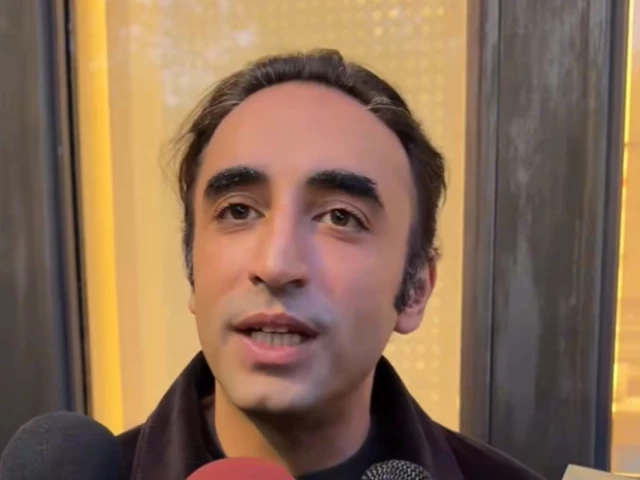
“Pakistan Peoples Party (PPP) Chairman Bilawal Bhutto Zardari said on Wednesday Interior Minister Mohsin Naqvi is entitled to express his views on the creation of new provinces, but stressed that the i…”
Speaking to reporters in London, where he is visiting with his father, President Asif Ali Zardari, Bilawal acknowledged that he and Naqvi could hold differing views on the matter. “Mohsin Naqvi will be speaking in his own voice, and I speak in my own voice,” he said.
“Mohsin Naqvi has the right to express his opinion,” he added. Responding to a question about Naqvi’s remarks on the creation of new provinces, particularly in Sindh, Bilawal reiterated his call for the matter to be brought before the National Assembly.
“As I have answered this question before, my thinking is that this issue should be debated in the National Assembly,” he said. “And Mohsin Naqvi rarely comes to the National Assembly, so instead of coming to business forums, Mohsin Naqvi should come to parliament,” Bilawal remarked.
"Stay connected with Aman-e-Pakistan for ongoing live reporting and verified investigative updates."
“There should be a debate on this in parliament,” he added. Read More:Naqvi vows not to back down from demand for new provinces, says decision must reflect public will. Bilawal also expressed his willingness to discuss the matter directly with government representatives.
“I am ready to debate the issue with any federal minister or government representative in parliament.”He maintained that the discussion should focus on longstanding problems within the country’s system rather than being reduced to competing political positions.
“What are the problems in the system, what are the faults in the system, what are the issues in the system — these problems are not new; historically, these issues have existed,” he said.
“In my view, there should be an open debate on what the real problems are, what causes the system to collapse, and what their solutions should be,” he added. Bilawal acknowledged that Naqvi was entitled to his own position, but argued that such matters should ultimately be taken up by elected representatives in parliament.
“Mohsin Naqvi will have his own opinion,” he said. “I believe that these points, these positions, when you are an elected representative, should be discussed in parliament by those elected representatives speaking as the voice of their people,” he concluded.
The devolution of Sindh. The current debate over new provinces began on July 30, when Interior Minister Mohsin Naqvi called foradditional administrative unitsor provinces as part of a broader overhaul of the country’s governance system.
Naqvi argued that meaningful structural reforms were needed to improve governance, deliver justice and create opportunities for young people. The proposal quickly became politically sensitive in Sindh, where the PPP strongly opposed any move to divide the province.
Sindh Chief Minister Murad Ali Shahrejected. Naqvi’s assessment that the governance system had collapsed and called the proposal outdated, warning that no bloodshed would be allowed over the creation of new provinces. The debate widened in August when Muttahida Qaumi Movement – Pakistan (MQM-P) backed the creation of new provinces and called for anational dialoguewith political parties.
The party argued that Pakistan’s growing population, poor governance and concentration of political power made greater administrative devolution necessary. The move put the party, which is part of the federal coalition but sits in opposition in Sindh, at odds with the PPP’s position on the province.
The PPP, meanwhile, maintained that administrative reform and the division of Sindh were separate questions. Sindh minister Nasir Hussain Shah said the provincial government was willing to discuss measures to improve governance and devolve power, butrejectedlinking those reforms to the creation of a new province.
Read more:Let people decide on new provinces: Naqvi. The dispute reached the Sindh Assembly at the beginning of September. On September 3, the house unanimously passed a resolution rejecting any proposal to divide Sindh or alter its territorial limits.
The resolution described Sindh as a “historic, civilisational and constitutional entity” and declared that “Sindh is one and shall remain one”. Read the Sindh Assembly report. Naqvi, however, showed no sign of backing away.
On September 5, he said he wouldcontinue to supportnew provinces regardless of whether he remained in office, arguing that the ultimate decision should belong to the people rather than politicians or governments. He said the public should first be “pros and cons” of creating new administrative units before being allowed to decide.
That position has since raised another question over how public opinion could be formally established. A constitutional debate emerged over whether areferendumcould be used to gauge support for new provinces.
Article 48(6) allows a matter of national importance to be put to a referendum following approval by a joint sitting of Parliament, although a referendum itself would not create a new province; any change to provincial boundaries would still have to follow the constitutional process.
Pakistan Tehreek-e-Insaf Chairman Barrister Gohar Ali Khanwarnedon September 7 that dividing Sindh or any other province without the consent of its people and representatives would weaken the federation. He called for a commission and extensive deliberations before the issue was taken to parliament.
Defence Minister Khawaja Asif, while accepting that Sindh had the right to take its own position, also said a final decision would have to emerge through consensus.
Asif separately suggested that Islamabad could be used as astarting pointfor any future administrative restructuring, while Prime Minister’s Adviser Rana Sanaullah said the question of new provinces should be taken up at the relevant forums and resolved through consensus among political parties.
Continue Reading: More in National
Swipe or click arrows to explore National desk coverage