Aurangzeb highlights Pakistan's climate vulnerability, calls for faster climate financing at UNGA
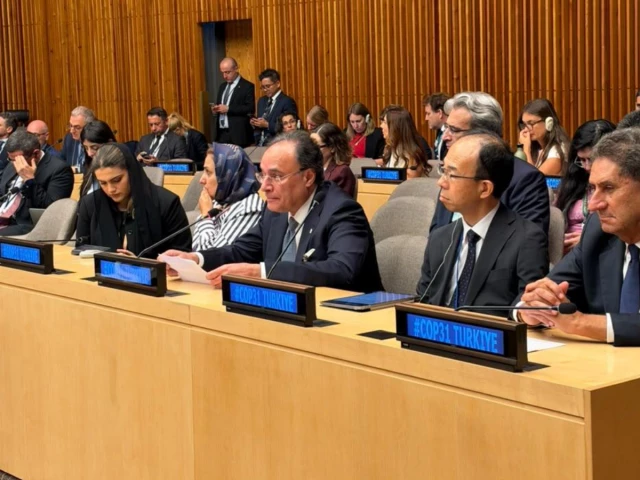
“Finance Minister Muhammad Aurangzeb on Tuesday highlighted Pakistan’s vulnerability to climate-related disasters, the need for faster climate financing and the country’s transition towards a regulated…”
At the World Economic Forum’s “Financing Planet and Prosperity” meeting, the finance minister highlighted Pakistan’s acute vulnerability to climate-related disasters, particularly floods affecting infrastructure and communities. He outlined the government’s efforts to strengthen disaster-response frameworks, early-warning systems and costed climate-investment plans, while emphasising that external assistance must be complemented by domestic resources and fiscal buffers.
Finance Minister Highlights Pakistan’s Climate Resilience, Transition Towards Regulated Virtual Assets and Climate Action Priorities in New York.
Federal Minister for Finance and Revenue, Senator Muhammad Aurangzeb, participated in a series of high-level engagements in New York,…— Ministry of Finance, Government of Pakistan (@Financegovpk)September 22, 2026Aurangzeb referred to the mobilisation of financing through the World Bank (WB), Asian Development Bank (ADB) and international capital markets for relief, adaptation and reconstruction.
"Stay connected with Aman-e-Pakistan for ongoing live reporting and verified investigative updates."
At the same time, he cautioned against complacency and called on international climate funds, including the Green Climate Fund and the Loss and Damage Fund, to simplify their procedures and accelerate access to financing. The minister’s engagements also focused on the role of digital innovation in expanding economic opportunities and strengthening financial inclusion.
In his opening remarks at the “United Nations Digital Cooperation Day 2026 – Blockchain and the Tokenised Future: Sovereign Choices and Safeguards for Next-Gen DPI”, Aurangzeb highlighted Pakistan’s transition towards a regulated virtual-assets framework. Read:PM to lead Pakistan delegation at UNGAHe said tokenisation must address “real economic needs”, including cheaper remittances, SME financing, sovereign debt and broader financial access.
Aurangzeb also stressed that private-sector innovation should be supported by strong state safeguards, inclusive digital infrastructure and international cooperation, with emerging economies fully involved in shaping global standards. Building on the broader focus on climate action and development financing, Aurangzeb also participated in the launch of the COP31 Action Agenda.
The finance minister expressed Pakistan’s full support for the agenda, noting its strong alignment with the country’s national climate priorities and NDC 3.0. He highlighted shared priorities including clean energy and electrification, renewable-energy expansion, energy-efficient buildings, climate-resilient cities, climate education and public awareness, food security and climate-resilient agriculture.
Welcoming the proposed Climate Implementation Bridge, Aurangzeb described it as a mechanism for translating NDC commitments into “investable and bankable projects”. He stressed that the principal challenge is no longer the formulation of plans but their effective implementation, and commended the agenda’s clearly defined action points and key performance indicators.
He described the agenda as “practical, impact-oriented” and focused on measurable results.
Continue Reading: More in National
Swipe or click arrows to explore National desk coverage