Supreme Court rules inheritance rights do not expire merely with passage of time
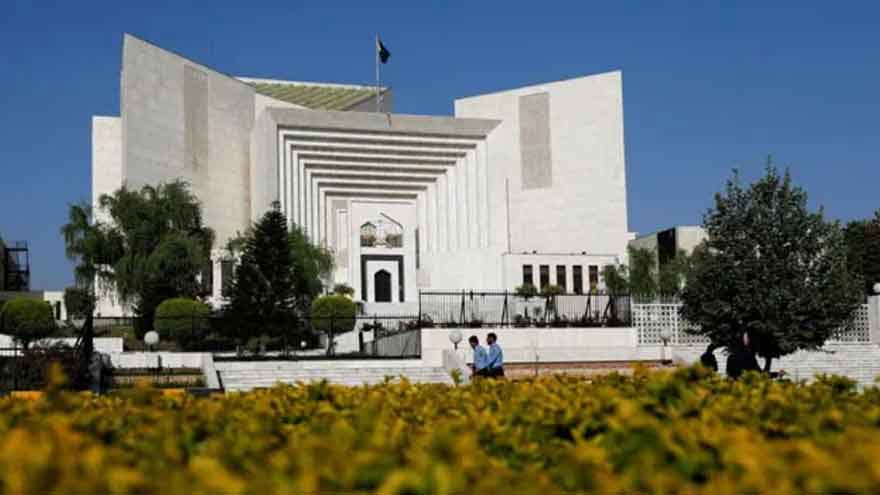
“The Supreme Court has ruled that a person's legal heirs acquire their shares in the deceased's property and assets immediately upon death, and their inheritance rights do not lapse merely with the pas…”
The court clarified that the limitation period for a claim of deprivation of inheritance begins only when an heir's ownership rights are expressly and openly denied, and the heir becomes aware of that denial. Both the denial and the heir's knowledge of it must be established.
In a larger bench judgment authored by Justice Shahid Waheed, the court held that if an heir learns that their inheritance rights are being denied but fails to initiate legal proceedings for six years despite having that knowledge, their claim may become time-barred. However, the limitation period cannot be presumed to have started without the heir's knowledge.
Legal heirs also inherit claims of their predecessor that remained unpursued during the predecessor's lifetime. The judgment noted that Sunni schools of Islamic jurisprudence agree that, after a person's death, the estate passes to legal heirs following payment of funeral and burial expenses, outstanding debts and valid bequests.
"Stay connected with Aman-e-Pakistan for ongoing live reporting and verified investigative updates."
Delays in inheritance distribution particularly harm widows, daughters, minor children and orphans, while increasing the risk of family disputes, fraud and unlawful deprivation of heirs' rights. The Supreme Court also identified various methods used to commit fraud involving inherited property.
These include forging thumb impressions to transfer property, fabricating claims of oral gifts, excluding sisters' names through affidavits and obtaining signatures or thumb impressions from women on documents they cannot read or understand. In some cases, an entire branch of a family is concealed to obtain a succession certificate.
Invoking Article 187 of the Constitution, the court directed provincial and territorial revenue authorities not to process inheritance mutations without a NADRA Family Registration Certificate or an equivalent document verifying all legal heirs. Written notices must be sent to every heir at their respective addresses, including women.
If an heir is to receive less than their entitled share, their statement must also be recorded., the personal appearance of the relevant heir must be ensured in any transaction involving a gift, sale, relinquishment or settlement of inherited property.
Their identity must be verified and their statement recorded to confirm that they have been informed of the details of their full inheritance share. The court also directed that the services of a female revenue officer should be engaged in such matters wherever possible.
The Supreme Court further directed registration authorities, development authorities, cantonment boards and cooperative housing societies not to transfer inherited property to another person without a succession certificate, letters of administration or a court decree. These institutions must also issue written notices to all legal heirs to prevent property transfers without their knowledge.
The court instructed settlement officers appointed in newly surveyed areas, including the merged tribal districts, to enter the names of all legal heirs in the land records and formally notify them. Trial courts were also directed to specifically determine legal questions concerning limitation in inheritance claims and decide them promptly in light of available evidence.
The judgment also made several recommendations to legislatures and the Law and Justice Commission.
These include making registered documents mandatory for relinquishment or settlement of inheritance rights, introducing a separate provision in the Limitation Act, 1908, concerning claims by heirs, and setting a final limitation period to protect bona fide purchasers who have paid valid consideration and obtained open possession of property.
The Supreme Court also recommended amending Section 498-A of the Pakistan Penal Code or introducing a new legal provision to make it an offence to deprive any heir, whether male or female, of inheritance through fraud or unlawful means, while retaining the existing special legal protection for women.
It also recommended legislation to ensure the timely partition of property after inheritance mutations. The court ordered that copies of the judgment be sent to the Ministry of Law, provincial law secretaries, the Attorney General, provincial advocates general and the Advocate General of Islamabad.
Written by Sheheryar Munawar
Aman-e-Pakistan Senior Journalist & Bureau Reporter
Continue Reading: More in National
Swipe or click arrows to explore National desk coverage