Constitutional procedure must be followed for creation of new provinces: PA speaker
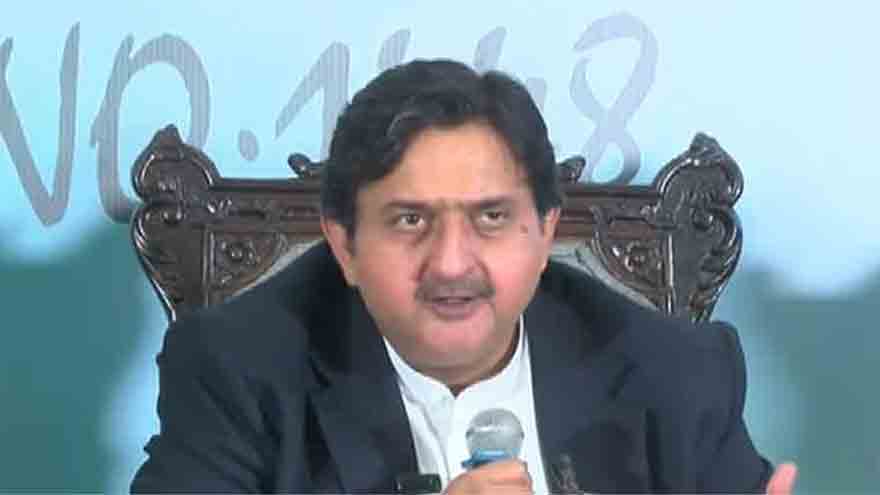
“Speaker of the Punjab Assembly Malik Muhammad Ahmad Khan has declared that a clear constitutional mechanism exists for creating new provinces, emphasizing that passing a resolution by a two-thirds maj…”
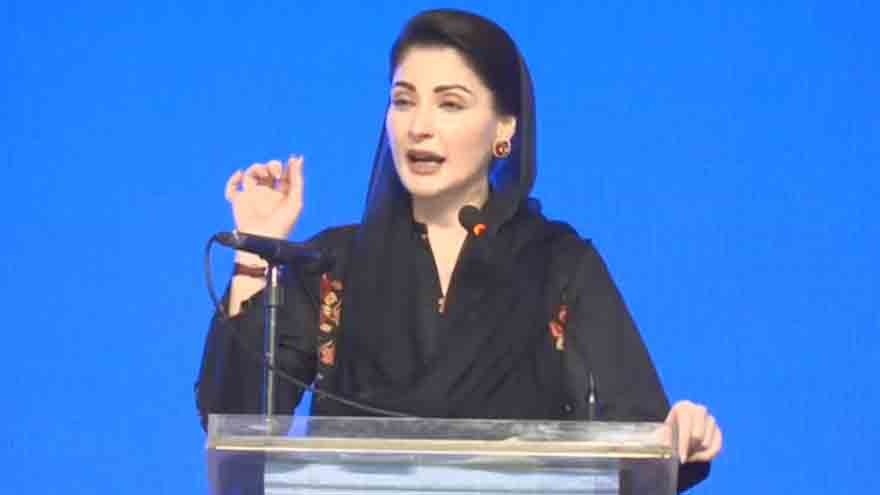
Highlighting the role of youth, Speaker Malik Muhammad Ahmad Khan noted that student unions serve as a vital medium for fostering leadership among young people. He added that universities can utilize student unions to train a generation capable of assuming leadership roles across various fields, reinforcing that open debate on governance models and administrative restructuring is a healthy practice.
Regarding the creation of new provinces, he outlined the framework provided in the Constitution of Pakistan. Under Article 239, Clauses 1 and 2, any constitutional amendment requires a two-thirds majority in Parliament. Furthermore, Clause 4 explicitly mandates that altering the boundaries of any province requires a two-thirds majority vote from the concerned provincial assembly.
"Approving the division of Punjab by a two-thirds majority in the Punjab Assembly is a strict constitutional requirement," the Speaker affirmed, adding that while public referendums hold democratic weight, a referendum cannot act as a substitute for the mechanism outlined under Article 239(4).
"Stay connected with Aman-e-Pakistan for ongoing live reporting and verified investigative updates."
Commenting on party positions, Malik Muhammad Ahmad Khan acknowledged that the Pakistan Peoples Party's (PPP) stance demanding adherence to the constitutional process is legally sound. He recalled that in 2012, the PPP-led government introduced resolutions regarding the division of Punjab and the creation of a Southern Punjab province, with Farhatullah Babar tabling the resolution in the Senate and Farooq H.
Naek in the National Assembly. At that time, the PML-N objected and staged a walkout, arguing that the authority to divide a province rests solely with the provincial assembly under Article 239(4). The Speaker emphasized the need for consistent principles, stating that if population and economic backwardness are valid criteria for dividing Punjab, similar factors exist in Sindh as well.
He stressed that final decisions must align with the wishes of the local population and be made through consensus among political leadership, including the PML-N, PPP, and Jamaat-e-Islami. Recalling historical precedent, he referenced the pre-partition referendum in the then-North-West Frontier Province (NWFP), where 282,000 voters chose accession to Pakistan.
He noted that while direct public participation is fundamental to democracy, constitutional rules remain distinct and binding. He concluded by advocating for a robust local government system and open dialogue on smaller administrative units.
Continue Reading: More in National
Swipe or click arrows to explore National desk coverage