Where have Karachi’s Olive Ridley turtles gone?
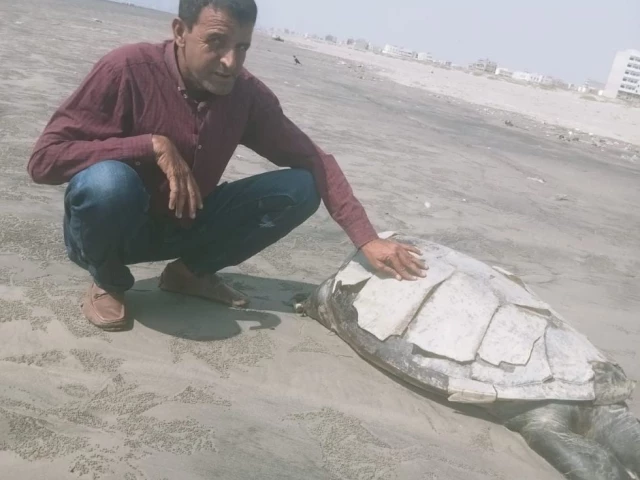
“Once familiar visitors to Pakistan’s sandy shores, Olive Ridley sea turtles have all but vanished from the country’s recorded nesting grounds. Now, the discovery of a dead turtle on Clifton Beach has …”
Now, the discovery of a dead turtle on Clifton Beach has brought an old ecological mystery into focus: if these turtles still inhabit the Arabian Sea, where have the breeding females gone? The turtle’s death has no confirmed explanation.
It may have become entangled in a fishing net, collided with a vessel or fallen victim to marine pollution.
But its appearance on Karachi’s shoreline has renewed concern over a far bigger disappearance - the collapse of Olive Ridley nesting along Pakistan’s coast.-Pakistan technical adviser Muhammad Moazzam Khan, these turtles were once found in significant numbers at Sandspit, Hawke’s Bay, Manora, Sonmiani Beach and other coastal locations.
"Stay connected with Aman-e-Pakistan for ongoing live reporting and verified investigative updates."
Historical research cited by experts recorded more than 500 Olive Ridley nests along Karachi’s beaches during the 1980s and 1990s. By 1996-97, that number had reportedly plummeted to just two. In the years that followed, researchers failed to establish reliable evidence of regular nesting by the species on Pakistan’s shores.
The turtles, however, have not disappeared entirely from regional waters. Olive Ridleys continue to inhabit the Arabian Sea, leaving scientists with a crucial unanswered question: have Pakistan’s breeding females shifted to distant shores, or are other factors disrupting their nesting cycle?
Khan believes satellite tracking could help unravel the mystery. He cited a study in a neighbouring country in which an Olive Ridley fitted with a GPS tag crossed the Arabian Sea and reached Oman to breed.
Similar research in Pakistan could identify migration routes, locate breeding grounds and reveal the dangers turtles encounter in their journeys across the sea. The need for such research is underscored by recent encounters along Pakistan’s coastline.
Two Olive Ridley turtles caught in fishermen’s nets near Jiwani, Balochistan, were recently rescued and released. Their presence offers evidence that the species continues to frequent Pakistani waters, even as its nesting history remains largely unaccounted for.
The dead turtle at Clifton is not an isolated reminder of the pressures facing marine life. Several dead green turtles have previously been found at Hawke’s Bay and Sandspit, raising wider concerns about the hazards confronting sea turtles along Karachi’s increasingly busy coastline.
Fishermen Sajag Forum Chairman Muhammad Bakhsh Jat warned that plastic bags, discarded plastic waste and marine pollution posed serious threats to marine life. Damage to the marine ecosystem, he said, also threatens the livelihoods of fishing communities that depend on healthy coastal waters.
Experts identify entanglement in fishing nets, intensive human activity, pollution and changes to natural nesting habitats among the principal dangers facing sea turtles. Yet the precise reasons behind the collapse of Olive Ridley nesting on Pakistan’s beaches remain uncertain, and specialists caution that more scientific investigation is needed before definitive conclusions can be drawn.
Olive Ridleys are capable of travelling thousands of miles between feeding and breeding areas. Tracking their movements could therefore help determine whether turtles frequenting Pakistani waters are nesting elsewhere and, if so, where their breeding grounds lie.
It could also provide the scientific basis for regional cooperation to protect their migration routes and habitats. For now, the dead turtle on Clifton Beach is both a troubling sight and a reminder of how much remains unknown beneath the Arabian Sea’s surface.
The species may still be passing through these waters, but until its movements are tracked and its breeding destinations identified, the silence of Pakistan’s once-recorded nesting grounds will remain an ecological mystery.
Continue Reading: More in National
Swipe or click arrows to explore National desk coverage