No change in Pakistan's Afghan policy
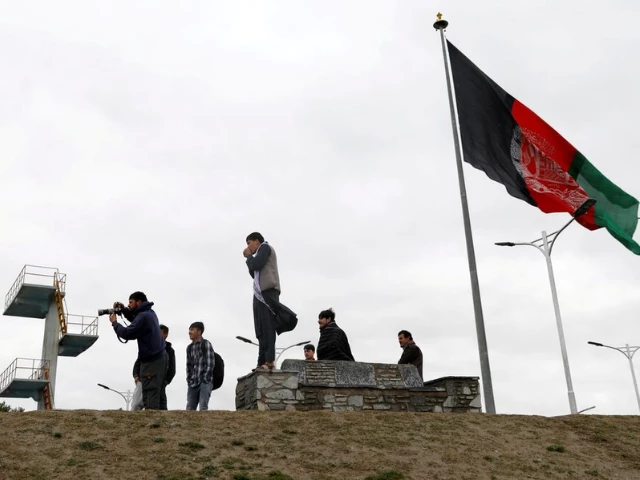
“Despite a series of recent developments triggering speculation that Pakistan may be reconsidering its policy towards Afghanistan's Taliban regime, official sources have made it clear that there has be…”
The speculation gained momentum following reports that acting Afghan Interior Minister Sirajuddin Haqqani had offered to hold talks with Pakistan and that a joint mechanism could be established to address outstanding issues between the two neighbours.
The reported offer was followed by another development that fuelled speculation about a possible policy shift, an invitation extended to Afghanistan's ambassador in Islamabad to speak at the National Defence University (NDU). However, official sources familiar with the matter neither development should be interpreted as a change in Pakistan's Afghan policy.
They particularly dismissed the NDU invitation as evidence of any move towards political engagement with the Taliban regime., interactions between foreign diplomats and Pakistani academic and defence institutions are not unprecedented.
"Stay connected with Aman-e-Pakistan for ongoing live reporting and verified investigative updates."
They pointed out that even India's high commissioner had previously been invited to the NDU, suggesting that such invitations should not automatically be viewed through the prism of foreign policy. The Afghan envoy's participation, however, subsequently became controversial after,, he violated the ground rules governing the interaction bwy making public remarks about what were understood to be off-the-record discussions.
The issue,, angered concerned authorities, who viewed the disclosure as a breach of the understanding under which the interaction had taken place. At the Foreign Office's latest weekly briefing, spokesperson Tahir Andrabi also sought to play down the significance of the NDU invitation, describing such engagements as routine academic interaction.
He made it clear that the invitation did not represent a policy change towards the Taliban authorities in Kabul.
Pakistan has maintained that meaningful engagement with the Taliban government cannot resume unless Kabul takes concrete and verifiable action against banned terrorist groups, particularly the Tehreek-e-Taliban Pakistan (TTP), which Islamabad says operates from the Afghan territory to plan and carry out attacks inside Pakistan. The issue of terrorist sanctuaries remains the central source of friction between the two countries.
Islamabad has repeatedly conveyed to Kabul that assurances alone are insufficient and that Pakistan wants to see demonstrable action against groups it considers responsible for attacks on its territory. The Pakistani position also extends to other terrorist organisations operating from Afghan territory, including the Balochistan Liberation Army (BLA).
Against this backdrop, officials said there was currently no indication of Pakistan abandoning this position or opening a fresh political track with the Taliban. Meanwhile, China continues to explore diplomatic options aimed at easing tensions between Pakistan and Afghanistan.
Chinese Special Envoy for Afghan Affairs Ambassador Yue Xiaoyong recently visited Islamabad for talks on the latest regional situation and Pakistan-Afghanistan tensions. His visit was part of Beijing's efforts to review the possibility of reviving the Urumqi process, a Chinese diplomatic initiative to ease tensions between Islamabad and Kabul.
However, officials and diplomatic sources remain cautious about the prospects of an early revival of the process, given the current state of Pakistan-Afghanistan relations. The deterioration in bilateral ties, particularly over the TTP issue, has significantly narrowed the space for diplomatic initiatives.
Pakistan appears to be keeping diplomatic channels and limited institutional contacts open while refusing to resume substantive engagement with Kabul until it sees concrete and verifiable action against militant groups operating from Afghan soil. Officials insist that any future change in policy would depend primarily on developments on the ground rather than isolated diplomatic or academic interactions.
Continue Reading: More in National
Swipe or click arrows to explore National desk coverage