ML-I phase one to cost $2.1b
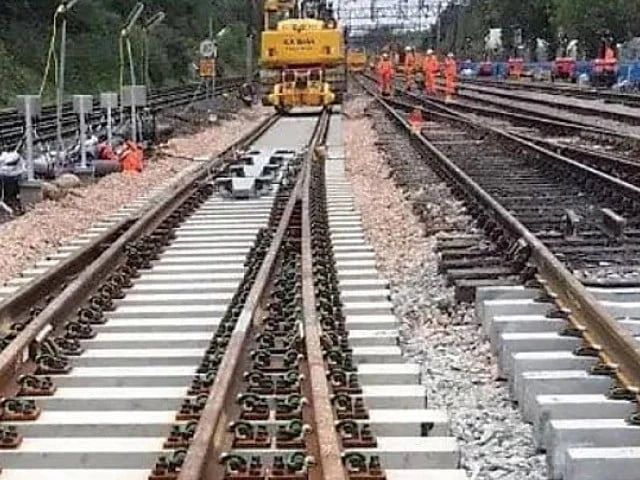
“The government has informed the Senate that the first phase of the Mainline-I (ML-I) project would cost $2.1 billion, as Prime Minister Shehbaz Sharif constituted a new committee to finalise funding p…”
The project faces delay even though 67% of the railways' track is unsafe, causing 300 accidents in just three years, the official response to the upper house of Parliament revealed on Friday.
The 1,872-kilometre ML-I from Karachi to Peshawar faces serious funding constraints, compelling the government to look for sources other than China, pledge land with local banks and seek loans from multilateral creditors. The Minister for Railways Hanif Abbasi informed the Senate on Friday that the estimated cost of the 480-kilometre Karachi-Rohri section is $2.1 billion.
He said the final project cost will be determined upon completion of the detailed engineering design, currently under review for finalisation. The minister said construction is expected to commence during the current fiscal year, subject to completion of all requisite approvals, financing arrangements and procurement processes, with an estimated implementation period of two and a half years.
"Stay connected with Aman-e-Pakistan for ongoing live reporting and verified investigative updates."
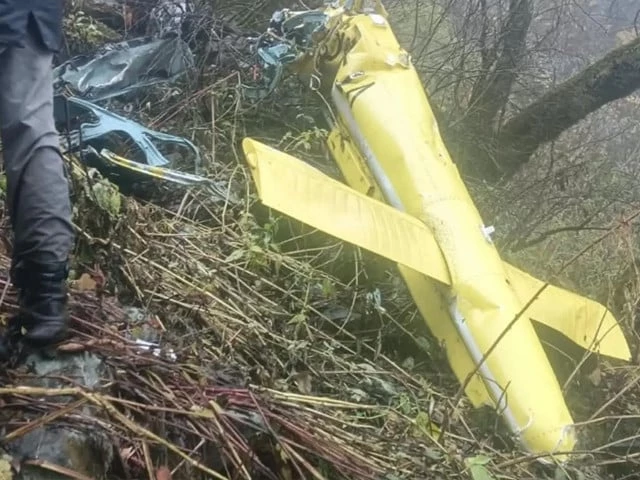
Pakistan could not secure $8 billion in funding from China out of a total cost of $10 billion, despite the project having been declared the only strategically important initiative under the China-Pakistan Economic Corridor (CPEC). In response to another question, the minister said accidents faced by Pakistan Railways had risen to 300 over a three-year period.
As many as 299 accidents were reported from 2023 to 2025, including 241 incidents of derailment of goods and passenger trains. About 84 accidents were reported in 2023, a maximum of 118 in 2024 and 97 in 2025, including 37 head-on collisions.
The ministry of railways admitted that 67% of the track and 60% of the rolling stock has outlived its life, but said that "despite the fact that 67% of the railway track and 60% of the rolling stock is over-aged, there have not been significant investments in railway infrastructure, as required, for more than seven decades of our history".
Due to funding constraints, the government has not been able to fill vacant posts. There were 22,546 vacant positions in Pakistan Railways against pay scales 1 to 22, of which 12,165 are in Punjab, 7,245 in Sindh, 1,840 in Khyber-Pakhtunkhwa and 1,296 in Balochistan.
Prime Minister Shehbaz Sharif has also constituted a committee under the chairmanship of the governor of the State Bank of Pakistan (SBP) to formalise a financing plan for the second phase, the Multan-Rohri section. The committee met this week to find ways to securitise Pakistan Railways' land to finance the project's second phase.
"Trillions of rupees of land is lying vacant and the government is now looking for ways to give the land as collateral to domestic commercial banks for raising funds for the second phase," Federal Minister for Planning Ahsan Iqbal.
The Frontier Works Organisation (FWO), which was eager to construct the Multan-Rohri section, had estimated the second phase cost at Rs470 billion under a build-and-lease model.
However, there were issues over who would repay the debt and the quantum of sovereign guarantees the ministry of finance may have to issue, and Pakistan Railways was reluctant to take full responsibility for debt repayments that FWO would raise from local banks.
Out of the Rs470 billion estimated cost, the debt requirement was around Rs365 billion and the remaining money had been sought from the government as a grant. Sources said that over a 25-year lease, total payments had been estimated at Rs1.1 trillion, but the ministry of railways showed willingness to pay only Rs29 billion.
It had projected operational profits of Rs485 billion over 25 years, and the ministry of finance was of the view that at least this amount should be pledged by the railways. But the railways ministry was unwilling to provide the entire funds, and the ministry of finance was unwilling to provide guarantees against 25-year repayment obligations.
Under the FWO construction model, FWO will complete the rail link in three years by borrowing a maximum 80% of the cost from local banks and securing at least 20% financing from the federal government as viability gap funding.
FWO will then hand over the track to Pakistan Railways on a 25-year lease and transfer the title after expiry of the lease period. The total project cost is Rs470 billion.
Continue Reading: More in National
Swipe or click arrows to explore National desk coverage