The 50-point gap behind tariff debate
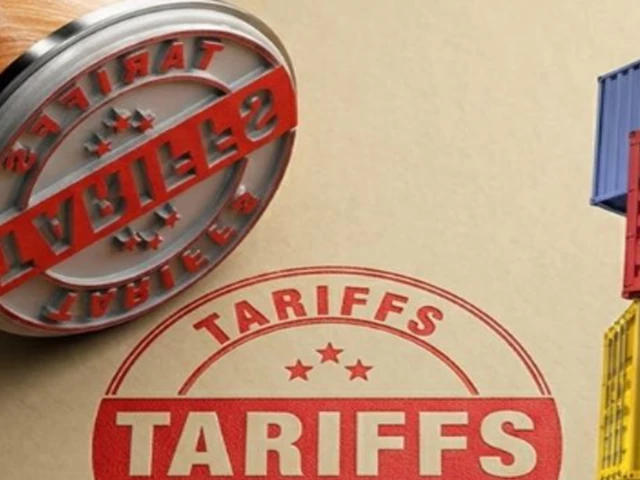
“A recent debate between industry representatives and policymakers has erupted over the calculation and the implications of the tariffs presented in the National Tariff Policy (NTP) 2025-2030. Industry…”
Industry representatives state that the tariff rates for Pakistan reported in the World Trade Organisation (WTO) World Tariff Profiles 2025 are not only much lower than those reported in the NTP but are also consistent with the tariff rates applied by regional export powerhouses such as Vietnam, Thailand and Indonesia.
The simple average most favoured nation (MFN) tariff rate applied by Pakistan in 2024 was 10.3%, which is not an outlier given that the aforementioned countries applied 9.5%, 9.9% and 8% respectively. On the face of it, the comparison holds.
The question that needs to be answered is whether the WTO figure measures what the debate is about. It is important to note that the figures provided in the NTP 2025-2030 stack regulatory duties (RDs) and additional customs duties (ACDs) on top of the statutory customs duties.
"Stay connected with Aman-e-Pakistan for ongoing live reporting and verified investigative updates."
The WTO reports the latter only. The NTP has a baseline tariff rate of 20.2%, which includes RDs and ACDs. The WTO figures hide the para-tariffs applied by Pakistan.
The information in the WTO tariff profile merits deeper analysis. WTO tariff profiles report another crucial indicator, which is often overlooked, namely the tariff ceiling rate, or the bound rate. This matters because WTO members commit not to charge above it.
The simple average bound tariff for Pakistan is 60.8%, with 63.5% of non-agricultural tariff lines bound between 50% and 100%. Vietnam's bound rate is 11.7% and China's is 10%. While the ceiling set by Pakistan is far above the tariff it applies, the ceilings set by Vietnam and China are close to the tariffs they apply.
Both had to bind close to their applied rates as a condition of their entry into the WTO.The founding members, such as Thailand and Indonesia, have average bound rates of about 27% and 37% respectively. The gap between bound and applied rates is often labelled "tariff overhang" or "water in the tariff" and is crucial for policymakers.
Pakistan has a gap of 50.5 percentage points, while Thailand and Malaysia have a gap of less than 17 percentage points. The first consequence of this gap is that the para-tariffs applied by Pakistan are largely WTO-legal.
Pakistan can apply significantly large RDs and ACDs, unlike Vietnam and China, as doing so would breach their commitments to the WTO. Pakistan has repeatedly done so through statutory regulatory orders (SROs) and Finance Acts.
This gap allows the actual tariffs applied by Pakistan to drift from the MFN rate it reports to the WTO. The large gap makes tariff policy unpredictable, and investors are unable to treat it as stable.
A firm planning to build supply chains and invest in a factory tied into global value chains will be wary of tariff unpredictability caused by the large gap. Further, tariff uncertainty undermines the payoff from every other reform, as a firm will not invest in meeting European Union (EU) standards if its input costs can change overnight through SROs.
For instance, certain products in the auto sector may find a 100% tariff on their imports while the group average is 22.5%. The NTP 2025-2030 narrows the gap between what the WTO reports and what Pakistan actually applies on its imports by eliminating the web of RDs and ACDs and placing customs duties into simpler slabs.
However, it does not touch the bound rates set at the WTO. As applied tariffs fall, the overhang will widen, and each reduction can be reversed by the next Finance Act. Locking in the reform requires narrowing the tariff overhang.
The biggest beneficiary of this reform will be the manufacturing sector itself. A second problem with the comparison is that Southeast Asian countries pay MFN rates on a shrinking share of their imports, as most trade with the Association of Southeast Asian Nations (ASEAN), Japan, China and South Korea moves under reciprocal trade agreements.
Yet, even on MFN rates, the gap is stark. Approximately 60% of non-agricultural imports into Vietnam and Thailand enter duty-free, compared with 40% for Pakistan. Approximately 35% of non-agricultural imports into Pakistan face duties above 10%.
This drops to about 16% for Vietnam and less than 10% for Thailand. Their MFN schedules are tilted towards lower rates. Pakistan's is not.
There is significant evidence reported across the developing world that cheaper imported inputs raise plant productivity and have played an important role in increasing the introduction of new products by firms, which eventually boosts export capabilities. The tariff structure in Pakistan raises the costs of importing essential inputs deemed necessary for local production.
Further, the quality of exports by firms is inversely related to the tariffs on inputs. In essence, imports carry technology, and its access is critical in enhancing the productive capacity of firms. Cheap and better access to inputs is critical to ensure a more productive manufacturing sector.
Further, several non-tariff measures such as customs procedures, technical barriers to trade (TBTs), sanitary and phytosanitary (SPS) measures and others create hurdles and disincentives for increasing productive capacities. With the focus entirely on tariff measures, reforms on non-tariff measures that define trade are often neglected.
Pakistan must undertake a holistic approach to ensure that it participates more intensely in regional and global value chains. Regional Integration and Value Chain Analyser created by the United Nations Economic and Social Commission for Asia and the Pacific (ESCAP), Pakistan's exports are overwhelmingly home-made, with foreign value added in exports accounting for 8.5% of gross exports.
In comparison, this figure is 37% in Vietnam, 34% in Cambodia and 29% in Thailand. While half of Pakistan's export value is domestic content in final goods, other countries rely on their products crossing borders multiple times.
Interestingly, the most export-oriented sector in Pakistan, textiles, reports foreign value-added content of less than 9%. The same indicator is more than 21% in Bangladesh. Localisation behind a tariff wall is a double-edged sword, as Pakistan retains more value in each dollar it exports but exports fewer dollars.
The pattern is consistent with a tariff structure that penalises exporters and more productive firms that need better technology and higher quality inputs.
If Pakistan is serious about implementing the tariff reforms, the NTP must be followed by the rebinding of tariffs closer to applied rates and by deeper, reciprocal free trade agreements (FTAs) with several of its important trading partners. THE WRITER IS AN ASSISTANT PROFESSOR OF ECONOMICS AND RESEARCH FELLOW AT CBER, IBA
Continue Reading: More in National
Swipe or click arrows to explore National desk coverage