Climate shifts slash olive yields in Khyber
“Climate change and erratic weather are cutting into olive production across Khyber district, leaving growers with smaller harvests and less oil even as official efforts expand the crop. Farmers report …”
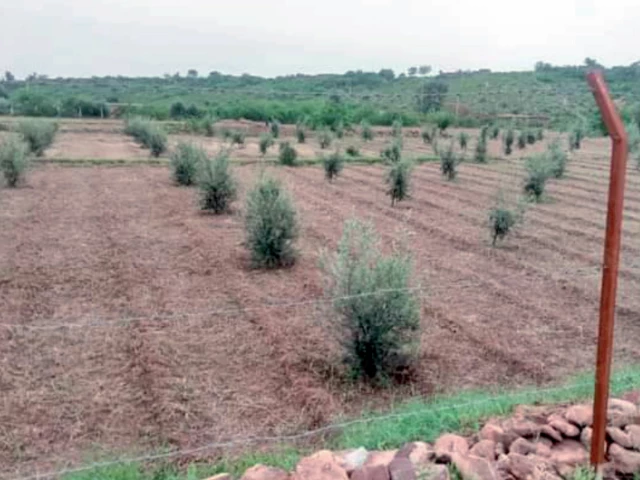
Farmers report that excessive rains in March and April, the critical flowering period, disrupted fruit set this year. The result has been lower olive yields and a noticeable drop in oil output. Ahmad Gul, who grows about 1,100 olive trees on 20 acres in Shah Kas, Tehsil Jamrud, production has fallen sharply compared with last year.
"Earlier we used to get more than 120 litres of oil from the orchard. Now it is less than 100 litres," he said. He attributes the decline primarily to climate change and unusual rainfall patterns.
Gul also noted that olive trees face various diseases and called on the agriculture department to supply timely sprays, pesticides and urea so orchards can be protected. Similar concerns come from Bara tehsil. Ziarat Gul Afridi, who manages 140 trees in Spah Dora, said the department planted olive orchards in the area about seven years ago.
"Stay connected with Aman-e-Pakistan for ongoing live reporting and verified investigative updates."
Early yields were encouraging, but climate change and irregular weather have since reduced output. He stressed that sustained official attention and practical assistance are needed to keep production viable. Fazal Rabi Afridi, owner of an 800-tree orchard in Akakhel, likewise reported a marked drop this season linked to changing weather.
He has sprayed against diseases at his own expense and said that while the department provides occasional training on orchard care, more concrete support, medicines, sprays and other inputs, is essential.
Grafting of wild olive plants continues in areas such as Takhtaki in Tirah and Payanda China in Upper Bara, though regular commercial production has yet to begin in those locations. Agriculture Ziaul Islam Dawar, 415 acres of olive orchards have been established under the merged-districts olive promotion project.
Roughly half of these are in Bara tehsil (Akakhel, Spah, Qambar Zaw and Shin Drang among other sites). Jamrud (Ghandi, Shah Kas, Jalaluddin and Malagori) and Landi Kotal (Shalman and adjoining areas) are also covered.
This year's harvest from these orchards yielded about 3,500 litres of oil. Large-scale grafting has converted wild olive stock into improved varieties; project records show 178,938 of a targeted 195,000 wild plants have already been grafted, with roughly 16,000 still to be done.
The original target for new orchards was 1,402 acres. A modern processing unit has been installed at the Agriculture Training Centre in Bara. It can process 200 kg of olives per hour and is equipped with a 35 kVA generator, filters and related machinery, giving local growers a nearby facility to extract oil and strengthen the crop's commercial value.
Ten training programmes were planned to build farmers' skills in grafting, orchard management, disease control, value addition, market access and nursery development. Three have been completed; seven remain.
Farmers registered with Farmers Service Centres receive priority for new orchard schemes, and both individual growers (one acre or more) and groups (minimum five to eight acres) can apply through local agriculture officers. Wild olive resources remain substantial.
Across the former FATA districts an estimated 53.45 million wild plants exist; Khyber alone accounts for about 5.5 million, found in Tor Wela, Mastak, Bazaar Zakha Khel, Tarkho Kas, Nara Baba, Payanda China, Mehrban Kalle, Sandana, Surkas and other locations. Converting these through grafting offers a long-term route to higher production.
Agricultural experts note that successful olive yields depend on suitable weather during flowering and fruit set, proper irrigation, timely disease diagnosis and scientific orchard management. Officials are urged to factor climate risks into guidance, maintain regular monitoring and ensure farmers receive sprays, fertilisers and other inputs without delay.
The olive project holds clear potential to strengthen the local economy, create new income streams for farmers and increase domestic edible-oil production. Yet planting new trees alone will not suffice. Protecting existing orchards, raising yields, producing quality oil and linking growers to markets remain equally critical if the initiative is to deliver lasting results.
Continue Reading: More in National
Swipe or click arrows to explore National desk coverage