PIMS fire inquiry blames systemic failures as electrical fault emerges as likely cause
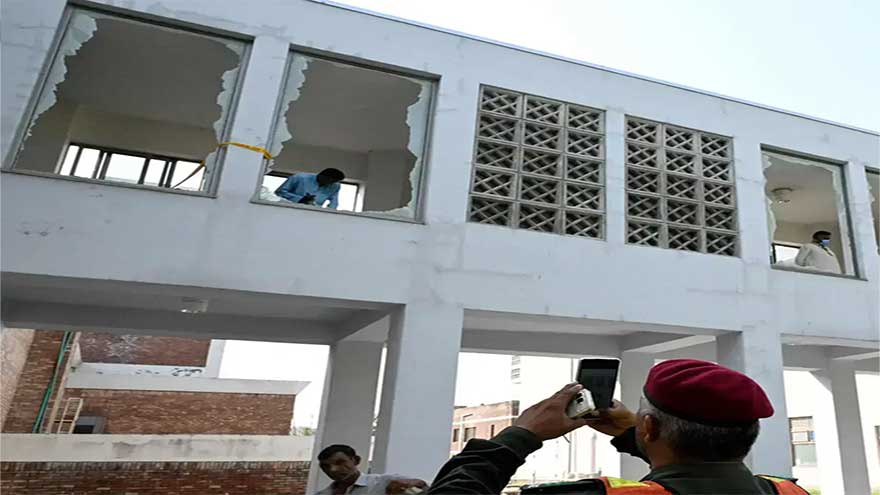
“Inquiry report says systemic failures turned an electrical fault into the deadly Pims nursery fire that killed 14 newborns, urging safety reforms and accountabi…”
IISLAMABAD —A high-level inquiry into the deadly fire at the Pakistan Institute of Medical Sciences (Pims) has concluded that systemic and institutional failures allowed a probable electrical fault to escalate into a catastrophe that killed 14 newborns at the hospital’s Mother and Child Hospital.
The August 26 blaze broke out in the nursery of the Mother and Child Hospital, triggering scrutiny of fire safety, electrical maintenance, emergency preparedness and administrative oversight at one of the capital’s largest public hospitals.’s 43-page report, an electrical failure was the most probable cause of ignition, but the scale of the tragedy could not be explained by the initial fault alone.
The committee concluded that Pims and its senior management bore the principal institutional responsibility for failing to transform known risks, previous warnings and assigned responsibilities into an effective safety system. It stressed, however, that responsibility of individual officials must be determined.
"Stay connected with Aman-e-Pakistan for ongoing live reporting and verified investigative updates."
“The electrical spark explains how the fire began; the institutional system explains why it became a catastrophe,” the report said. The committee found that multiple layers of protection were either absent, inadequate, delayed or had not been verified as functional.
Electrical fault identified as probable starting point. Technical evidence from the National Forensics Agency identified the electrical supply cable associated with AC Unit No. 2, near or above AC Unit No. 1, as the most probable point of ignition.
Investigators said abnormal localised electrical heating — potentially caused by excessive current, a high-resistance connection or another defect — most likely resulted in insulation failure and ignition of nearby combustible material.
The inquiry did not find evidence establishing arson, multiple ignition points, an external fault originating from Islamabad Electric Supply Company, a pre-fire oxygen leak or an incubator or warmer as the source of the blaze.
While maintenance records showed that nursery air conditioners had been serviced, the committee said the available documentation did not demonstrate a sufficiently systematic electrical safety programme covering cables, insulation, earthing, connections, breaker protection and thermal hotspots. The report stressed that keeping equipment operational was not the same as establishing that its electrical installation was fire-safe.
Earlier warnings failed to produce comprehensive action. The inquiry found that fire-safety concerns at Pims were not entirely new. It referred to earlier correspondence from the Capital Development Authority, findings of the Federal Ombudsman dating back to 2015, Pims’ own acknowledgement in 2025 of ageing fire-safety infrastructure and a July 6, 2026 fire at the Nursing Hostel.
The Nursing Hostel incident had already highlighted deficiencies involving alarms, fire detection, electrical inspections, evacuation arrangements, firefighting equipment, emergency drills and planning., these warnings had not resulted in a comprehensive, time-bound and independently verified corrective programme before the nursery tragedy.
While the precise electrical defect that apparently triggered the August 26 fire may not have been predictable, the committee found that the need for stronger overall fire preparedness was foreseeable. Overcrowded nursery complicated rescue. The inquiry also highlighted conditions inside the nursery when the fire erupted.
Fifteen medically vulnerable newborns were being accommodated in a unit designed for 10, with several babies dependent on oxygen or respiratory support. Only two doctors and two nurses were immediately available, while protected evacuation resources were limited.
Investigators found no adequately documented, approved, trained and rehearsed nursery-specific fire and neonatal evacuation procedure. Nor was a functional automatic smoke detection, alarm or sprinkler system demonstrated to be serving the affected area. Combustible material and an oxygen-supported environment contributed to the rapid spread of fire and smoke after ignition,.
Frontline workers acted within moments. The inquiry rejected a generalised allegation that frontline hospital personnel abandoned the newborns. CCTV evidence showed an extremely rapid emergency, with Charge Nurse Nasreen Akhtar, Security Guard Maria Saleem and Staff Nurse Razia Noreen responding within moments.
The committee said several frontline workers acted promptly and courageously despite conditions becoming extremely dangerous within minutes. It cautioned against blaming individuals whose rescue efforts were supported by objective evidence merely because the final outcome was catastrophic.
The inquiry instead drew a distinction between the actions of individual workers and the hospital’s institutional emergency response. Frontline staff responded at around 6:38am, while external emergency services were notified at 6:54am and operational response arrived at approximately 7:01am.
The report therefore identified the interval between the visible outbreak of the fire and external notification as a key area requiring examination. Emergency system found inadequate.
The committee found that Pims had not demonstrated a tested incident command system capable of immediately converting detection of a fire into an alarm, evacuation, external notification, hazard isolation, access management and coordinated rescue operation. Capital Emergency Services separately reported locked or obstructed routes, which the committee described as a serious institutional concern regarding emergency exits.
The inquiry said Pims security procedures contained explicit responsibilities concerning fire safety, emergency exits, firefighting equipment, training, keys, access control and emergency reporting. This created one of the clearest documented chains of responsibility examined by investigators.
Accountability to depend on evidence. The committee said the available record did not establish criminal guilt against any named individual.
It nevertheless recommended focused criminal investigation into four possible areas: electrical installation or maintenance failures associated with AC Unit No. 2; obstruction of a mandatory emergency route; failure to act despite specific prior warnings; and any culpable delay established in seeking external emergency assistance.
The inquiry also found prima facie grounds for administrative and efficiency-and-discipline proceedings where evidence establishes a defined responsibility, prior knowledge, authority to act and a corresponding failure or omission. It stressed that evidence against different officials was not equally developed and that final responsibility must be established through due process.
The electrical, engineering and HVAC chain remained particularly important, with investigators recommending that responsibility be traced among those who designed, installed, altered, inspected, maintained, supervised or certified the circuit implicated in the fire. No evidence of sabotage or casualty concealment.
The inquiry said the evidence did not establish conspiracy, sabotage, deliberate locking-in of newborns, political protection, manipulation or concealment of casualty figures. It also found no evidence supporting wholesale abandonment by frontline personnel or a prolonged delay by Capital Emergency Services after the emergency had been confirmed.
The report described shortcomings involving the health ministry, Islamabad Healthcare Regulatory Authority and CDA/CES primarily as institutional, supervisory and regulatory issues rather than establishing person-specific criminal culpability.
Continue Reading: More in National
Swipe or click arrows to explore National desk coverage