SC says time cannot erase inheritance rights
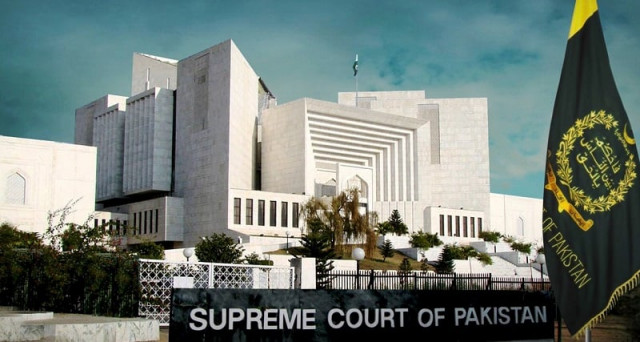
“The Supreme Court has ruled that an heir's right to inheritance takes effect immediately upon the death of the property owner and does not require the acceptance or consent of other heirs. It adds tha…”
It adds that the right to inheritance cannot be extinguished merely by the passage of time. In a unanimous judgment, a five-member larger bench held that the limitation period for filing an inheritance claim begins only when an heir is informed of a clear denial of their ownership rights.
The bench observed that fraud was one of the oldest threats to inheritance rights, often taking the form of forged thumb impressions on gift deeds, fabricated claims of oral gifts, omission of daughters from affidavits, or obtaining relinquishment documents from women who could neither read them.
The verdict, authored by Justice Shahid Waheed, clarified that although inheritance claims are subject to the Limitation Act 1908, the limitation period cannot be presumed to have started merely because several years have passed since the owner's death.
"Stay connected with Aman-e-Pakistan for ongoing live reporting and verified investigative updates."
It held that under Article 120 of the Limitation Act, the six-year limitation period in disputes among co-heirs begins only when an heir's right is clearly and effectively denied and the denial is brought to that heir's knowledge. Both conditions must be met for the limitation period to start.
The court added that legal heirs of a deceased claimant also inherit the right to pursue an inheritance claim that the original heir had not exercised.
The Supreme Court observed that all four Sunni schools of Islamic jurisprudence agreed that a deceased person's estate automatically passes to the legal heirs upon death, subject to the prior payment of funeral expenses, outstanding debts and valid bequests.
The court explained that inheritance is acquired automatically under Islamic law and does not require the acceptance or consent of the heirs. The judgment noted that although no specific calendar deadline had been prescribed for the distribution of an estate, its prompt division was essential.
Once funeral expenses, debts and valid bequests had been settled, the estate became the property of the heirs. It observed that every day of delay in distributing an estate meant that one Muslim continued to hold another Muslim's property despite the clear Islamic injunction to distribute it among rightful heirs.
The Quran had clearly prescribed the shares of heirs, leaving no room for negotiations or arguments over their entitlement or for unnecessary delays in distribution, the judgment stated.
The court observed that when an estate remained undivided, the heir in possession of the property, usually the eldest or most influential male family member, often began treating it as his personal property, while other heirs grew suspicious of his intentions.
"Brothers who stood shoulder to shoulder at their father's funeral stand on opposite sides of a courtroom a generation later," the judgment observed. It said the weakest heirs, including widows, daughters, minor children and orphans, were often forced to wait the longest and suffered the greatest losses because they had the least power to compel the distribution of inheritance.
Some heirs even died while waiting for their rightful shares. The court further observed that undivided property became economically inactive because no heir wanted to invest in land from which they might later be excluded.
Property could not be properly sold, mortgaged or improved when ownership and boundaries remained unclear. The judgment also warned that outstanding debts of the deceased might remain unpaid, valid bequests might not be carried out and the shares of orphans could be wrongfully appropriated.
It noted that the Quran had described consuming an orphan's property as equivalent to swallowing fire. It said evidence was also lost with the passage of time, witnesses who could establish family relationships died, documents disappeared and revenue records changed.
Successive deaths increased the number of legal heirs to such an extent that proceedings could become extremely. The judgment stressed that the best protection of inheritance rights was not prolonged litigation but the timely and proper distribution of an estate.
Continue Reading: More in National
Swipe or click arrows to explore National desk coverage