Poverty climbs back to 28.9%
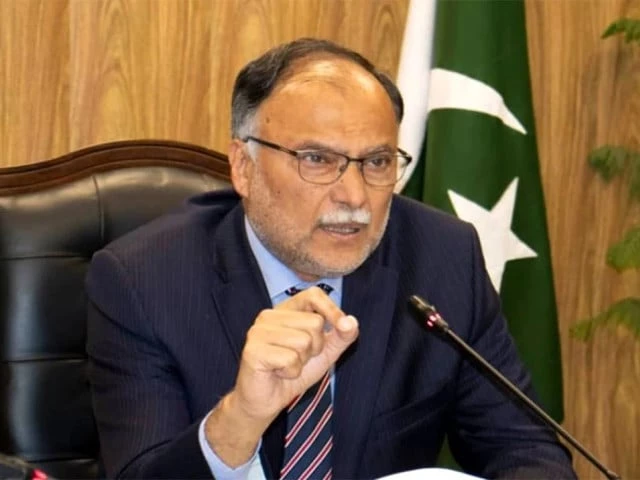
“Poverty rose to 28.9% in 2024-25, reversing earlier gains, Planning Minister Ahsan Iqbal has acknowledged, as the government considers changing its poverty measurement methodology to gauge the impact …”
The Ministry of Planning and the Oxford Poverty and Human Development Initiative (OPHI) of the University of Oxford have discussed the possibility of revising the Multidimensional Poverty Index (MPI), which is currently based on outcomes in health, education and living standards.
Government officials said OPHI has proposed including demographic pressure, climate shocks and new barriers to opportunity among the yardsticks to measure poverty. However, adopting these measures may be politically costly ahead of the 2029 general elections for a ruling alliance that has been in power since April 2022, barring a brief eight-month caretaker setup.
A recent World Bank report said one out of every two of the poorest people living in the Middle East, North Africa, Afghanistan and Pakistan were living in Pakistan.
"Stay connected with Aman-e-Pakistan for ongoing live reporting and verified investigative updates."
Pakistan's economic growth rate remains low and dipped further to 2% in the April-June quarter of this year, which was even lower than the 2.6% population growth rate, contributing to higher poverty and unemployment.
"The political instability, policy discontinuity, economic crises and climate shocks reversed development gains," Iqbal said while speaking at an event organised to sign a memorandum of understanding with OPHI.The minister, who has recently started speaking against the government's number-centric economic policies, emphasised the need for restoring social investment, empowering local governments and using poverty evidence to shape national development priorities.
Iqbal said political stability, sustained economic growth and continuity of national development priorities were essential to restoring poverty reduction.
A planning ministry handout stated that Iqbal said an updated national poverty measurement exercise will draw upon the ongoing Pakistan Social and Living Standards Measurement Survey 2026-27 and examine the relevance of emerging development challenges, including climate vulnerability, insecurity, youth deprivation, gender inequality, digital exclusion, early childhood development, nutrition, stunting and migration.
He emphasised that new indicators and complementary thematic studies must be supported by reliable data and sound methodology to preserve the credibility and policy relevance of the national measure.
A significant component of the renewed collaboration will involve exploring multidimensional poverty analysis at the National and Provincial Assembly constituency levels, using data from the 2023 Population and Housing Census, he added.
The officials said the Pakistan Bureau of Statistics has developed political constituency-wise poverty analysis, but the government has not yet decided to make it public because of its far-reaching implications.
The planning minister was of the view that any political constituency analysis should first be done as a pilot project and as evidence of the need for targeted public investments to improve people's wellbeing, instead of being used as a scorecard of elected representatives, they added.
Iqbal said OPHI's international experience could play an important role in helping Pakistan translate poverty measurement into practical policy interventions, particularly in development planning, resource allocation and social protection targeting and sustainable graduation from poverty.
The proposed collaboration includes updating the National MPI, developing constituency-level poverty analysis, examining the relationship between monetary and multidimensional poverty using household survey data, strengthening institutional technical capacity and promoting the policy use of poverty evidence, said the planning ministry.
Commenting on rising poverty in Pakistan, the minister said poverty reduction momentum had suffered a serious setback after 2018, as political instability, discontinuity in development policies, economic crises, the COVID-19 pandemic and devastating floods undermined earlier gains and constrained the country's capacity to invest in its people.
His party has been in power since early 2022, and yet poverty and unemployment are on the rise. Iqbal also recently wrote to Prime Minister Shehbaz Sharif, urging him to reset economic policies while describing the current phase of economic stabilisation as "borrowed and stunted".
He said national monetary poverty declined from 29.5% in 2013-14 to 24.3% in 2015-16, with the downward trend continuing to 21.9% in 2018-19. But Iqbal admitted that the latest official estimates show poverty increased to 28.9% in 2024-25, reflecting a substantial reversal in Pakistan's earlier progress.
In his letter to the prime minister, Iqbal had also attributed the economic downfall to current economic policies. "The greatest danger is that Pakistan may successfully stabilise at a structurally low rate of economic growth.
"The minister had written that Pakistan needed sustained growth significantly above population growth simply to create sufficient jobs, absorb millions of young entrants into the labour market, reduce poverty and service its debt obligations. If development expenditure remains at rock-bottom levels, our potential growth rate itself will be damaged, he added.
Similar views were expressed by the minister this week when he stated that the federal Public Sector Development Programme (PSDP) had reached Rs1 trillion in 2017-18, accounting for approximately 19.6% of the federal budget and 2.5% of gross domestic product (GDP).
In contrast, the federal PSDP allocation for 2026-27 stands at approximately Rs1 trillion, almost unchanged in nominal terms despite the substantial increase in population, prices and development requirements over the intervening years, he added.
He observed that had the 2017-18 share of the federal budget been maintained, the development programme would today exceed Rs3 trillion, illustrating the scale of development investment capacity that Pakistan has been unable to sustain. The minister warned that shrinking public investment had serious consequences for education, healthcare, water security, infrastructure, skills development and economic opportunities, particularly in disadvantaged regions.
However, the finance ministry appears to be ignoring the planning minister's warnings.
Iqbal said MPI evidence subsequently helped identify Pakistan's 20 poorest districts, 11 in Balochistan, five in Sindh, three in Khyber-Pakhtunkhwa and one in Punjab, providing the basis for a targeted development initiative under the federal PSDP.The minister said more geographically disaggregated evidence could help elected representatives understand development gaps within their constituencies, strengthen public accountability and generate greater political consensus around social investment.
Continue Reading: More in National
Swipe or click arrows to explore National desk coverage