Back when detectives had to think
“Back to Tribune. HomeT-Magazine. Back when detectives had to thinkT-Magazine. Next Story. Back when detectives had to think. Three 1970s TV detectives return in books about clever mysteries, iconic characters a…”
Back to Tribune. HomeT-Magazine. Back when detectives had to thinkT-Magazine. Next Story. Back when detectives had to think. Three 1970s TV detectives return in books about clever mysteries, iconic characters and solving crimes without tech. By. Omair Alavi|facebooktwitterwhatsuplinkdedemailPUBLISHED
October 11, 2026If you thought the trend of placing yourself in the 1980s was cool, you were completely wrong. It was even better in the 1970s, when Petrocelli, Banacek, and Columbo solved cases and stayed cool.
The Matrix 1990s were the absolute pinnacle of human civilisation. That may be debatable, but if any decade saw television peak, it was the 1970s. It was a time when television detectives did not need smartphones, forensic labs, drones, or computer databases to solve crimes.
"Stay connected with Aman-e-Pakistan for ongoing live reporting and verified investigative updates."
They needed little more than a sharp mind, an unusual personality, a good memory, and, occasionally, a very suspicious-looking suspect. Among the many detectives who emerged during that golden age were Anthony Petrocelli, Thomas Banacek, and Lieutenant Columbo.
They all solved crimes, but that was largely where the similarities ended. Petrocelli was the lawyer who investigated before presenting his case in court; Banacek was the sophisticated insurance investigator who specialised in seemingly impossible thefts; and Lt. Columbo was the apparently disheveled police lieutenant who made murderers underestimate him.
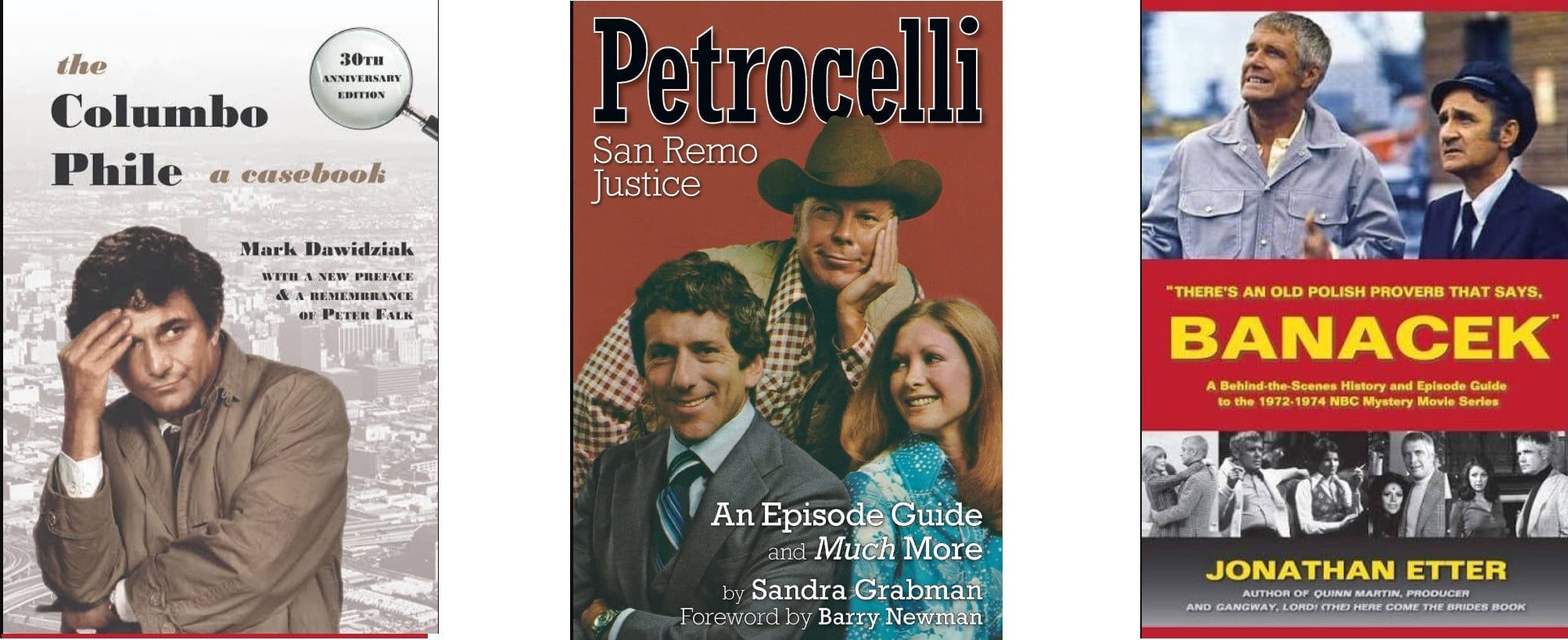
Three books—Sandra Grabman’s Petrocelli: San Remo Justice, Jonathan Etter’s There’s An Old Polish Proverb That Says, “BANACEK,” and Mark Dawidziak’s The Columbo Phile: A Casebook — take readers behind the scenes of these shows and their central characters. Together, they make a compelling case for why the decade still captivates television fans.
Petrocelli -- San Remo Justice. Barry Newman’s Anthony Petrocelli was perhaps the most unusual of the three because he wasn’t technically a detective or investigator.
The character was introduced as the fictional attorney in The Lawyer in 1970, a film loosely inspired by the real-life case of Sam Sheppard, the neurosurgeon who was initially convicted of murdering his wife, Marilyn, in 1954. The television film Night Games aired in 1974 and became the starting point for the Petrocelli series, which ran from 1974 to 1976.
Petrocelli's method was to become an investigator before becoming a courtroom lawyer, as his predecessor, Perry Mason, did and his successor, Matlock, would later adopt. Each episode centred on a crime and on his attempt to understand what actually happened, rather than simply accepting the available evidence.
The writers incorporated the Rashomon effect into the plot, first showing a crime without the criminal. The accused and the police then narrated their versions, which were brought to a conclusion by Petrocelli, whose version was taken as the final one.
Newman gave Petrocelli an intensity that made the character feel less like a traditional television lawyer and more like someone personally driven to uncover the truth. Sandra Grabman's Petrocelli: San Remo Justice takes that world apart and examines how the series came together, including its development, cast, critical reception, and the post-show lives of its stars.
It also benefits from access to people directly involved in the production. Barry Newman contributes the foreword, and Petrocelli fan Max Allan Collins provides the introduction. The book includes about 50 photographs, an episode guide, trivia, and an index, making it especially useful for viewers seeking more than nostalgia.
Polish proverbs. There’s An Old Polish Proverb That Says, “BANACEK.” Long before he took over the reins of the popular 80s TV show The A-Team, George Peppard played Thomas Banacek.
If Petrocelli was driven by justice, Banacek was driven by the challenge, and that’s how they stayed distinct. The 1972-74 NBC Mystery Movie series featured Banacek (pronounced Ban A Check) as an insurance investigator specialising in seemingly impossible thefts.
The cases often followed the locked-room tradition: something had disappeared, apparently without anyone able to explain how. And then Banacek would explain it. His trademark was not only his intelligence but also his personality.
He delivered supposedly Polish proverbs with complete confidence, including the memorable warning: “When a wolf is chasing your sleigh, throw him a raisin cookie, but don't stop to bake a cake.”Jonathan Etter's There’s An Old Polish Proverb That Says, “BANACEK” uses those eccentric sayings as a doorway into the series' history.
The book examines Peppard's performance, the show's development, and the tradition of impossible mysteries that inspired it. It also explores the show's extensive roster of guest stars during its brief run, including Broderick Crawford, Margot Kidder, Stefanie Powers, Anne Baxter, Cesar Romero, and Victoria Principal.
But the most entertaining feature may be the episode guide, which is followed by over 100 challenges for readers to test their powers of observation and concentration and to feel like Banacek for the moment. The Columbo Phile: A Casebook.
If Petrocelli wanted to know why a crime happened, Banacek often wanted to know how something seemingly impossible could have happened at all. But Columbo was a different case altogether, because he arrived on the scene after the crime had been planned and executed in front of the audience.
Peter Falk's Lieutenant Columbo looked as if he’d wandered into the wrong television programme. His rumpled coat, apparently absent-minded manner, and endless references to “my wife” made him seem harmless. But the appearance was deceptive.
Columbo's brilliance lay in catching a killer who believed he had committed the perfect crime. It was about watching Columbo figure out how the killer did it—and, more importantly, watching the killer realise, far too late, that the seemingly confused detective had been paying attention all along.
The ‘howcatchem’ format made Columbo fundamentally different from many traditional detective shows. The first episode of the continuing series, Murder by the Book, premiered in September 1971 and was directed by a young Steven Spielberg.
The audience already knew the murderer's identity, and the pleasure came from watching Columbo gradually dismantle the murderer's carefully constructed alibi. That structure is one reason the character remains so distinctive. The Columbo Phile: A Casebook, by Mark Dawidziak, goes beyond individual episodes to examine the character's creation, the writing of the mysteries, and the series' production history.
Originally published in 1989 and later expanded for its 30th Anniversary Edition, the book also includes material on developments since the original edition and a remembrance of Peter Falk. The behind-the-scenes material is particularly interesting because Columbo was not simply a perfect character in a perfect production.
Dawidziak explores the tensions between Falk's perfectionism and Universal Studios' commercial concerns. That makes the book more than a fan's guide. It also recounts how one of television's most recognisable characters was created and sustained.
Three kinds of mystery. What makes these books work particularly well together is that they present three distinct portrayals of the television detective in what was apparently their golden age. Petrocelli was the lawyer-investigator who had to understand the crime because he ultimately had to argue the case.
Banacek was the problem-solver whose cases were puzzles, often built around the seemingly impossible. Columbo was the psychologist who did not necessarily overpower suspects with evidence. He let them talk, observed their behaviour, and waited for their stories to unravel.
Their personalities were equally distinct. Petrocelli was serious and driven; Banacek was confident, sophisticated, and amused by the intellectual challenge. Columbo deliberately downplayed his intelligence, letting criminals feel superior until it was too late.
That contrast makes revisiting them in these books especially enjoyable. Nostalgia with substance. There is always a risk with books about old television shows.
Nostalgia can easily become an excuse for a collection of photographs, anecdotes, and “remember when?” moments. These three books largely avoid that pitfall by offering context. Petrocelli: San Remo Justice examines the creation and legacy of the series while drawing on the memories of those who made it.
There’s an old Polish proverb that says. “BANACEK” places Banacek within the history of the impossible-mystery genre while giving readers the chance to revisit the individual episodes. And The Columbo Phile examines both the character and the machinery behind one of television's most enduring detective series.
The books also remind us that television mysteries need not be complicated to be clever. They need strong characters, well-constructed puzzles, and writers who understand that audiences enjoy being challenged. Perhaps that is why these shows still draw audiences, decades after their original broadcasts.
Today, detectives can access fingerprints, DNA, surveillance footage, and databases in seconds. In the 1970s, a detective might have to recall what someone said in a conversation three years earlier. Somehow, that made the journey more entertaining.
The three books offer distinct paths back to that television era. For fans of Petrocelli, Banacek, and Columbo, they serve as detailed backstage passes. For younger viewers discovering these characters for the first time, they remind us that television's obsession with crime-solving didn’t begin with streaming platforms.
The technology has changed, but the detectives haven’t. They still ask questions, notice details, and, eventually, solve the case. The writer is a freelance contributor who writes about film, television, and popular culture.
All facts and information are the sole responsibility of the writer. Pages. Pakistan.
Business. World. Opinion.
Life & Style. Sports. Blogs.
Videos. Our Sites. Express News.
Urdu E-Paper. English E-Paper. Sindhi E-Paper.
Cricket Pakistan. Express Live. Campus Guru.
Express Entertainment. Food Tribune. About Us.
Contact Us. Online Advertising. Privacy Policy.
Copyright. Fuel Prices Pakistan. Gold Prices Pakistan.
Prayer Timing Pakistan. Weather Forecast Pakistanfollow us
Continue Reading: More in Tech
Swipe or click arrows to explore Tech desk coverage

1728289383-0/Tribune-Pic-(3)1728289383-0-640x480.webp)