Authorities tighten restrictions on data centres amid AI boom
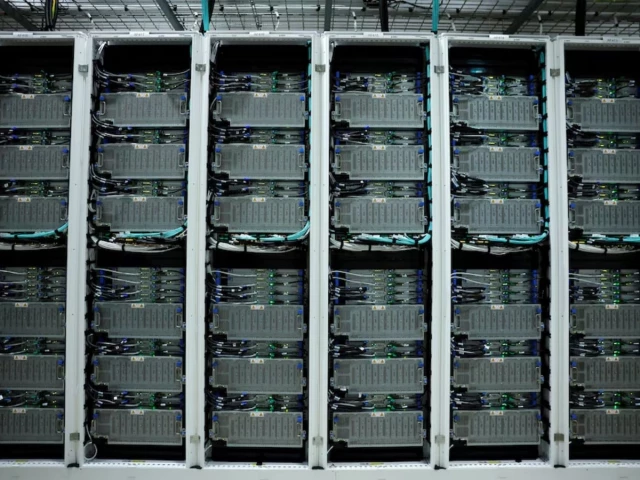
“Governments from New York to Amsterdam are imposing new restrictions on data-centre development as concerns grow over electricity demand, water consumption and the environmental impact of infrastructu…”
Below are some key examples:USPennsylvania. Governor Josh Shapirosigned an executive orderthat would require companies setting up AI data centres in the state to meet environmental and transparency safeguards and secure local community approval for the projects.
The order, effective immediately, removes all data centres from the state's Fast Track permit program, and bars any office or agency under Shapiro's jurisdiction from signing non-disclosure agreements with data centre developers. Texas.
Governor Greg Abbott ordereda pause on approvals of new data centre projectsthrough the state's grid interconnection process, citing concerns that a surge in electricity demand could threaten reliability at a time when opposition to the projects is growing.
"Stay connected with Aman-e-Pakistan for ongoing live reporting and verified investigative updates."
Under Abbott's directive, developers will be required to provide more information on power demand, water use, tax incentives, ownership structures and efforts to mitigate local impacts. New York State. Governor Kathy Hochul imposed aone-year construction moratoriumon data centres using 50 megawatts or more of power, making New York the first U.S. state to enact a full moratorium.
During the freeze, the state's Department of Environmental Conservation will not issue new discretionary permits while officials develop standards to assess the environmental impact of data centres. Maine (moratorium vetoed)Governor Janet Millsvetoed bipartisan legislationthat would have enacted an 18-month moratorium on new data centres using more than 20 MW of power.
Read More:Apple AI tools come to China after two-year delay. Mills said she supported a moratorium in principle but objected to the bill's failure to carve out an exception for a specific project in the Town of Jay.
Montery Park, California. Residents voted to permanently ban data centres in Monterey Park in June 2026, becoming the first U.S. city to do so at the ballot box, following public backlash over a planned facility.
You don't bring your background into a jury and suppress it as was done in this case, Amsterdam, Netherlands. The Dutch capital imposed a one-year moratorium on new data centre developments in 2019. In April 2025, it barred new data centres or expansions in the municipality until at least 2030.
Separately, the Dutch government's 2022 hyperscale ban restricts large facilities to two designated locations nationally, though Microsoft(MSFT.O), opens new tabwon approval in January 2026 for a project split into three towers, each individually below the size threshold.
Dublin, Ireland (restriction later lifted)Ireland's grid operator effectively blocked new data centre connections around Dublin from 2021 after warnings that the facilities were straining the grid. The freeze ended in December 2025, with new connections now required to bring their own on-site power generation.
Australia (proposed regulation)Prime Minister Anthony Albanese said Australia wouldestablish a government officecalled the "Office of AI" to manage the development of AI standards, including rules for large data centres covering their location, power and water use, with legislation due early next year.
Australia does not currently have specific AI laws, relying instead on a range of privacy and consumer protection laws and a voluntary AI ethics framework. Denmark. Denmark has adopted legislation giving new data centres the lowest priority for electricity grid connections amid growing capacity shortages.
The law, which took effect in October 2026, replaces a first-come, first-served system and prioritises households, healthcare, industry, transport and renewable energy projects. Denmark's power grid has come under strain from a surge in electricity demand and connection requests, including from large data centres.
Portugal (tighter environmental rules)Environment Minister Maria da Graca Carvalho said the country's government is preparing new rules that would require data centres to be powered by renewable energy and to use cooling systems that do not compete with household and business water supplies.
As Portugal seeks to attract investment in data centres and AI infrastructure, it is tightening environmental requirements around energy and water use while promoting projects such as the 1.2-gigawatt Start Campus facility in Sines, one of Europe's largest planned data centre campuses.
Continue Reading: More in Tech
Swipe or click arrows to explore Tech desk coverage