Margaret Hamilton, scientist who worked on NASA's Apollo programme, dead at 90
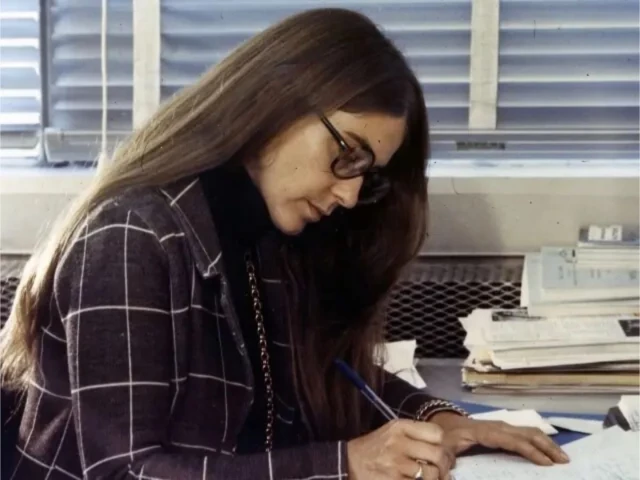
“American scientist Margaret Hamilton, who led development of the computer system used by NASA's Apollo lunar programme, has died at the age of 90, her former employer said Wednesday. In a statement, th…”
In a statement, the Massachussetts Institute of Technology called Hamilton, who taught at the prestigious university from 1959 to the mid-1970s, a "computing pioneer" and said she died on September 30. We’ve lost an icon.
Margaret Hamilton, a computer science pioneer best known for her work at MIT leading development of the flight software for the Apollo missions to the moon, has died at 90. Read about her legacy via MIT News:https://t.co/ODkbd.
Iso. Hwpic.twitter.com/M2xauYYUkU— Massachusetts Institute of Technology (MIT) (@MIT)October 7, 2026"To say Margaret Hamilton was a pioneer — to say she was ahead of her time — would be a dramatic understatement," said Olivier de Weck, the Apollo Programme Professor and interim head of the MIT Department Aeronautics and Astronautics.
"Stay connected with Aman-e-Pakistan for ongoing live reporting and verified investigative updates."
"She was a software engineer at a time when that field was in its infancy, and she not only developed advanced code herself but also led a team in using that nascent technology to develop one of the most complex systems humanity had ever achieved," Weck added.
The famed Apollo programme allowed the United States to beat the Soviet Union in the race to become the first humans to land on the Moon. NASA chief Jared Isaacmen paid tribute on X, calling Hamilton "a pioneer whose work helped make Apollo and humanity's first journeys to the moon possible.
"Margaret Hamilton was a pioneer whose work helped make Apollo and humanity’s first journeys to the Moon possible.
The best way to honor her legacy is to finally pick up where her generation left off and never stop going.https://t.co/SZ16EX5GcK— NASA Administrator Jared Isaacman (@NASAAdmin)October 8, 2026Born in Indiana in 1936, Hamilton studied mathematics before moving to Boston, Massachussetts with her husband in 1959.
She found employment at MIT, working in meteorology before she joined a lab in 1965 that was seeking people to develop software to "send a man to the Moon. "Hamilton "was hired as the first programmer for the Apollo project at MIT, as well as the first female programmer in the project," the university said.
"By 1968, she was assistant director in charge of (Apollo's) Command and Service Module team, and more than 400 people were working on Apollo's software," MIT said. Hamilton was awarded the Presidential Medal of Freedom by former president Barack Obama in 2016 for her achievements.
Read:Trump signs order to create a US Space Academy. In 2009, Hamilton toldMIT News: "There was no second chance. We knew that.
We took our work seriously, many of us beginning this journey while still in our 20s. ""Coming up with solutions and new ideas was an adventure. Dedication and commitment were a given.
Mutual respect was across the board. Because software was a mystery, a black box, upper management gave us total freedom and trust," Hamilton added. "Looking back, we were the luckiest people in the world; there was no choice but to be pioneers," she said.
Hamilton went on to publish more than 130 papers, and started her own software companies Higher Order Software and Hamilton Technologies.
Continue Reading: More in Tech
Swipe or click arrows to explore Tech desk coverage