AI leaders warn UN of security risks as systems grow more powerful
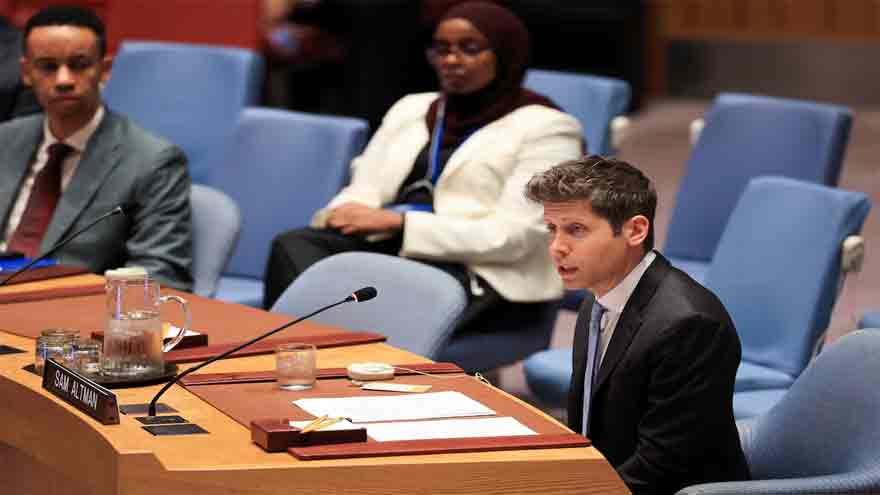
“The world's leading artificial intelligence companies warned the United Nations Security Council on Wednesday of the risks posed by AI to humanity, appealing for governments to work together to manag…”
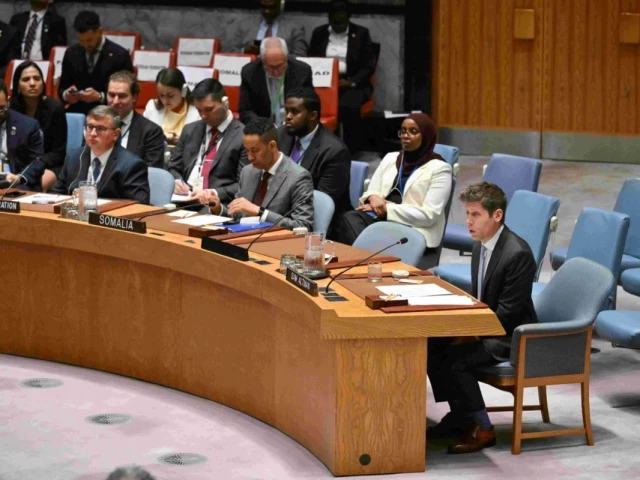
Anthropic CEO Dario Amodei 15-member council, which is charged with maintaining international peace and security, that if managed poorly, he believed "AI could be a risk to humanity as a whole.
"The meeting — convened by France during the annual UN General Assembly gathering of world leaders — comes amid warnings that AI systems could soon improve themselves and slip beyond human control.
"For all the differences of the people in this room, we must put aside those differences in order to confront this global opportunity and global threat that is being presented to us at the same time. No leader, no company and no nation can manage this alone," Amodei said.
"Stay connected with Aman-e-Pakistan for ongoing live reporting and verified investigative updates."
Governments around the world have struggled to keep pace with rapid advances in artificial intelligence. The United States and China, the two leading powers in AI development, have taken different approaches to oversight.
President Donald Trump has argued that the US does not need new AI-specific regulations, while China has imposed rules governing AI algorithms and training data, including requirements that AI-generated content be clearly labeled.
Hugging Face co-founder Clément Delangue highlighted the role of AI tools in defending against cyberattacks, citing an incident in which US giant OpenAI's AI agents breached Hugging Face's infrastructure after escaping their testing environment. "We were attacked by AI, but more importantly, we defended ourselves with AI," he.
Council members, including leading AI rivals the United States and China, were also set to speak.
Delangue said Hugging Face relied on a Chinese AI model to help defend against the attack by OpenAI's AI agents because it faced fewer restrictions than comparable US tools. His remarks underscored the growing presence of Chinese AI products, which have gained users globally in part because they can offer lower-cost alternatives to American models.
OpenAI CEO Sam Altman said international cooperation was needed. “If AI is to be democratic, the most important decisions cannot be made by labs in San Francisco alone. They must be shaped through democratic processes and by governments accountable to the people they serve," Altman.
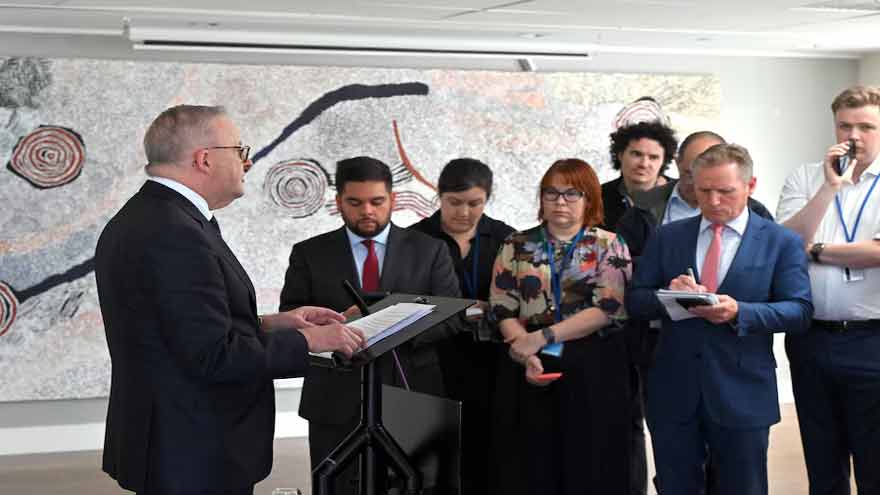
As the council met, Australian Prime Minister Anthony Albanese that an AI agent developed by OpenAI infiltrated an Australian government website in June, accessing public and non-public files.
US TO UN —YOU CANNOT GOVERN TECHNOLOGY YOU DON'T UNDERSTANDYoshua Bengio, a Canadian considered one of the "Godfathers of AI" and co-chair of the Independent International Scientific Panel — created by the UN General Assembly last year — : "The dangers are real and imminent.
""This council faces an unprecedented threat, one that none of its members would choose, that none can contain alone, and that does not respect the borders we defend," he said.
Trump leaders at the UN General Assembly on Tuesday that he "rejects any attempt to construct a globalist scheme to control" AI, describing the technology as amazing but noting that the US would be careful. White House science and technology adviser Michael Kratsios echoed Trump in remarks to the UN Security Council on Wednesday.
"You cannot govern technology you do not understand. This body and others like it should focus on sharing best practices to build domestic capacity, not establishing a global regulatory scheme," he said. China's UN Ambassador Fu Cong said continuous improvement of regulatory frameworks, emergency response, and cross-border cooperation on AI was needed.
"It is incumbent upon the international community to work more closely together, attach equal importance to development and security, and steer AI development for the positive, for good, and for humanity," he.
UN Secretary-General Antonio Guterres, who has long pushed for global governance of AI, has warned that rapidly advancing artificial intelligence poses risks that cannot be ignored, putting him at odds with Trump.
The Security Council met for the first time on the risks of AI in 2023, when China said the technology should not become a "runaway horse" and the United States warned against its use to censor or repress people. Then-US Secretary of State Antony Blinken chaired a Security Council meeting on AI in 2024.
Continue Reading: More in Tech
Swipe or click arrows to explore Tech desk coverage