USF approves Rs32.9b to push 4G projects
“The Universal Service Fund (USF) policy committee approved a Rs32.90 billion budget for fiscal year 2026-27 on Tuesday and advanced 15 4G projects that target 3.66 million people across 1,893 mauzas i…”
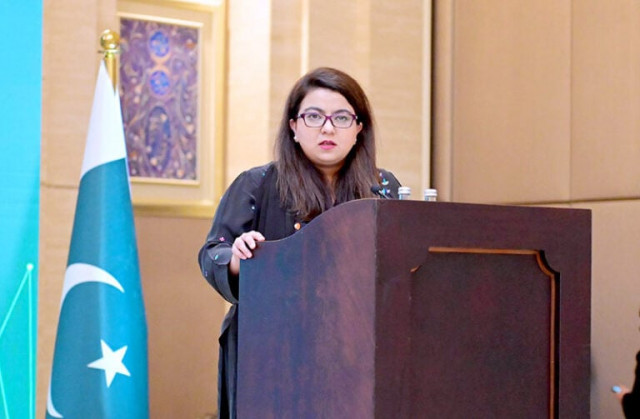
Federal Minister for Information Technology and Telecommunication Shaza Fatima Khawaja chaired the meeting. USF Chief Executive Officer Mudassar Naveed and senior management presented the programme portfolio and budget priorities. The committee allocated Rs24.89 billion for payments on ongoing work and set aside Rs6.56 billion for new initiatives.
It also released Rs5.57 billion for the first quarter so teams could execute the approved programme without delay. USF currently runs 28 projects – 17 Next Generation Broadband Service Delivery schemes and 11 Next Generation Optical Fibre Network Services schemes.
The new allocation covers nine additional NG-BSD projects, four NG-OFNS projects and block funds for small lots that reach remote settlements. Official project data shows that 15 contracted 4G schemes carry a combined subsidy of Rs14.008 billion and cover a target population of 3.66 million.
"Stay connected with Aman-e-Pakistan for ongoing live reporting and verified investigative updates."
The Kurram project leads progress with 75% completion. It covers 40 mauzas and 251,980 people with a Rs92.25 million subsidy. Five projects stand at 50%, which include Pishin, Chiniot, Abbottabad, Badin and Kohat.
Pishin spans Pishin, Killa Abdullah and Quetta, covers 306 mauzas and targets 574,545 people with a Rs1.32 billion subsidy – the largest population among the 15 schemes. Chiniot covers 117 mauzas and 333,267 people. Abbottabad covers 61 mauzas and 157,473 people.
Badin covers 144 mauzas and 432,666 people. Kohat, including the former Frontier Region Kohat, covers 24 mauzas and 41,404 people. Umar Kot and Khuzdar stand at 25%.
Umar Kot covers 142 mauzas and 243,695 people with a Rs914.61 million subsidy. Khuzdar covers 144 mauzas and 75,637 people and holds the largest subsidy of about Rs2.945 billion. Work continues on Small Lot P-15, Gujranwala, Muzaffargarh, Mansehra, Haripur, Rajanpur and Sujawal.
Small Lot P-15 covers nine mauzas in Bahawalnagar, Faisalabad, Sheikhupura and Hafizabad and targets 15,700 people. Gujranwala and Mandi Bahauddin cover 160 mauzas and 234,573 people. Muzaffargarh targets 498,927 people across 138 mauzas.
Rajanpur covers 215 mauzas and 301,512 people. Sujawal covers 144 mauzas and 246,759 people. These projects extend 4G coverage, open online services and create connectivity-enabled opportunities in underserved communities.
The Ministry of IT and Telecom and USF pursue digital inclusion and close the digital divide through sustained, targeted investment. WITH ADDITIONAL INPUT FROM APP
Written by Sheheryar Munawar
Aman-e-Pakistan Senior Journalist & Bureau Reporter
Continue Reading: More in Tech
Swipe or click arrows to explore Tech desk coverage