Anthropic mathematician claims AI-assisted breakthrough on 167-year-old math problem
“A mathematician at the US artificial intelligence company Anthropic on Friday claimed that he and the company's Claude AI model have solved the 167-year-old Riemann Hypothesis, one of mathematics' mos…”
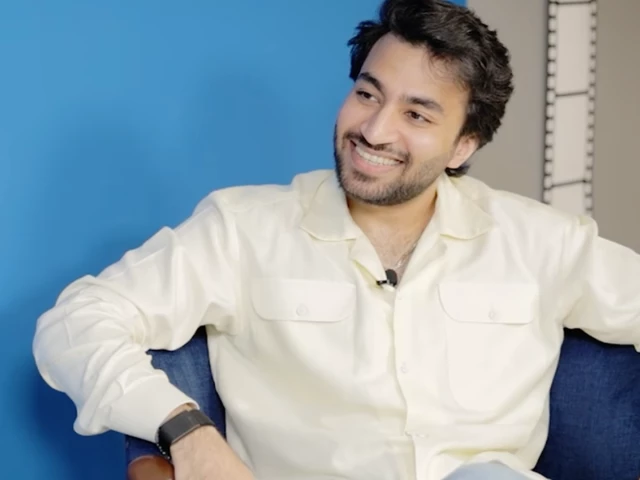
Levent Alpoge said he discovered a proof of the hypothesis, first proposed by German mathematician Bernhard Riemann in 1859. "I believe I have, working with Claude, discovered a proof of the Riemann Hypothesis," Alpoge wrote in a four-page statement published on his website.
The Riemann Hypothesis concerns the distribution of prime numbers, which are divisible only by themselves and one. A successful proof could deepen mathematicians' understanding of fundamental numerical patterns and have implications for computer science, cryptography and theoretical physics.
The hypothesis is one of seven Millennium Prize Problems identified by the US-based Clay Mathematics Institute, each carrying a $1 million prize for a successful solution. Alpoge said Claude played a crucial role in developing the proposed proof, at times advancing beyond his own mathematical understanding.
"Stay connected with Aman-e-Pakistan for ongoing live reporting and verified investigative updates."
Read More:Signal restricts screenshots to block AI agents from reading messages"Claude far outpaced me near the finish line," he wrote. The researcher also claimed to have solved a broader version of the problem. He said he released the mathematical argument in Lean, a programming language designed to verify mathematical proofs and detect logical errors.
Andrew Sutherland, a mathematician at the Massachusetts Institute of Technology, reported that the submitted code has passed several independent computer verification checks. However, additional checks were still underway,. The claimed breakthrough has not yet received broad acceptance from the mathematical community.
Continue Reading: More in Tech
Swipe or click arrows to explore Tech desk coverage