France and Germany want deal by year-end to 'Le Pen-proof' next EU budget and Ukraine funding
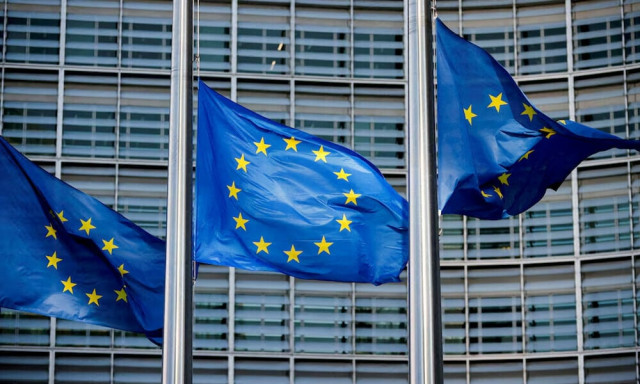
“France and Germany want the European Union to reach a deal in the next month on its 2028-2034 budget and financing for Ukraine ahead of a slew of elections across the bloc in 2027, but leaders made li…”
While the next EU budget only starts in 2028, leaders want a deal by year-end because France, Italy, Poland, Greece, Estonia, Finland and Slovakia all hold elections next year, which could complicate negotiations on the almost €1.6 trillion ($1.8 trillion) draft budget that pays for all of the EU's key policies.
The seven-year budget requires unanimous approval from all 27 member states. The possibility that French far-right leader Marine Le Pen, who leads in the polls, becomes president after elections in April and May has focused minds.
Le Pen has vowed to end financial aid to Ukraine, which isfighting off Russia, and slash French contributions to the EU budget. Deadline is December 31French President Emmanuel Macron until the end of the year to strike a deal.
"Stay connected with Aman-e-Pakistan for ongoing live reporting and verified investigative updates."
"After 31 December, I will no longer be in a position, politically or democratically, to reopen discussions on the budget and bring them to a conclusion, as we will be entering a period far too close to the presidential election in France," Macron said. German Chancellor Friedrich Merz also mentioned end-2026 as the deadline that leaders were working towards.
The talks on Thursday, while inconclusive, are to help the chair of EU summits, Antonio Costa, present a budget proposal in the coming weeks on which EU governments might agree at a meeting on December 17 and 18.
Read:EU proposes tax on Big Tech to boost budget"Even negotiations that do not lead to the desired outcome or the most positive result possible are necessary to make progress," Austrian Chancellor Christian Stocker. "Even though we were apparently unable to bridge our differences today, we may know what is necessary to ensure success next time.
"Under the current proposal, the seven-year budget totals €1.582 trillion, which includes €140 billion to repay pandemic-era borrowing. The biggest line item is around €740 billion to support European farmers and help the poorest regions of the EU catch up with the richer ones.
Money for Ukraine. Leaders must also sort out how to continue financing Ukraine as Kyiv defends itself against a Russian invasion that started in 2022. The 2028-2034 budget draft includes up to €100 billion for Ukraine, which diplomats say falls well short of the country's needs.
The talks also cover aid to Kyiv in 2027 because a proposed loan intended to raise funds for Ukraine would be borrowed against the EU's current budget, which expires at the end of next year. The EU wants to borrow €45 billion and lend it to Ukraine, to be repaid only when Russia pays war reparations.
In 2027, non-EU countries such as Britain, Norway, Japan, Switzerland and Canada are expected to provide another €25 billion for Ukraine. The combined €70 billion would cover the funding gap that Ukraine faces next year.
Division between net contributors and net beneficiaries. One of the fights is over whether all EU countries should contribute to the €45 billion loan to Ukraine. Slovakia, the Czech Republic, Hungary and Bulgaria object, but Germany and several other countries have made participation a condition of a broader budget deal.
"For me, there is a link between our support for Ukraine and the European budget," Merz said. "The European Union comprises of 27 member states, not 23 or 24. "Read More:EU proposes 40b Euros cut to long-term budget.
The four objecting countries are major net beneficiaries of EU spending. The debate is a microcosm of ongoing divisions between countries that contribute more to the EU budget than they get from it, such as Germany, Sweden, the Netherlands and Finland, and those that on balance receive more than they pay.
The net contributors want EU budget reductions, which would lower their contributions, and urge that spending prioritise making the EU more competitive against rivals like the US and China rather than subsidising European agriculture and poor regions.
The net beneficiaries say that the budget should have money for both aims, and believe doing that would sustain public support for the EU in the face of far-right political parties' rising popularity throughout Europe.
Written by Sheheryar Munawar
Aman-e-Pakistan Senior Journalist & Bureau Reporter
Continue Reading: More in Tech
Swipe or click arrows to explore Tech desk coverage