After Vucic defeat, Serbia waits to learn how student-backed leaders will govern
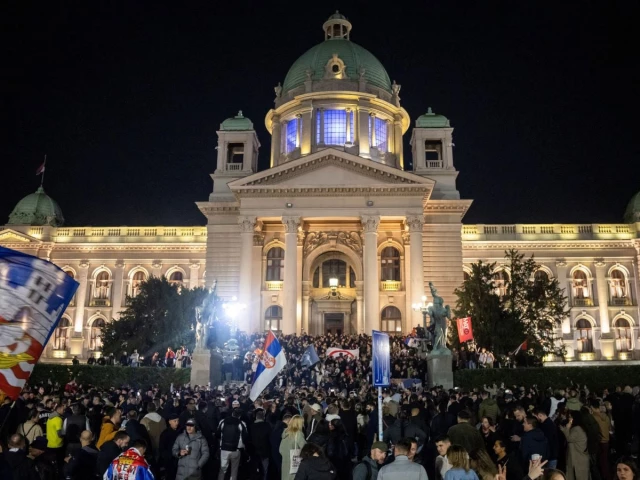
“Serbia woke to a new era on Monday after a student-backed protest movement unseated longtime leader Aleksandar Vucic in a historic landslide election that sparked nationwide celebrations, although few…”
Tens of thousands took to the streets of Belgrade and other cities and towns across Serbia after Vucic conceded defeat late on Sunday, capping two years of peaceful anti-government protests calling for the populist ruler to step down.
With almost 99% of votes counted, the students' candidates had secured a commanding 52.7% of the vote,, versus 39.2% for Vucic's Serbia Progressive Party (SNS)-led alliance. That gives the students 139 seats in the 250-seat parliament, leaving the SNS alliance with 97, and the remainder held by minority parties.
The constitution allows up to 90 days for the creation of a government, once the parliament is convened after the announcement of final results by the State Election Commission. "I thought it was unbelievable, I still do not believe it.
"Stay connected with Aman-e-Pakistan for ongoing live reporting and verified investigative updates."
It was too long, and (Vucic) was pressuring us for a long, long time," said university administrator Marijana Radovanovic Pajovic. Vucic dominated Serbian politics as prime minister or president from 2014.
But he was swept from power by a list of student-backed candidates born out of anti-corruption protests following the deaths of 16 people in the collapse of a train station canopy in the city of Novi Sad. Profound political shift.
The students' win marks a profound political shift in the country of some 6 million people and is reminiscent of the defeat of Hungary's Viktor Orban in April. It may also offer inspiration to other student movements that have cropped up across Europe in recent weeks demanding better education standards and prospects.
Read More:Lula says bus cuts hinder voters in Brazil. While the students' candidates include university professors, actors and farmers, the movement is without a leader - a strategy employed during protests to avoid any smear attempts by the government.
It is unclear who will become prime minister and assume other key positions in order to enact the students' domestic agenda, which aims to root out graft and improve schooling, and manage the country's place on the international stage.
"This corruption that has entered into all pores of our lives...of course it will change, we are hoping we will slowly go into that direction of a normal community," said 60-year-old insurance worker Svetlana Karagkozidou.
Prominent figures include the head of the students' candidate list, cardiologist Ilija Srdanovic, former central bank governor Dejan Soskic and Radomir Sajcic, a professor at Belgrade University, who spoke on behalf of the students following their victory. However, not everyone welcomed the change.
"Changing the country like that so suddenly and all at once, I don't like it. I don't even know who is standing behind, who those people are, who will be leading the country," said 60-year-old civil worker Senka Radakovic.
Meanwhile, supporters of the student movement set about cleaning up a park near the parliament building in Belgrade that had long been used as a camp by Vucic's supporters. They removed metal barricades and tents and cleaned stickers off children's play equipment.
"I think it is one of Belgrade's most beautiful parks, that they took from us for a year or a year-and-a-half, and this is the least we can do right now," said one of the cleaning volunteers, Filip Beselinovic. Vucic and the SNS repeatedly denied accusations of repression and corruption.
Continue Reading: More in International
Swipe or click arrows to explore International desk coverage