Nepal teams seek hundreds trapped in hydropower tunnels after deadly floods
“Nepal's rescue teams, helped by Chinese and Indian experts, stepped up efforts on Monday to reach hundreds of people believed to be stuck inside blocked hydropower project tunnels in the aftermath of…”
The unprecedented deluge of ice, rock, mud and debris on the Nepal-Tibet border on Wednesday – blamed on a glacier collapse – killed more than 900 people and nearly 5,000 are still missing.
Hundreds of bodies, many unidentified, have been buried in shallow graves as they began decomposing in the humid weather in the plains of the Himalayan country after being swept down the mountains by the torrent.
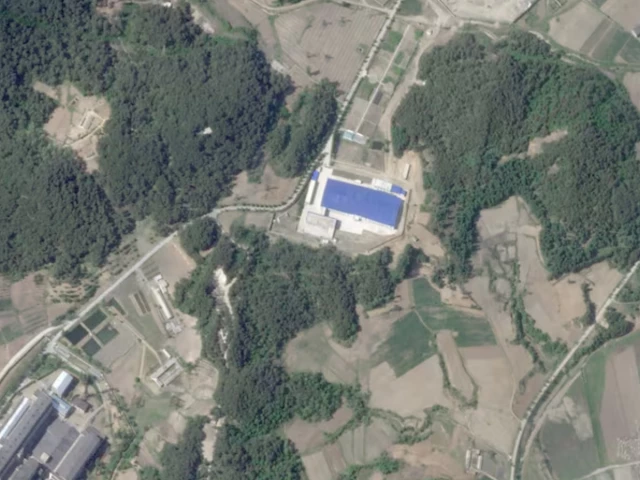
Nepali officials said that the focus was on reaching the 933 workers believed to be trapped at 11 hydropower projects, including many who were working in about half a dozen tunnels, in the two hard-hit districts of Rasuwa and Nuwakot.
"Stay connected with Aman-e-Pakistan for ongoing live reporting and verified investigative updates."
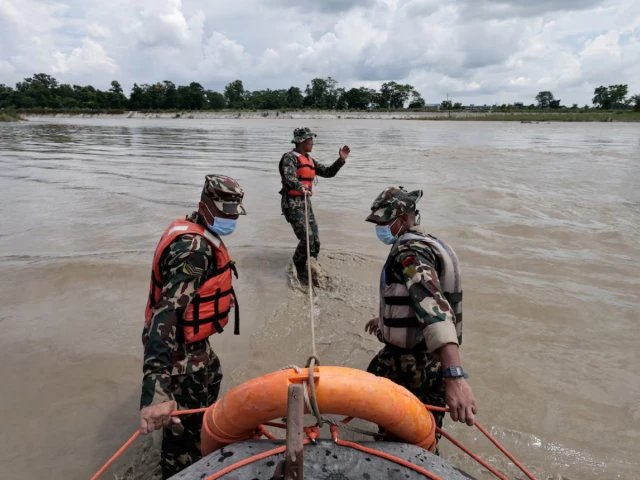
Pictures and videos shared by rescue teams showed earth-moving equipment digging and shovelling mud and rocks under lights in the dark of the night as workers watched. Soldiers used torchlight in a big pit they had created to look for space to get into one tunnel.
The Nepali army said search-and-rescue teams were using controlled blasts, excavators and searchlights to clear water and mud and reach trapped people. Teams recovered three bodies after entering two tunnels, while other sections remained buried in mud and were still being searched, it said.
“A large amount of debris has been deposited, and that is posing us a big challenge to open the tunnels,” Nepal army spokesperson Raja Ram Basnet. “Our main focus is on opening the tunnels.”Read:800 dead in Nepal-Tibet floods, 3,000 missing.
Nepal's hydropower projects boom. On Monday, Nepali authorities said 903 people had died, with 4,247 missing, including the 933 at hydropower projects. On the Chinese side, authorities said 16 people were killed in Gyirong County and 546 were missing.
The Red Cross has estimated that more than 90,000 people are likely to have been affected by the disaster, which China has linked to the effects of climate change.
There has been a boom in hydropower projects in Nepal since the turn of the century as the mountainous country sought to take advantage of its Himalayan water resources to address chronic domestic power shortages and exploit prospects of selling electricity to southern neighbour India.
Hydropower projects in Nepal's mountains need tunnels to carry water through the steep terrain, allowing developers to exploit the sharp elevation drop between Himalayan rivers and powerhouses to generate electricity. Prime Minister Balendra Shah said the flood was an “unprecedented and devastating natural disaster” and it remained challenging to compile a complete assessment of the damage.
Beijing has said 261 foreign nationals from 23 countries were unaccounted for in Tibet, near a key border crossing with Nepal. On Monday, Chinese foreign ministry spokesperson Guo Jiakun said that nearly 100 Chinese citizens have not been contactable on the Nepalese side.
Besides tunnel experts, Beijing has provided emergency cash assistance and humanitarian aid to Nepal, he said. "Currently, China is making every effort to search for and rescue missing persons both domestically and internationally, while maintaining close communication with foreign embassies in China to jointly conduct a thorough investigation of missing foreign nationals," Guo added.
Risks from lakes and landslides. Although Nepal has said that it does not need foreign help in general rescue and search, it has leaned on giant neighbours India and China for their expertise in tunnel rescue.
Rescue operations have been suspended several times because of bad weather and concerns that a lake formed across the Nepal-China border by the disaster could trigger fresh flooding after it began overflowing into Nepal's rivers.
On Monday, China’s state television CCTV said that glaciers around an impact crater carved out near the site of last week's glacier collapse on the Nepalese side remained at risk of collapse. Drone footage showed multiple landslide deposits along both riverbanks, posing a risk of further collapses and the formation of new lakes, it said.
Last week's flood was "caused by glacier instability under the long-term effects of global warming", the state broadcaster reported, saying it was a "new and prominent feature of cryosphere disasters" on the Tibetan plateau. Two Nepali officials told.
Reutersthat China had not shared much information on glacier risks and water levels following a meeting to strengthen cooperation earlier this year, and they feared that a lack of data sharing could hamper future disaster preparedness.
The Chinese foreign ministry said that Beijing had continuously provided Nepal with meteorological and hydrological data and will continue to "strongly support" Nepal's disaster relief efforts and safeguard the two countries' common interests.
Thedisaster struck on August 26when a glacier on Nepal’s Mount Langtang Lirung fractured at an altitude of about 5,200 meters, triggering an ice-rock avalanche that developed into a massive debris flow and swept through valleys along the border.
The huge surge in water, along with mudslides, devastated Rasuwa, Nuwakot, Dhading, Kavre and the Kathmandu Valley in Nepal, as well as burying the Gyirong border area on the Chinese side.
Continue Reading: More in International
Swipe or click arrows to explore International desk coverage