New York on screen: A movie lover’s guide to the city’s iconic film locations
“For generations of movie lovers, New York's bridges, avenues, subway stations, parks, museums and neighbourhood cafés have existed not merely as landmarks, but as pieces of cinematic memory. A walk thr…”
A walk through Manhattan can feel strangely familiar: perhaps you have never lived there, yet you know the corner where a heroine hurried to work, the park where two characters fell in love, or the bridge where a movie star stood against the skyline. For Bollywood audiences, New York has long carried a particular romance.
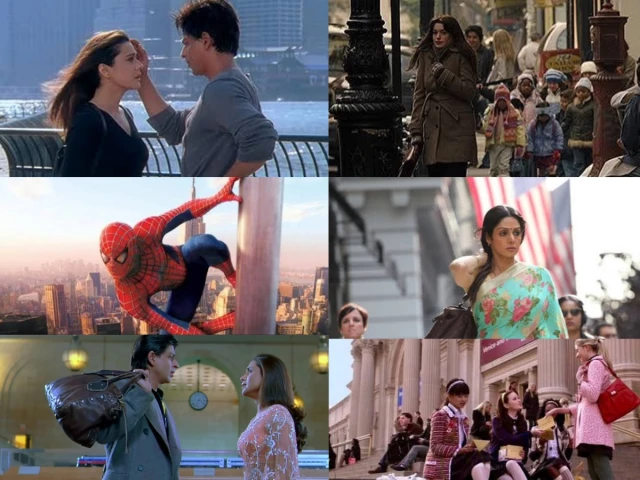
From Shah Rukh Khan and Preity Zinta wandering through Manhattan in. Kal Ho Naa Hoto the complicated love stories of. Kabhi Alvida Naa Kehna, the city became part of the emotional vocabulary of Hindi cinema.
Hollywood, meanwhile, has turned the same streets into everything from a fashion editor's playground in. The Devil Wears Pradato a superhero's battleground in. Spider-Man.
"Stay connected with Aman-e-Pakistan for ongoing live reporting and verified investigative updates."
And then there are films such as. Past Lives, which use the city more quietly, allowing its bridges, waterfronts and ordinary streets to hold the weight of memory. For film fans visiting New York, the result is almost a cinematic treasure hunt.
When Shah Rukh Khan made New York feel like Bollywood in. Kal Ho Naa Ho. Few films have connected Bollywood and New York as memorably as.
Kal Ho Naa Ho. Released in 2003, the Nikkhil Advani-directed film follows Naina, Aman and Rohit, played by Preity Zinta, Shah Rukh Khan and Saif Ali Khan, through a New York that feels both enormous and intimate.
The movie's locations became almost as recognisable as its stars. Bethesda Terrace in Central Park is among the most evocative stops. The terrace, fountain and surrounding walkways appear in the film's musical sequences, while the Brooklyn Bridge and Manhattan's skyline provide another unmistakable visual backdrop.
PHOTO —On The Set of New York. According to location research by. On the Set of New York, Kal Ho Naa Hoalso used Times Square and Bow Bridge, and frequently filmed by the pier showcasing the East River.
The film's pizza restaurant is another particularly interesting stop: location research identifies the former setting of Jenny's restaurant at 82 Reade Street in Tribeca. For Bollywood fans, however, the appeal is not simply standing in the same place as the actors.
It is the sensation of seeing a familiar film world suddenly become three-dimensional. Kabhi Alvida Naa Kehna. Karan Johar's.
Kabhi Alvida Naa Kehnagave New York an altogether different mood. Released in 2006, the film placed its characters' complicated relationships against a city of skyscrapers, parks, railway stations and winter streets. But there is an important detail for movie-location hunters: although the story is set in New York, not every supposedly New York location was actually filmed there.
PHOTO —Daily Nutmeg. According to locationrecords, significant portions of the film were shot elsewhere in the United States. The production used locations in New York, New Jersey, Connecticut and Pennsylvania, with New Haven's Union Station and Philadelphia's 30th Street Station standing in for some scenes associated with Grand Central.
The song. Tumhi Dekho Naa, meanwhile, made extensive use of recognisable locations in and around New York. Location accounts identify Columbia University, Wall Street, St Patrick's Cathedral and Pier A Park in Hoboken among the places used for its colourful sequences.
That distinction is part of the fun of film tourism: sometimes the place on screen is exactly where you think it is, and sometimes the magic of filmmaking has quietly moved it somewhere else. And then there was Sridevi in Manhattan.
Bollywood's relationship with New York is not limited to romance. In Gauri Shinde's. English Vinglish, New York becomes the setting for Shashi Godbole's personal transformation.
Sridevi's character arrives in. Manhattanuncertain and uncomfortable, gradually learning to navigate the city and an English-language environment on her own. PHOTO: IMDb.
The film was shot primarily in New York, and Manhattan is not treated simply as a postcard. It is initially overwhelming for Shashi before gradually becoming a place she can navigate with confidence. The song.
Manhattancaptures that transformation through a lively tour of the city, turning shopping streets, skyscrapers and Manhattan's famous urban landscape into part of Shashi's journey. Contemporary coverage of the film also highlighted the sequence's playful references to New York shopping and its city-tour quality.
Spider-Manroute. For Hollywood fans, few New York film trails are as instantly recognisable as. Spider-Man.
The Roosevelt Island Tramway became part of the visual language of Sam Raimi's 2002Spider-Man. In the film, the tram and the Queensboro Bridge form the setting for the climactic confrontation involving Spider-Man, the Green Goblin and Mary Jane.
The tramway has subsequently become one of the city's most recognisable film-related attractions. PHOTO: The ASCThe Roosevelt Island Tramway itself is worth taking even without the superhero connection. The aerial ride crosses the East River between Manhattan and Roosevelt Island, offering a perspective of the skyline that is difficult to reproduce from street level.
In. Spider-Man 2, Peter Parker works as a pizza deliveryman and eventually loses his job after a late delivery. The pizza shop used for those scenes was Joe's Pizza in Greenwich Village at 233 Bleecker Street; the famous.
Joe's Pizzaoperation is now associated with its Greenwich Village location at 7 Carmine Street. Joe's Pizza has therefore become an easy stop for anyone wanting to recreate a very different kind of New York movie moment: less romance, more "friendly neighbourhood Spider-Man".
Jane's Carousel: where. Past Livesfound its quiet New York. Not every cinematic New York moment needs a skyscraper.
One of the most beautiful examples is. Jane's Carouselin Brooklyn Bridge Park, featured in Celine Song's. Past Lives.
PHOTO —Untapped Cities. The film brings Nora and Hae Sung together in New York after years apart, and their conversation beside the carousel is charged with the awareness of their childhood selves and the lives they have since built.
Sung has explained why the location mattered to her. In an interview about the film, she described the carousel as something that represented where the characters were emotionally — their childhood selves still existing in their memories, even though they are now adults.
She was also drawn to the delicate glass enclosure surrounding the carousel. The Met steps and the Upper East Side belong to. Gossip Girl.
For a different version of New York glamour, head uptown. The Upper East Side became almost inseparable from. Gossip Girl, the television series that transformed Manhattan's young elite into a world of private schools, designer clothes, penthouses and carefully guarded secrets.
PHOTO —Rolling Stone. The steps of The Metropolitan Museum of Art became one of the show's mostrecognisablegathering points.
Blair Waldorf, Serena van der Woodsen and their friends famously occupied the steps, turning an entrance to one of the world's great museums into a piece of teen-TV mythology., the Met's Fifth Avenue steps were used as the place where Blair and her friends took lunch breaks before heading to their fictional schools.
The series also used locations including the Lotte New York Palace. For visitors, the Upper East Side offers something different from the frantic energy of Times Square. Here, the cinematic fantasy is quieter: Fifth Avenue, Central Park, grand apartment buildings and museum steps become the backdrop to a polished New York life.
Fashion's New York:The Devil Wears Prada. IfGossip Girlpresented the fantasy of Manhattan's social elite, The Devil Wears Pradatook viewers inside the city's fashion-and-media machinery. Anne Hathaway's Andy Sachs moves through a recognisable Manhattan, travelling between her Lower East Side home and the fictional Runway magazine headquarters.
PHOTO —House & Garden. The building used for the exterior of the fictional Elias-Clarke/Runway headquarters is 1221 Avenue of the Americas, while Smith & Wollensky appears as the restaurant where Andy has to pick up Miranda Priestly's lunch.
The American Museum of Natural History also serves as the exterior of the museum gala. The movie wasshotprimarily in New York and Paris, with New York providing much of its visual identity. A film fan can therefore build an entire fashion-themed walk around the movie: Lower East Side streets, Midtown, Madison Avenue, Central Park and the Upper East Side.
And, appropriately, the city itself becomes the ultimate accessory.13 Going on 30Before social media turned every New Yorkstreetinto a backdrop for a photograph,13 Going on 30gave audiences another glossy version of Manhattan. PHOTO: The Hollywood Reporter.
Jennifer Garner's Jenna Rink wakes up as an adult and discovers a life as a successful magazine editor. Her fictional workplace, Poise magazine, was represented by locations including 444 Madison Avenue, while her apartment was filmed at 51 Fifth Avenue.
The movie also used Times Square, Central Park, the New York Public Library and several Greenwich Village locations. For visitors, this is perhaps one of the most satisfying movie trails because the film jumps naturally between the city's neighbourhoods: Fifth Avenue glamour, Greenwich Village streets, Central Park and Midtown.
It is New York as seen through the eyes of someone suddenly given permission to experience everything at once. Night at the Museum. For an entire generation of children, the American Museum of Natural History was not simply a museum.
It was the place where dinosaurs could roar, statues could talk and a night watchman could suddenly find himself surrounded by a world that had come alive. Ben Stiller's. Night at the Museumturned the museum at Central Park West and 79th Street into one of the most recognisable cinematic landmarks in New York.
PHOTO —Variety. The real museum was used for exterior filming, while many of the elaborate interior sequences were recreated on soundstages in British Columbia. But for moviegoers, that distinction almost does not matter.
Walk up to the museum today and the memories arrive immediately: Larry Daley beginning his first night shift, Rexy the T-rex, the miniature cowboys and Romans, Teddy Roosevelt appearing in the darkness, and the entire museum becoming a world of its own. The American Museum of Natural History has even highlighted the realexhibitsthat inspired the.
Night at the Museumfilms, giving visitors the chance to connect the movie's fantasy with the actual museum collections. And that may be one of the reasons New York works so well on screen: it can represent different things to different characters.
To one person, it is a place to fall in love. To another, it is a place to reinvent yourself. Perhaps the greatest pleasure of following New York through movies is discovering that the real city is both more ordinary and more extraordinary than the cinematic version.
But for movie lovers, the real magic begins when the screen ends and you find yourself standing inside the frame.
Continue Reading: More in International
Swipe or click arrows to explore International desk coverage