Oil prices fall as markets look to Iran truce, but remain wary of attacks on oil facilities
“Oil prices fell slightly on Friday as markets weighed the possibility of a truce between the US and Iran against the bombing of Saudi Arabia by Houthi rebels after a week of price spikes. Brent was d…”
Brent was down 87 cents, or 0.82%, at $105.73 a barrel at 0212 GMT, while West Texas Intermediate (WTI) was down $1.56, or 1.65%, at $93.05 a barrel. The sluggish opening was a contrast to a week of volatility when oil prices rose to a one-week high on Thursday.
Both contracts rose as much as 5%. Brent settled up 3.4% and WTI was 2.7% higher. Brent notched its highest close since September 15.
It was the first rise in days for WTI, which was down 13% over the prior six sessions and is down 6.42% for the week, compared with Brent’s 2.09% rise. The spread between Brent and WTI is the widest it has been since May at $12.68 when it was over $13.
"Stay connected with Aman-e-Pakistan for ongoing live reporting and verified investigative updates."
Fears of a US ban on diesel exports that could flood the domestic market are largely responsible for the price bifurcation, given that the two benchmarks usually rise and fall in tandem, despite the US contract usually selling for a discount.
"The unusually wide WTI-Brent spread also reflects the different regional risk profiles at play," said Tim Waterer, chief analyst at KCM Trade.
US and Iranian negotiators in New York are exploring a phased path out of war that would involve Tehran reopening the Strait of Hormuz and Washington lifting its economic blockade of Iran, sources close to the talks said this week.
Since the war began at the end of February, around a fifth of the world’s oil and gas shipments have been curtailed, pushing up prices by 50% in March alone while driving liquefied natural gas buyers to look further afield for new, stable supplies of the super-chilled fuel.
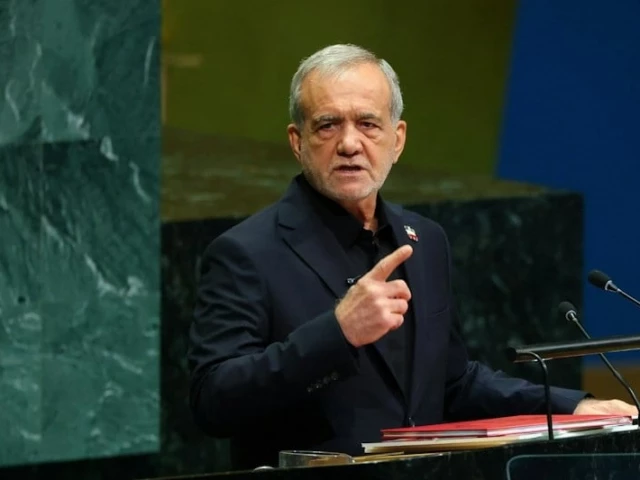
On Thursday, Iranian President Masoud Pezeshkian said it was up to the US to choose when the Iran war will end. "It's America that must choose whether it wants to end this or not," Pezeshkian said, responding to a question in an interview aired on Thursday on Fox News.
Saudi Arabia intercepted six ballistic missiles fired by Yemen's Iran-backed Houthis, thwarting attacks on the southern province of Taif and the Yanbu area on the Red Sea, the Saudi-led coalition in Yemen said. Ongoing attacks “serve as a clear reminder that critical oil assets remain firmly in the firing line,” Waterer said.
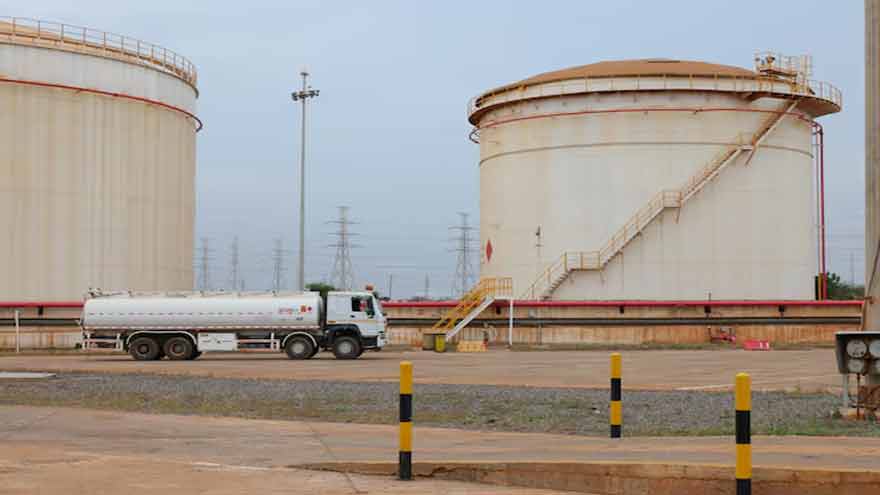
Saudi Arabia is building up crude pumping volumes through its East-West Pipeline that runs to its Red Sea export hub of Yanbu, although crude tanker loadings have yet to resume,, satellite imagery and shipping data.
Continue Reading: More in International
Swipe or click arrows to explore International desk coverage