'Very good' US-Iran talks crack open diplomatic door
“The United States and Iran held a three-hour meeting on Tuesday as Tehran signalled a willingness to revive diplomacy and potentially reopen the strategically vital Strait of Hormuz, even as US Presid…”
Trump Nations that US officials had held a "very good" three-hour meeting with the Iranian delegation. He gave few details, saying the talks had ended about an hour before he spoke to reporters. "It was a meeting that lasted for three hours.
It was a very good meeting," Trump said. "I can't imagine why they wouldn't want to do it; it's greatness or obliteration," he remarked hours after his address to the UN General Assembly.
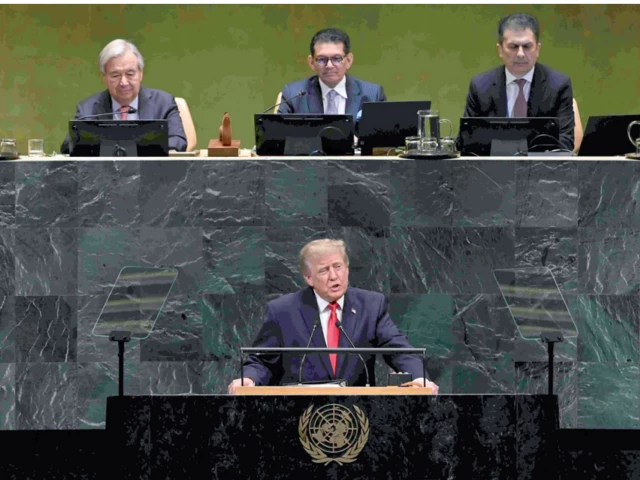
Trump used the speech to issue a stark warning to Tehran, saying he faced a choice between reaching a deal and destroying Iran's ability to attacking against other countries.
"Stay connected with Aman-e-Pakistan for ongoing live reporting and verified investigative updates."
"I have a big decision to make," the US president, asking whether a deal could allow Iran to rebuild or whether he should "annihilate the Islamic Republic" and drive it "into hell with no chance of survival". The Iranian delegation did not attend the session when Trump spoke.
However, talking to the media persons after a meeting with British Prime Minister Andy Burnham in New York on the sidelines of UNGA session, Trump adopted a conciliatory tone, saying Washington and Tehran had been talking even on Tuesday. He expressing his confidence that a settlement with Iran could eventually be reached.
"They want to talk to us. They have been talking to us, even today they've been talking to us, and the relationship is developing," Trump said. He reiterated that US would not allow Iran to obtain a nuclear weapon, saying the issue remained central to any possible agreement.
He called for the economic isolation of Iran until it stopped attacks on commercial shipping, abandoned its nuclear ambitions and ended support for what he described as terrorism.
Earlier, Trump he believed a deal with Iran could be reached after the US midterm elections in November, saying Tehran was waiting to see how he performed in the vote before making a decision. The Iranian side, meanwhile, signalled that diplomacy remained possible but insisted that Washington would need to change its approach.
A senior Iranian official said that Tehran could reopen the Strait of Hormuz within seven days if US military pressure was eased and the blockade on Iranian ports lifted.
The official described the UN General Assembly as a "golden opportunity" for Washington to return to diplomacy, saying the United States should formally declare that it wanted to resolve the dispute diplomatically and then agree on a timetable.
Iranian Parliament Speaker Mohammad Bagher Ghalibaf, who led Iran's negotiating team in previous talks, struck a harder line, saying Tehran would never surrender and that Trump could not impose his power on the Iranian people and armed forces. The contrasting positions came against the backdrop of an almost seven-month-old conflict that has disrupted regional security, commercial shipping and energy markets.
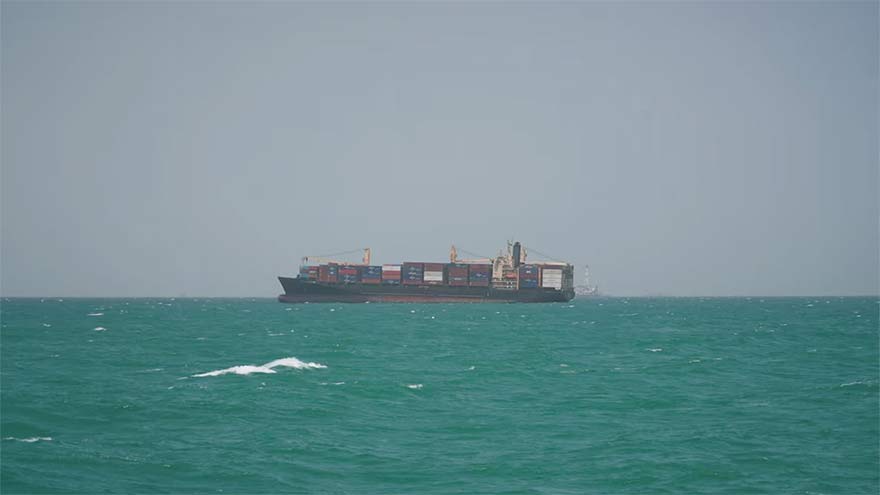
The Strait of Hormuz, through which a major share of global oil and gas shipments normally passes, remains at the centre of the confrontation.
At the UN, Trump was also due to meet leaders of Bahrain, Kuwait, Qatar, Oman, Saudi Arabia and the United Arab Emirates, all of which have a direct interest in restoring secure navigation through Hormuz while balancing their relations with Washington and Tehran.
The developing diplomatic activity came as Trump used much of his UN address to defend his administration's record and its handling of several international conflicts. He said the United States had restored its strength and portrayed his administration as an active force for ending wars.
In his address, Trump also singled out Pakistan Prime Minister Shehbaz Sharif, calling him a "terrific man" while repeating his claim that his administration's diplomatic efforts helped end the May 2025 Pakistan-India conflict. He said world leaders had sent him letters thanking him for his mediation efforts.
"The Prime Minister of Pakistan, terrific man, said that Donald Trump was responsible for saving thirty million lives and probably many more than that," the president noted, as he credited his administration's diplomatic efforts to end multiple global conflicts and received letters of thanks from world leaders.
For now, the three-hour meeting between the US and Iranian officials has produced no announced agreement, but it marked the latest direct indication that diplomatic channels remain active despite the increasingly severe rhetoric surrounding the conflict.
Continue Reading: More in International
Swipe or click arrows to explore International desk coverage