How China’s clean-tech machine is reshaping the global climate fight
“China sent $132 billion in clean technology and investment to the developing world last year, by far the largest contribution to carbon-dioxide reduction of any country. In fact, the nation’s green-man…”
In fact, the nation’s green-manufacturing juggernaut, built in part through heavy subsidies from Beijing, nearly matches the current total of grants, loans and private finance that all wealthy countries sent to poorer ones in 2024 to help fight climate change,.
Those loans and grants stemmed from a climate-finance program the world’s wealthiest nations agreed to at a 2009 United Nations climate conference on the premise that industrialized nations made outsized contributions to the climate crisis – and had outsized means to help poorer countries pay to clean it up.
AReutersinvestigationin 2024 found that most global climate finance comes in the form of loans – and sometimes at market interest rates that funnel billions of dollars back to rich countries. China took a different approach, funneling billions in subsidies into its own green-energy industries, serving its own national interest to dominate next-generation manufacturing domestically and globally.
"Stay connected with Aman-e-Pakistan for ongoing live reporting and verified investigative updates."
The result: massive and rapid market-share gains in solar panels, batteries and battery minerals, electric vehicles, wind turbines and other green products. China remains by far the world’s biggest greenhouse-gas emitter because of its large population, concentration of heavy industry and reliance on coal power.
But its huge clean tech exports mean it has also become among the biggest global forces in reducing climate-damaging emissions. The. Reutersanalysis used customs data to calculate the value of Chinese exports of clean technologies to countries classified by the Organisation for Economic Cooperation and Development as developing nations.
Those exports alone will help the Global South avoid 257 million metric tons of carbon dioxide emissions (MtCO2) per year once deployed – an amount equal to the annual carbon dioxide emissions of France, according to analysis by Lauri Myllyvirta, co-founder of the Helsinki-based Centre for Research on Energy and Clean Air.
This year’s exports from China, meanwhile, are on track to avoid 337 MtCO2 in the Global South, the analysis shows. Reuterswas unable to find a reliable single estimate of how much greenhouse gas emissions are avoided as a result of global climate finance from rich to poor countries.
The OECD estimates a fifth of all rich world climate giving in 2024 came from the private sector. The United Nations Framework Convention on Climate Change and the High Ambition Coalition – an informal coalition of nations that has advocated for substantial climate finance – did not immediately comment for this story.
The $132 billion figure derived by. Reutersfor China’s global climate contribution also includes an estimated $40 billion of Chinese foreign direct investment into clean-technology projects in developing countries. The investment data was compiled by Mathias Larsen and Xiaokang Xue at the London School of Economics.
That brings China’s contribution to nearly equal to the $137 billion in climate finance that wealthy nations provided to poorer ones in 2024 under their UN climate pledges, provided by the OECD.The figures are not directly comparable.
China's total largely reflects commercial transactions focused on clean energy development, while climate finance can also support other types of programs like developing climate-resilient agricultural techniques or cleaning up damage from major storms or floods. But the comparison illustrates the extraordinary scale at which China's manufacturing economy is now shaping the energy transition in poorer countries.
The findings point to a potential shift in the mechanics of the global energy transition,, a veteran observer of China at UN climate talks who heads the China Climate Hub at the Asia Society Policy Institute. For years, climate talks focused on how much money and technology wealthy countries would provide to poorer ones to help them decarbonize.
China's manufacturing boom is creating another pathway: Driving down the price of clean technology through self-interested innovation and scale – until developing countries adopt it for economic reasons. Read More:Electric auto rickshaws reshape India's roads"You can align it to your economic agenda," he said.
Export giant, diplomatic mouse. Beijing has so far shown little interest in translating its commercial might into diplomatic leadership at global climate talks since President Donald Trump withdrew the United States from international climate cooperation in 2025.
China’s diplomatic role likely will take center stage as nations gather this month for the UN’s COP31 climate conference in Antalya, Turkey. Bilateral agreements between heavyweights Washington and Beijing have traditionally paved the way for international climate agreements, including the landmark 2015 Paris deal to limit global warming.
But Beijing may be unwilling to go on alone without its geopolitical counterweight at the table,. Beijing may also be worried that taking a bold stance on global carbon reduction would bring unwanted pressure for China to give more climate aid or cut its own fossil-fuel emissions, observers say.
China emits about a third of all carbon dioxide emissions and still burns coal for more than half its power.
"How China engages on different levels in the coming years is the most fundamental thing that is going to happen on climate because of both their role in clean-tech deployment… but also because of their emissions profile," said Jennifer Morgan, Germany’s former climate minister.
China’s Ministry of Commerce said the country is an important contributor to the global green transformation, and that its wind and solar exports have cumulatively reduced global emissions by roughly 4.1 billion tons of CO2 over the past five years - the equivalent of around 80% of the total emissions of the United States in one year.
"Against the backdrop of a global climate governance 'action deficit,' China will continue to uphold a responsible attitude, working with other countries to address challenges, overcome difficulties, and jointly promote global green and low-carbon transformation and sustainable development," it said. Forcing out fossil fuels.
Meanwhile, China's manufacturing boom has made renewable energy more affordable in the developing world. When Ethiopia banned combustion engine car imports in 2024, for example, it was the first country to take such a dramatic step toward electric vehicles.
The decision was less about emissions and more about cutting its fuel import bill, its deputy minister of transport at the time told. Reuters. "No one in Ethiopia is asking COP to pay for any of this; the economics have just switched.
It is just the cheapest and best solution," said Larsen, a senior policy fellow at the London School of Economics, who built the database of Chinese green investment used by. Reutersin this story.
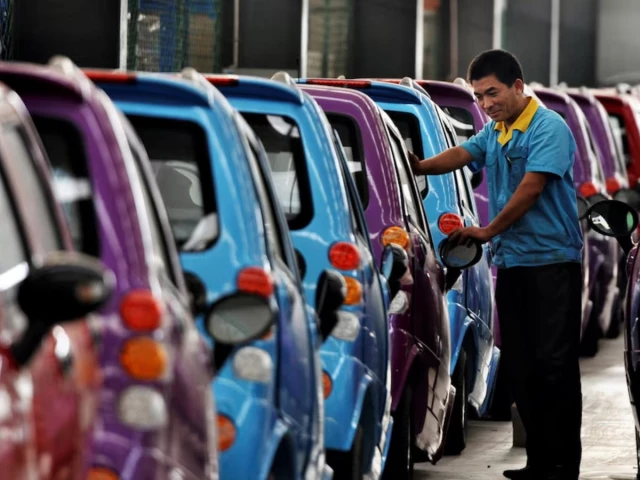
China has been by far the world’s biggest supplier of electric vehicles over the past few years, as dozens of subsidized automakers have waged a fierce price war in China and dramatically increased exports. The green transition has been similarly pragmaticin Pakistan, which imported 17GW worth of solar from China last year,, roughly on par with Germany’s installations that year.
Those panels will cut emissions and, more importantly, providecheap, reliable powerin a country that often has neither. Nearly two thirds of China’s exports of solar panels, and the cells needed to make them, went to the developing world last year, according to.
Reutersanalysis of customs data. The picture is different in wealthy countries like the United States and parts of Europe, which in recent years have imposed tariffs and other restrictions on Chinese clean technology to protect their domestic manufacturers from the surge in shipments.
The United States, for example, imposes tariffs exceeding 100% on Chinese electric vehicles and has taken other measures to effectively block them from the market.
"What is striking is that policies originally designed to address climate change are now facing opposition not because of their climate impacts, but because of concerns about trade and competitiveness," said André Corrêa do Lago, a veteran climate negotiator for Brazil, which hosted last year’s climate summit.
Continue Reading: More in International
Swipe or click arrows to explore International desk coverage
 International
Former Israeli premier urges Eisenkot to swiftly replace Netanyahu government

 International