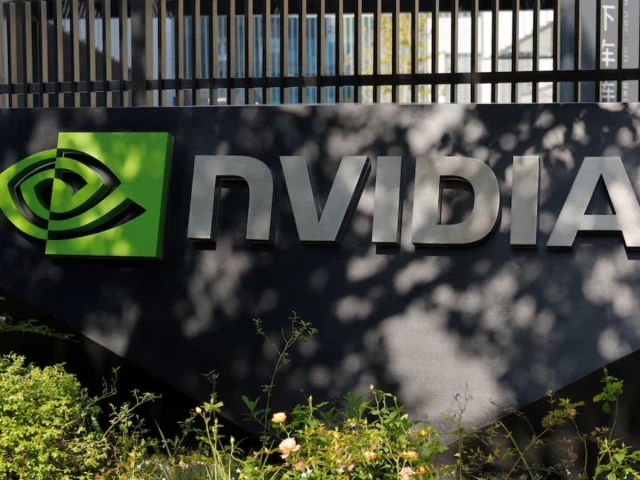
Nvidia's clubby board faces a sticky 'honey pot' test
“Revelations that Nvidia CEO Jensen Huang had an affair witha businesswomansuspected of being a Chinese spy have forced the chipmaker's board to confront more than ordinary executive misconduct, raisin…”
Among corporate leaders, "There have definitely been affair scandals and sexual-harassment scandals. But honey-pot scandals? No," said Ann Lipton, a University of Colorado law professor who follows boardroom issues.
She was using a term for an espionage ploy in which an operative entraps a target by feigning romantic interest. Historical examples include the. Profumo Affairin the early 1960s and tend to involve diplomatic or political consequences.
US President Donald Trump said on Monday the FBI was probing Huang's relationship, a day after Nvidia's board launched an internal investigation "regarding the national security concerns raised in news reports,," to Nvidia employees and released by the company. The company's advanced semiconductors are at the heart of a global race for AI superiority.
"Stay connected with Aman-e-Pakistan for ongoing live reporting and verified investigative updates."
China's Foreign Ministry said the spying claim was "a groundless accusation, slander, and a smear. "Nvidia co-founder Huang, 63, has no obvious successor and close ties to Trump. He owns 3.6% of its stock and has dozens of direct reports, suggesting a tight grip on the company.
Read More:Nvidia's shares slide after-hours as tech giant probes CEO Jensen Huang. Shares in Nvidiafell Mondayas Huang's future came under scrutiny. But the stock later trimmed its decline to close 4% lower as some investors bet that the CEO could survive the crisis.
Board's credibility. Unusually among its peers, Nvidia operates without a board chair among its 11 directors. While the company considers all but Huang independent, three independent directors have served since the 1990s and a fourth, Mark Stevens, for most of that time.
Only two have joined the board since 2021. The clubby roster may not be so unusual by the standards of charismatic Silicon Valley company founders like Apple's Steve Jobs, who died in 2011. But the US probe has heightened scrutiny of whether directors who have worked alongside Huang for decades are sufficiently independent to investigate his conduct.
"If you have a figure like Steve Jobs, I think people on Wall Street as well as in Silicon Valley would say they're entitled to some leeway or deference," said Marc Goldstein, head of US research for proxy adviser Institutional Shareholder Services.
Such deference could now raise questions about whether the board provided sufficient oversight of a CEO whose own judgment has come under scrutiny. Nvidia said on Sunday that while its board had no reason to believe that either US national security or Nvidia secrets were compromised, its inquirywould examine all available information.
The board said it had confidence in the CEO and his leadership team. Goldstein said board members running that investigation should be given the latitude to hire their own legal advisers to bolster their credibility.
The company also might consider keeping long-serving directors away from the probe, he added, to avoid legal challenges from shareholders claiming it wasn't sufficiently independent. Political economy. Yale University management professor Jeffrey Sonnenfeld said the company faces additional national-security questionsbecause of the tiesbetween Huang and Trump.
Trump, who has praised Huang, said on Monday that he had spoken to the executive and thought he would "be in good shape. "Washington has imposed restrictions on exports of advanced AI chips to China since 2022.
Last yearthe Trump administration allowed Nvidia to resume certain China shipments under arrangements in which the US government receives a cut of the company's China chip sales. The deal makes any suggestion of foreign espionage more sensitive for both executives and US government officials, Sonnenfeld said.
"That's why you don't want state capitalism arrangements. You don't want the US government to be so involved in private companies," he said.
Continue Reading: More in International
Swipe or click arrows to explore International desk coverage