High temperatures low expectations
“Back to Tribune. HomeT-Magazine. High temperatures, low expectationsT-Magazine. Next Story. High temperatures, low expectationsA year of exceptional heat, political divisions and climate finance shortfalls te…”
Back to Tribune. HomeT-Magazine. High temperatures, low expectationsT-Magazine. Next Story. High temperatures, low expectationsA year of exceptional heat, political divisions and climate finance shortfalls tests progress at COP31ByHAMMAD SARFRAZ|facebooktwitterwhatsuplinkdedemailPUBLISHED
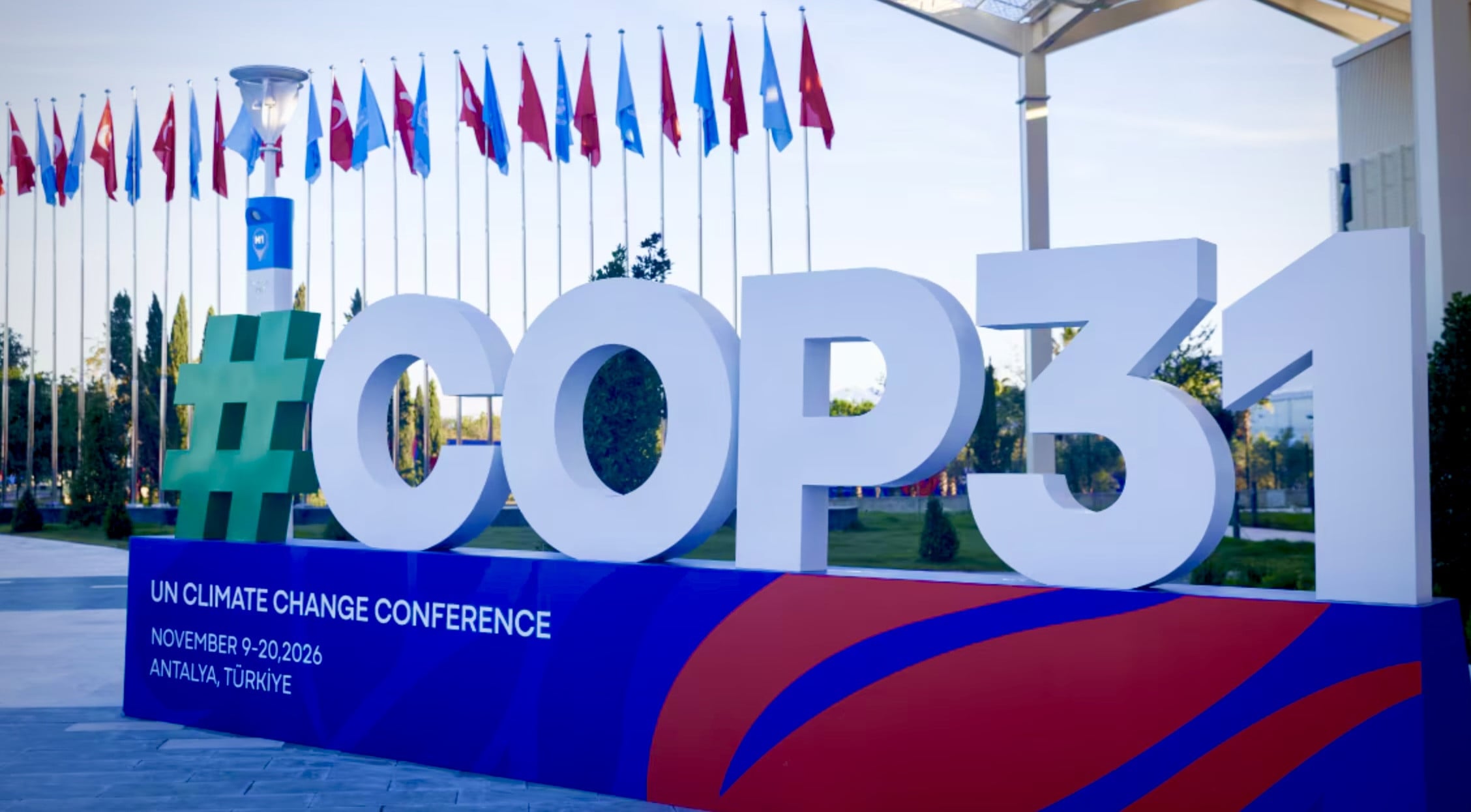
November 15, 2026The United Nations Climate Conference in Antalya, Türkiye, opened against a backdrop of scientific warnings and political absences, but by the end of its first week a clear, if contested, policy direction had begun to take shape.
The conference, jointly presided over by Türkiye and Australia, moved through the first full week of negotiations with draft texts emerging from most tracks, a major push on the 35-by-35 electrification pledge and a revived methane initiative, even as some of the world’s largest emitters stayed away from the Leaders’ Summit.
"Stay connected with Aman-e-Pakistan for ongoing live reporting and verified investigative updates."
Warnings from the UN’s top leadership set the tone early when outgoing Secretary-General António Guterres world had entered “a new age of climate extremes”, with “a supersized El Niño colliding with a planet already superheated by manmade climate change”.
The World Meteorological Organization (WMO) reinforced the alarm, reporting that the past 12 years had been the hottest on record and warning that the exceptionally strong El Niño could make 2027 another record-breaking year.
WMO chief Celeste Saulo said global average temperatures from January to September were already about 1.47°C above pre-industrial levels, giving new meaning to the phrase “off the charts”. Negotiations got off to a relatively smooth start after an early agenda dispute was avoided.
By the end of the week, draft texts had emerged from most negotiating tracks, although contentious issues, particularly a new climate finance work programme, remained stalled. A presidency proposal for an overarching “cover decision” faced procedural resistance from Russia and other countries.
An initial “reflections” text was released, setting out countries’ priorities and including references to responding to a possible 1.5°C overshoot and welcoming roadmaps on fossil fuels and deforestation. A draft cover decision was expected early in the second week.
There was also a renewed push behind the Global Methane Pledge. More than a dozen countries rallied behind the Glasgow-era commitment, with France seeking to integrate methane reduction into the COP31 cover decision. On Thursday of the first week, more than $480 million in new philanthropic funding was announced to accelerate efforts to reduce methane and other non-CO2 greenhouse gases.
They were absent. The Leaders’ Summit, held on November 11–12, was defined as much by who was absent as by what was said. Guterres 80 world leaders that it was “make or bake time”, cautioning that leaders “cannot keep expanding fossil-fuel production while claiming to be committed to 1.5C”.
Brazil’s President Luiz Inácio Lula da Silva said that “science and multilateralism remain under attack” and that “the planet cannot be left at the mercy of hegemonic disputes”. UK Prime Minister Andy Burnham was the only G7 leader to address the summit.
French President Emmanuel Macron, German Chancellor Friedrich Merz and Italian Prime Minister Giorgia Meloni skipped the event, as did Canadian Prime Minister Mark Carney and Japanese Prime Minister Sanae Takaichi.
Climate activists awarded Carney and the absent leaders of wealthy countries, including Germany, France, Japan and Denmark, the satirical “Fossil of the Day” title, saying their empty chairs “send a dismal signal about their commitment to international climate co-operation”. The United States had no official federal delegation, continuing the Trump administration’s retreat from international climate diplomacy.
An unofficial US presence of Democratic governors, senators and mayors, however, offered a counterpoint. California Governor Gavin Newsom, Rhode Island Senator Sheldon Whitehouse, Minnesota Governor Tim Walz, New Mexico Governor Michelle Lujan Grisham and a group of mayors and House representatives attended to signal that states and cities would continue pushing for decarbonisation.
Newsom used the platform to criticise Trump’s climate rollback, saying “China is cleaning our clock” on clean technology and arguing that the US was surrendering influence and supply chains by withdrawing from the international stage.
The Democrats’ message was also shaped by the November midterm elections, in which the party won control of both chambers of Congress and made gains in gubernatorial races. Minnesota Governor Tim Walz said the results could create more room for state-level climate action.
Beyond the headline pledges, the first week also brought attention to adaptation, early warning systems and resilience, following a year of heatwaves, fires and floods. All that said, the first week closed with familiar scientific warnings growing more urgent, thinner political leadership from major economies than at recent COPs, and some of the negotiations’ most difficult questions unresolved.
Science and the sermon. In his final address to COP31, António Guterres warned that “you cannot build peace on a burning planet”. The WMO’s latest assessment, released on the opening day of the conference, makes that warning difficult to dismiss as rhetoric.
The past 12 years have individually been the warmest on record, with the past four occupying the top four positions. Global average temperatures between January and September 2026 were already about 1.47°C above pre-industrial levels, putting this year on course to become one of the four warmest ever recorded.
But rising temperatures are only part of the concern. The WMO says the Earth’s energy imbalance has reached its highest level since monitoring began, with the planet accumulating heat as greenhouse gases trap more energy than the Earth system releases.
The oceans absorb around 90 per cent of this excess heat, and 2026 is on course to become the tenth consecutive year of record ocean warmth. Global sea levels have also reached their highest levels since satellite measurements began.
Glaciers lost more than 400 gigatonnes of ice in 2025, equivalent to filling five Olympic-sized swimming pools every second throughout the year. Meanwhile, freshwater stored on land has been declining globally since 2014, adding pressure to water supplies in regions already vulnerable to drought and extreme heat.
The outlook offers little relief. A very strong El Niño, which has been intensifying since August, is expected to amplify global temperatures and extreme weather well into 2027. WMO Secretary-General Celeste Saulo cautioned that El Niño does not create additional heat but releases heat from an ocean that is already the warmest ever measured.
Describing it as a “risk multiplier”, she warned that heatwaves, tropical cyclones and rainstorms are intensifying faster than historical baselines had prepared societies to expect. The human costs are already evident and being felt, not just in some of the poorest parts of the world, but also in the global north.
European heatwaves, droughts and wildfires led to more than 30,000 excess deaths, the assessment. An estimated 146.5 million people in India were exposed to extreme heat during an April 2026 heatwave, with temperatures reaching 47°C.
In Nepal, flash floods triggered by a Himalayan glacier collapse in August killed at least 1,455 people, while another 5,285 remained missing as of October 4, UNICEF. The WMO also warns that El Niño could increase health risks associated with heat-related illness, wildfire smoke, poor air quality, food insecurity and the spread of diseases such as malaria, dengue and cholera.
The World Health Organization has, for the first time, classified the anticipated health impacts as a health emergency. Yet better forecasts do not automatically translate into better preparedness. John Kennedy, head of Climate Information at the WMO, says seasonal and annual climate forecasts give governments advance indications of how the probabilities of above-average temperatures or rainfall are changing.
Unlike short-range weather forecasts, however, they do not predict individual extreme events. Their value lies in giving governments, humanitarian agencies and other institutions time to prepare. The WMO works with national meteorological services and humanitarian agencies to translate these forecasts into action before disasters happen, Kennedy says.
Information is also made available to individual countries so that it can be adapted to their particular circumstances and planning needs. For Pakistan, where devastating floods, prolonged heatwaves and growing water insecurity have repeatedly placed pressure on communities and public infrastructure, the ability to interpret and act on such information is particularly important.
Kennedy cautions against drawing country-specific conclusions from global or seasonal assessments. Such information, he says, should come from local services and be tailored to local needs and knowledge. The WMO supports these services by facilitating the production and sharing of standard observations and forecasts.
This places national meteorological and hydrological services at the centre of the adaptation and climate finance debate. Countries cannot adequately prepare for risks they lack the infrastructure to monitor, or act on warnings if their forecasting institutions are under-resourced.
Investment in weather observation networks, data collection, forecasting technology and the capacity to communicate warnings to communities and decision-makers is therefore an essential part of adaptation. US absence and way back. The absence of an official US federal delegation was particularly consequential for a country that remains the largest historical contributor to greenhouse gas emissions.
For the second consecutive year, Washington stayed out of the formal international climate negotiations, following President Donald Trump’s withdrawal from the Paris Agreement and his administration's retreat from federal climate action. The country that once played a central role in negotiating the global climate framework is now leaving others to carry much of the diplomatic effort.
The withdrawal has not gone uncontested at home and democratic governors, senators and local representatives have used their presence at COP31 to signal that American climate action has not disappeared, even if federal leadership has.
The midterm election results have also given Democrats renewed political leverage, although their ability to reverse the administration’s climate policies while Trump remains in the White House is limited.
California State Senator Henry Stern believes the United States can recover its position in international climate diplomacy, but argues that Democrats need to rethink how they make the case for climate action at home.
Rather than presenting it as an environmental cause that competes with concerns about the cost of living, national security and energy prices, he sees an opportunity to make clean energy part of the solution to those problems.
“I think it’s how you talk about it, and I think it’s what you see it as,” Stern said, arguing that voters may not necessarily identify climate change as a priority but remain concerned about the consequences of extreme weather, including fires, floods and hurricanes.
He believes Democrats have been too reluctant to make that connection, particularly when voters are preoccupied with affordability and security. For Stern, who is an environmental lawyer, the argument should be about making communities safer, diversifying energy supplies and reducing dependence on volatile international markets.
He also believes Democrats need to move away from treating climate action as the preserve of liberal states such as California. “The solutions are sitting in Texas too,” he said, arguing that the transition should not become another contest between Democrats and Republicans or a question of which states have the more virtuous environmental record.
His argument comes at a time when energy insecurity and international conflicts are putting pressure on economies. Stern believes clean energy can be presented as a means of reducing exposure to these pressures rather than as an additional environmental obligation.
He was also critical of the way international climate diplomacy can become an exercise in public relations, with countries making ambitious announcements without demonstrating what they are actually delivering. For the United States to regain credibility, he said, it would need to arrive at future climate summits with measurable emissions reductions, investment and infrastructure already in place.
“Less talk, more action,” he said. “It’s not the talk, but the tons.”Stern pointed to Pakistan’s rapid expansion of solar power as an example of how domestic economic pressures can accelerate the energy transition without waiting for international agreements to compel governments or consumers to act.
He argued that countries adopt clean technologies when they make practical and economic sense at home. The same principle, he believes, should guide American policy. He also called for greater pragmatism in dealing with China, whose manufacturing capacity has given it a significant position in global clean-energy markets.
While acknowledging the broader political and security disagreements between Washington and Beijing, Stern said there was room for cooperation on specific technologies and emissions standards. The United States, he argued, needs transformers, solar panels and electric vehicles now, and cannot afford to let geopolitical competition prevent cooperation where mutual interests exist.
For Stern, the challenge is to make climate action durable enough to survive changes in political leadership. Targets and ambitions that can be reversed whenever a new administration takes office are not sufficient.
The United States needs to invest in its energy infrastructure, strengthen its electricity grid and demonstrate that clean-energy deployment can deliver economic and security benefits across political divides. Whether that argument gains traction within the Democratic Party remains to be seen.
But the absence of the federal government at COP31 has exposed a question that extends beyond this year's negotiations: can the United States rebuild its international climate leadership when its domestic politics remain so deeply divided over the issue?
Stern believes it can, but insists that credibility will have to come from what the country delivers rather than what its representatives promise. The growing gap. As COP31 negotiations moved into their second week, activists argued that the conference’s headline figures and pledges still did not translate into money reaching communities most exposed to climate impacts.
Bertha Iris Argueta Tejeda, Senior Policy and Advocacy Officer for Climate Justice with Climate Action Network International, said journalists needed to look beyond the announcements and examine whether the funding matched the scale of countries' needs. “One of the reasons why these big announcements are made is precisely because out of context, they sound great,” she said.
Journalists from climate-vulnerable countries, she argued, were particularly well placed to question what these commitments meant for communities at home.
“Don’t be impressed by what’s being announced, because there’s going to be a lot of announcements, but actually bring it back to what you know for a fact are the needs.”Tejeda said climate finance needed to be assessed not only by the amounts pledged but also by the type of funding being offered and whether it was eventually delivered.
Referring to the gap between promises and implementation, she said that commitments made to the Loss and Damage Fund had not all materialised. “We see a lot of promises, but we need to follow up on the delivery,” she said, calling for greater accountability after the conferences had ended and governments had returned home.
She also pointed to the disconnect between international negotiations and the realities facing communities. “There’s a huge disconnect between this space and the realities on the ground, and I think we need to find ways, both as journalists and policy experts, to actually make that connection,” she said.
Much of the problem, she argued, lay in the failure to deliver promised funding and the layers of intermediaries between financial commitments and the people meant to benefit from them. For Tejeda, the gender dimension of climate finance also goes beyond including women in action plans.
Providing loans to vulnerable communities, she argued, does little to address the needs of women who are already struggling financially. “What people in communities, especially women in communities, need is not loans,” she said. She questioned whether finance channelled through private-sector investments and equity arrangements could reach local women and feminist organisations, particularly when public services were involved.
Her message to decision-makers was direct: public money should be redirected towards protecting people rather than financing activities that worsen the crisis. “Just stop spending it on wars, stop spending it on fossil fuels, stop spending it on all of these other destructive things and channel it towards the things that are actually protecting people,” she said.
Harjeet Singh, climate activist and Strategic Advisor to the Fossil Fuel Treaty Initiative, was equally blunt about the cause of the crisis. “The primary villain of this entire story is, of course, fossil fuels,” he said.
Singh was “equally skeptical” that COP31 could move the fossil-fuel transition agenda forward, particularly when countries with the greatest economic dependence on fossil fuels wield considerable influence over negotiations. Singh and others are therefore calling for complementary mechanisms alongside the UN climate process, including a fossil fuel treaty.
“We cannot depend on one single process,” he said. “We need several complementary mechanisms to deal with it.” But he stressed that this did not mean abandoning the COP space.
“This space is far too precious for us to move forward,” he said, arguing that the Paris Agreement had had an effect even if the world remained on a path to around three degrees of warming. “Yes, it is slow and frustrating.
We see people getting impacted, not enough support going there, not even tackling the cause of climate change. But there is no alternative to looking at it comprehensively and calling for justice.”Singh also turned his criticism towards developing-country governments, saying they must do more to challenge developed countries rather than strike side deals.
“The fight is not only here in these global fora, the fight is also at the local level, at the district level, at the subnational level, and at the national level,” he said.
“It has to be across, it has to be a whole-of-society approach if we really want to win.”This story was produced as part of the COP31 Climate Change Media Partnership, a fellowship for journalists covering the UN climate talks. Pages.
Pakistan. Business. World.
Opinion. Life & Style. Sports.
Blogs. Videos. Our Sites.
Express News. Urdu E-Paper. English E-Paper.
Sindhi E-Paper. Cricket Pakistan. Express Live.
Campus Guru. Express Entertainment. Food Tribune.
About Us. Contact Us. Online Advertising.
Privacy Policy. Copyright. Fuel Prices Pakistan.
Gold Prices Pakistan. Prayer Timing Pakistan. Weather Forecast Pakistanfollow us
Continue Reading: More in International
Swipe or click arrows to explore International desk coverage