Pakistan backs global green freight push
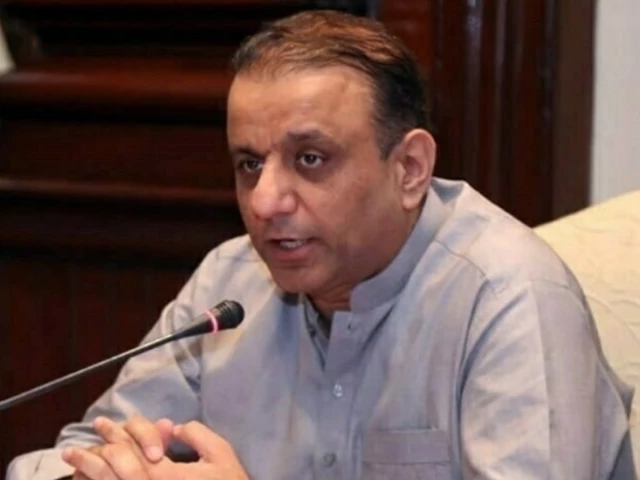
“Federal Minister for Communications Abdul Aleem Khan endorsed the Global Green Freight Corridors Initiative at a high-level ministerial roundtable during COP31 in Antalya, Türkiye, and pledged Pakista…”
The roundtable was co-hosted by Turkish Minister for Transport and Infrastructure Abdulkadir Uraloglu, the United Nations Economic Commission for Europe (UNECE) and the Economic and Social Commission for Asia and the Pacific and brought together global leaders to address sustainable transit solutions.
He said international freight transport was the lifeblood of global commerce but one of the fastest-growing sources of transport-related greenhouse gas emissions, and that economic growth and environmental stewardship were mutually reinforcing goals.
He said the initiative showed sustainable logistics was the only viable path forward and that COP31 must shift focus toward turning international climate pledges into tangible cross-border outcomes. The minister reaffirmed Pakistan's commitment to decarbonising global supply chains and building climate-resilient logistics infrastructure.
"Stay connected with Aman-e-Pakistan for ongoing live reporting and verified investigative updates."
Pakistan is strategically placed as a regional trade bridge linking China, Central Asia and the Middle East, with a network of over 500,000 kilometres of roads, a 7,800-kilometre railway, major deep-sea ports and developing trade arteries under the China-Pakistan Economic Corridor, he said.
Road carries 96% of domestic freight, straining national resources and urban air quality, and Pakistan is pursuing a multi-pillar transition, he said.
The Railway Plan 2026 aims to lift rail's freight share to 20% through the modernised Main Line-1 (ML-1) project, alongside the National Electric Vehicle Policy 2025-30, which provides for 3,000 charging stations along major corridors, and complementary maritime reforms across national seaports.
He said TIR transit volumes had risen 200% under the UN TIR Convention, with digital pre-shipment notices integrated into the Pakistan Single Window and an eTIR project with UNECE, positioning Pakistan as one of the fastest-rising countries in regional trade facilitation.
Financing combines Public Sector Development Programme allocations, multilateral support from the Asian Development Bank and Asian Infrastructure Investment Bank, and private investment under the Public-Private Partnership Authority Act for projects including the M-6 Motorway and ML-1 upgrades, he said.
Continue Reading: More in International
Swipe or click arrows to explore International desk coverage