COP31: the crisis of climate finance
“Since the dawn of the 21st century, the world has been facing three unprecedented challenges: artificial intelligence (AI), the pandemic, and climate change. Artificial intelligence has challenged the…”
Artificial intelligence has challenged the traditional way of thinking, planning, and living. The most shocking aspect of AI is that it has threatened human intelligence and is emerging as a competitor to humans. In the past, every technological innovation and development helped humans enhance efficiency but never challenged humans or human intelligence.
However, AI has challenged humans and human intelligence and is emerging as a competitor. The pandemic is another challenge that has shaken the whole world. Covid-19 jolted the world and introduced entirely new challenges to humanity.
It was the first time in modern human history that mobility came to a standstill and markets closed. Much-celebrated connectivity and mobility were checked. Industry and supply chains were disrupted and came to their lowest level.
"Stay connected with Aman-e-Pakistan for ongoing live reporting and verified investigative updates."
Now the world is living under the threat of new pandemics. However, climate change is a completely different challenge and more severe than AI and pandemics. AI and pandemics only threaten human life, with no threat to the planet.
Climate change, however, threatens both human civilisation and the planet. Therefore, climate change requires an urgent, unified response based on common but differentiated responsibility. The common but differentiated responsibility principle holds that countries contribute level of development.
Thus, the UNFCCC proposed a solution in which industrialised and developed countries lead the fight. They reduce GHG emissions and provide the financial resources needed for less developed and developing countries. Financial assistance is also needed because most least developed and developing countries lack the resources to combat climate change impacts.
In 2009, developed countries agreed to mobilise $100 billion annually to combat climate change. Unfortunately, that promise remains a distant dream. Developed countries are not fulfilling their commitment to mobilise financial resources.
They have applied various tactics to delay the mobilisation. After a strong backlash from the Global South and insistence from the UNFCCC, they began mobilising resources. It took many years to reach $100 billion.
Financing came with its own problems. First, they misquoted the pledged amount and the amount actually mobilised. Oxfam report indicated that in 2022, developed countries announced that they had mobilised $116 billion in climate finance.
However, the data showed that the actual mobilisation was around $28-35 billion. It was a deliberate attempt to fudge the data. Moreover, financial mobilisation was expected to be reversed in 2024 and 2025, as the OECD indicated that ODA shrank 9% in 2024 and 9-17% in 2025.
ODA matters because many countries accounted for parts of ODA as climate financing. This is unfortunate, as the need for climate finance is rising. Also, developed countries, the private sector, and multilateral institutions turned climate financing into an opportunity to extract more benefits from the developing world.
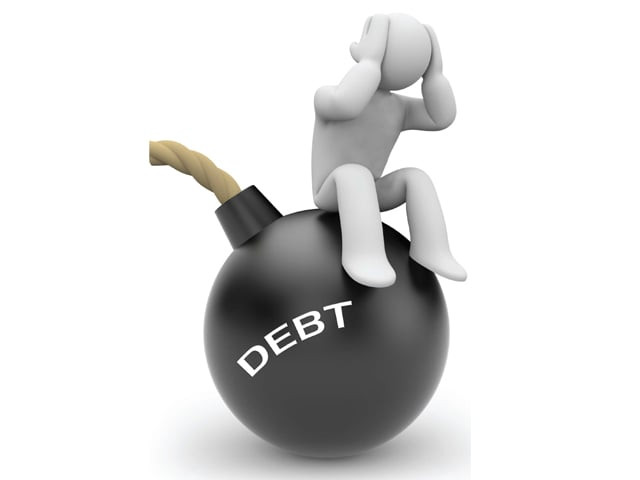
Data analysis showed that almost 65-70% of climate financing came through loans. Moreover, 40% of climate financing from multilateral development banks was in the form of loans. These loans were not concessional; they were market-rate loans and, at times, expensive.
As a result, countries and institutions are earning large profits. For example, it was estimated that for every $5 loan, they are getting $7, as developing countries paid back $88 billion and received $65 billion in 2022.
This adds to developing countries' total debt and worsens the debt crisis. Meanwhile, climate finance focuses more on mitigation than adaptation. Oxfam 2025 reported that only $15-18 billion was allocated to adaptation, while the actual requirement was around $310-365 billion.
The most shocking fact is that rich countries and big corporations are exploiting disasters in vulnerable countries. They treat disasters and destruction as an opportunity to invest and extract profit. As a result, they do not help countries fight back against climate disasters or address the impacts and destruction they cause.
The most recent example comes from Pakistan. The 2022 floods have shaken the country's economic, social, and environmental infrastructure. Rough estimates show that Pakistan suffered losses of $30 billion.
Since then, the country has struggled to secure financial help, with little success. Despite major promises and pledges, it secured only a few million dollars. This has worsened the economic and social problems.
For example, rebuilding disaster-affected infrastructure requires huge financial resources, but Pakistan lacks them. As a result, it had to borrow more money, which further complicated its debt, economic, and social crisis. Pakistan had to impose higher taxes, which are contributing to an increase in poverty.
Lastly, the market value of disaster-related impacts is projected to reach $92 billion. Loss and Damage Fund is another developing story on this front. The fund was created after a long struggle by developing and most vulnerable countries facing climate change, and Pakistan was one of the leading countries.
Developed countries and financiers are hesitating to provide the required resources and are trying to turn it into another opportunity for extracting benefits. The question is why the UNFCCC is failing to reach consensus and cannot compel countries to fulfil their commitments when the future of humanity and the planet is at stake.
In my view, three culprits are responsible: states represented by governments, the private sector, and the donor-think tank nexus. States are well-known actors that steer negotiations and are entrusted to find consensus for a secure and prosperous future.
Unfortunately, they are divided along geographical boundaries and lose sight of the humanity behind it. The private sector's greed for profit and its tendency to shirk responsibility for tackling climate change without a profit incentive make it another visible player.
Its behind-the-scenes role in creating stumbling blocks to consensus hinders efforts to combat climate change. However, the most damaging actor is the donor-think tank nexus, yet its role is often overlooked in discussions of the UNFCCC's failure to compel states to fulfil their commitments.
The donor-think tank nexus operates in a sophisticated way to achieve its objectives. Donors provide financial assistance and international exposure, while think tanks deliver on the ground. Donors, mostly developed countries, multilateral institutions, or the private sector, use this nexus to divert attention from their responsibilities.
They use think tanks' strengths to shape global discourse and influence decision-making bodies to achieve objectives of delay or responsibility-shifting. Lastly, donors also use the nexus to create direct influence on policymakers and implementers. For example, think tanks are tasked with hiring bureaucrats at lucrative consultancies.
Against this background, two actions are needed: one at the national level and the other at the UNFCCC level. At the national level, countries, especially developing countries, should develop mechanisms to hold think tanks and donors accountable to the public and require heads and employees to declare their assets before joining think tanks and every 10 years thereafter.
Second, at the UNFCCC level, the UNFCCC must ban donor-funded think tanks from attending COPs. Only self- or national government-funded think tanks should be allowed to participate in COPs. In conclusion, everyone needs to understand that the threat is complex and growing in severity.
Disasters have become more frequent and more damaging in financial, environmental, and human terms. Vulnerability is expanding, and countries are falling into a vulnerability trap one after another, without distinction of development status or power.
In a nutshell, humanity and planet Earth are on the verge of collapse. The situation urges us to cooperate, find solutions together, and act together. THE WRITER IS A POLITICAL ECONOMIST AND A VISITING RESEARCH FELLOW AT HEBEI UNIVERSITY, CHINA
Continue Reading: More in International
Swipe or click arrows to explore International desk coverage