Pakistan abstains as China, Russia veto Iran sanctions monitoring resolution
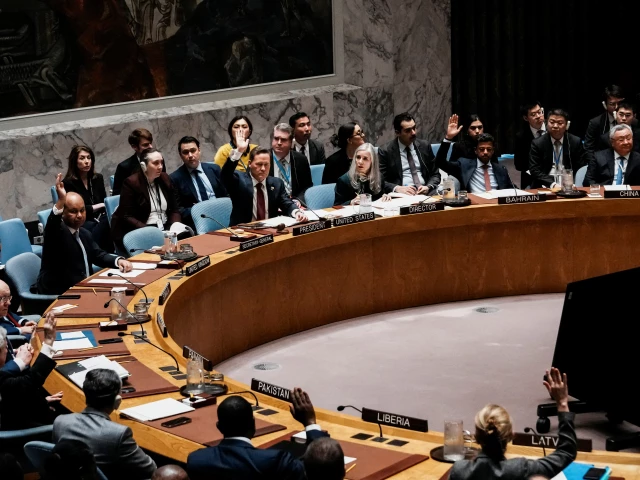
“Pakistan on Thursday abstained from voting on a resolution seeking to extend the mandate of an independent panel monitoring sanctions on Iran as China and Russia vetoed the measure, reiterating their …”
All UN sanctions on Iran were reimposed a year ago after France, Britain and Germany accused Tehran of violating the 2015 nuclear pact meant to prevent it from developing a nuclear weapon. Iran denies seeking nuclear weapons.
This included the return of an independent panel of experts to monitor and report to the 15-member Security Council on violations and recommend further action. However, the council has been operating without a panel of experts on Iran for the past year because it has been unable to agree on their appointment, a move that must be done by consensus.
Read:China presses Iran to help rein in Houthis after Saudi appeal, sources say. Beijing and Moscow ended the United Nations Security Council mandate for the independent monitoring of international sanctions on Iran, reviving their argument that all UN measures on Tehran had been removed under a nuclear deal with world powers.
"Stay connected with Aman-e-Pakistan for ongoing live reporting and verified investigative updates."
Both countries then vetoed the resolution that would have extended the mandate for the independent monitoring of sanctions. Eleven council members voted in favour, while Pakistan and Somalia abstained.
"Without an independent panel of experts, this council loses its principal source of impartial, evidence-based reporting on sanctions violations, creating a monitoring gap that only benefits the Iranian regime and those who profit from evading those measures," Deputy US Ambassador Jennifer Locetta vote.
The United States and Israel went to war with Iran seven months ago, arguing that they aimed to stop Tehran from developing a nuclear weapon. Trump withdrew the United States from the 2015 Iran nuclear deal in 2018 during his first term in office, describing the pact as "the worst deal ever.
"Russia and China accused their Western counterparts of politicising the Security Council on Thursday. "We strongly urge Western colleagues to stop their very dangerous actions on the Iran front, which threaten further complication of settling of the crisis in the Persian Gulf," Russia's UN Ambassador Vassily Nebenzia.
"The only way to resolve disagreements and to alleviate concerns... pertaining to the Iranian nuclear program is through political and diplomatic efforts. "Pakistan urges non-confrontational approach to Iran nuclear issue.
Explaining Pakistan’s decision to abstain from voting, Pakistan’s permanent representative to the United Nations, Ambassador Asim Iftikhar Ahmad, reiterated the country’s position that the Iran nuclear issue should be addressed through peaceful means and called for a non-confrontational and cooperative approach for a lasting peace.
Addressing the Security Council vote on a draft resolution concerning the Panel of Experts of the 1737 Committee on Iran, Iftikhar shared Pakistan’s concerns over the Iran nuclear issue, which he said had become further complicated over time.
“Ongoing tensions and hostilities in the region and strikes on nuclear facilities, as well as continued differences amongst permanent members on key aspects of this file, have added to the challenges in addressing the issue through dialogue and diplomacy,” he said.
Explanation of Vote by Ambassador Asim Iftikhar Ahmad, Permanent Representative of Pakistan to the UNOn the Security Council Vote on the Draft Resolution Concerning Panel of Experts of the 1737 Committee on Iran(17 September 2026)**********Mr. President, I have taken the…pic.twitter.com/1Xg.
WudkQHK— Permanent Mission of Pakistan to the UN (@PakistanUN_NY)September 17, 2026He recalled that in September last year, the council had two options: either continue the termination of sanctions as envisaged under the Joint Comprehensive Plan of Action (JCPOA), or introduce a six-month technical extension in the mandate of Resolution 2231 to provide more time and space for diplomatic efforts.
“Regrettably, a non-consensual path was chosen with far-reaching consequences that have since continued to reverberate in this chamber and beyond,” he said. Pakistan had stressed at the time that a non-confrontational and cooperative approach would have better facilitated the search for a lasting and peaceful solution while preserving consensus within the Council, he added.
“Pakistan continues to believe that diplomacy and dialogue remain the guiding principle for resolution of outstanding issues concerning Iran nuclear programme,” Iftikhar said, adding that Pakistan had consistently advocated the primacy of diplomatic engagement and the imperative of avoiding confrontation and conflict.
“We reiterate our position that the Iran nuclear issue should be addressed through peaceful means and in accordance with the rights, obligations and responsibilities of the parties concerned,” he said. Also Read:CDF Munir urges Iran to persuade Houthis not to target Saudi energy facilities: officials.
Iftikhar stressed the urgent need to renew and continue diplomatic engagement to address outstanding issues cooperatively, in accordance with the rights, obligations and responsibilities of the parties concerned. Pakistan remains concerned that the consideration of Iran nuclear issue, including by the Security Council, has become further complicated over a period of time.
We have clearly come a long way from the spirit of cooperation and peaceful settlement of disputes that characterized…pic.twitter.com/1tyEBz1LK9— Permanent Mission of Pakistan to the UN (@PakistanUN_NY)September 17, 2026“We must prioritise this approach and never give up on a peaceful negotiated settlement,” he said.
He said Pakistan continued its efforts to promote peace and stability in the region, building on the foundation provided by the Islamabad Memorandum of Understanding.
“We call on all parties to implement the commitments agreed in the Islamabad MoU, return to the negotiating table and allow diplomacy to deliver for the sake of regional and international peace and security,” he said.
Continue Reading: More in International
Swipe or click arrows to explore International desk coverage