NEVs get major tax relief
“Prime Minister Shehbaz Sharif has approved a draft of a new five-year auto policy, continuing protection to existing assemblers of conventional vehicles for four more years but offering substantial ta…”
It was also decided that hybrid electric vehicles and Internal Combustion Engine (ICE) conventional vehicles will be treated equally in terms of duties and taxes. During Wednesday's proceedings, the premier made certain changes in the proposed policy, particularly instructing to separate Range Extended Electric Vehicles (REEVs) and Plug-In Electric Vehicles (PHEVs) from Battery Electric Vehicles (BEVs).
He also asked to abolish the proposed federal excise duty on below 1000 cc conventional cars and cut the customs duty rate from 30% to 15% on all cars for the fifth year of the policy – fiscal year 2030-31.
The prime minister approved the draft policy for 2026-31 and to bring it largely in line with the National Tariff Policy(NTP), the rates will be implemented from the current year to offset the impact of the delay.
"Stay connected with Aman-e-Pakistan for ongoing live reporting and verified investigative updates."
After the prime minister's clearance, the policy will now be legally vetted by the Ministry of Law, and the Ministry of Finance has been instructed to take up the draft with the International Monetary Fund (IMF) for its vetting. Massive relief for NEVs.
The committee constituted to achieve consensus on the new policy had proposed equal treatment of BEVs, REEVs and PHEVs Policy. But the prime minister did not agree. BEVs will have the most preferential tax treatment, followed by REEVs and then PHEVs.
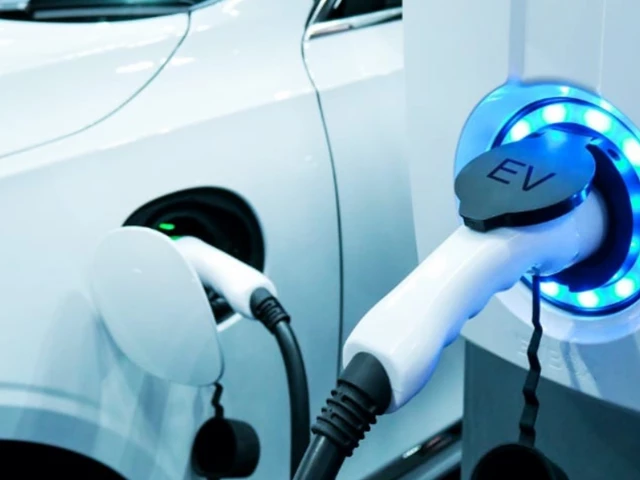
There will be only 1% sales tax on NEVs, their completely knocked down (CKD) kits, parts, inputs and raw materials. There will also be exemption of federal excise duty (FED), Capital Value Tax (CVT) and Withholding Tax (WHT) on NEVs,.
But the government has decided that there will be additional FED on conventional vehicles to compensate for the price drop due to tariff reductions., the loan limit for buying NEVs has been approved to be enhanced from Rs3 million to Rs10 million, and the tenor of the loan will be up from three years to five years.
The government decided that there will also be 1% customs duty on the import of charging stations, and swap stations will be supported through Viability Gap Funding. Tariff wall largely stays.
According to the approved draft, there will be up to 80% reduction in automobile tariff with no regulatory duty, and additional customs duty on the import of cars will also end after two years.
But due to other changes, the overall protection available to existing assemblers largely remains in place for the first two years and then will go down in the next two years. Government officials involved in policy-making said the proposed tariffs for completely built units would remain within upper tariff limits of the NTP except in the last year.
The tariff will be reviewed after two years on the basis of energy cost, tax, interest rates, exchange rate flexibility and export performance, they added. The Industry Ministry had presented the first draft of the auto policy to the prime minister in June, who referred the matter to Minister for Climate Change Dr Musadaq Malik.
Then another committee was constituted under Minister for Power Sardar Awais Laghari. The deputy prime minister also took up the recommendations. Laghari's committee held 14 sessions and proposed the draft when the committee called it an "attempt to strike a balance between the need for protection and opening the automobile industry to competition".
The stated objectives of the policy are to grow exports by linking auto parts into global value chains, set upfront performance targets with clear penalty and reward mechanisms, promote EVs across all categories, improve quality and lower prices of all vehicles except the luxury segment, and open competition for innovation, technology and better vehicle features.
It has been decided that statutory regulatory orders will be phased out by fiscal year 2029-30. The tariffs for the first two years will remain unchanged., for over 1801 cc SUVs and cars, the customs duty rate will be 40%, FED 60% and sales tax 25% for FY26-27 and FY27-28.
For FY28-29, customs duty will reduce to 40% and the rest of the taxes will stay the same. For FY29-30, it will go down to 30%. But for FY30-31, customs duty will be 15%, FED 60% and sales tax 25%.
Foreign consultant Stefan Dercon had recommended 40% customs duty, 30% FED and 20% GST for over 1800 cc cars. For cars of 1001-1800 cc, customs duty will be 50%, FED 15% and GST 25% for FY26-27 and FY27-28.
For FY28-29, customs duty will be 40%, FED 15% and GST 15%. For FY29-30, customs duty will be 30%, FED 15% and GST 25%. For FY30-31, customs duty will be 15%, FED 15% and GST 25%.
For up to 1000 cc cars, customs duty will be 50% and GST 25% for FY26-27 and FY27-28. For FY28-29, customs duty will reduce to 40%, and for FY29-30 to 30%. For FY30-31, customs duty will be 15% and GST 25%.
Based on these rates, there will not be any substantial reduction in prices of up to 850 cc ICE vehicles. Prices in the first year of implementation will reduce only 5.5% due to the government's decision to impose 4.5% additional customs duty.
This will be almost equal to comparable NEV prices,. For up to 1000 cc ICE cars, prices will also not reduce in the first years, but during the fifth year of implementation, these can go down by 9% – a benefit that may be offset due to annual price increases.
The government will impose 5% FED on 1500 cc cars to deny some benefits of price reduction, but in the fifth year, prices will be cut by 11% or Rs650,000. However, this benefit may also reduce due to annual price increases.
The price of the Toyota Fortuner is projected to reduce from Rs20.5 million in the first year to Rs18.6 million in the last year – a reduction of Rs2 million or 9%.
Under the new policy, the government will offer fiscally neutral duty and local tax drawback schemes to encourage exports, and there will be legally binding and enforceable mandatory export regimes. There will also be a target to attract at least five anchor parts manufacturing firms and establish SME clusters around them.
The manufacturing license will be linked to agreement with principals for a share in the global export market, and there will be separate CKD import for left-hand drive vehicles. There will be no duty on the import of parts used for exports, and an Auto Parts Export Council will be set up for coordination and developing synergy.
There will be a minimum domestic value addition requirement to measure and enforce value addition, and contract manufacturing will reduce production costs by allowing the use of existing idle capacity.
Continue Reading: More in Business
Swipe or click arrows to explore Business desk coverage