The world is no longer safe for children
“Back to Tribune. HomeT-Magazine. The world is no longer safe for childrenT-Magazine. Next Story. The world is no longer safe for children. From open manholes to online predators, children face more dangers than…”
Back to Tribune. HomeT-Magazine. The world is no longer safe for childrenT-Magazine. Next Story. The world is no longer safe for children. From open manholes to online predators, children face more dangers than ever. Parents cannot afford to look away. By. Fouzia Nasir Ahmad|Photo: AI generatedfacebooktwitterwhatsuplinkdedemailPUBLISHED
August 30, 2026In the present day, we hear about everything from children being eaten, sexually abused and murdered to cyberbullying, online predators, explicit content and the terrifying possibilities opened up by artificial intelligence.
The dangers surrounding children seem to have multiplied beyond anything previous generations had to contend with. And while the state has a responsibility to protect children, so do parents. Perhaps more than ever before, parenting today demands constant vigilance.
"Stay connected with Aman-e-Pakistan for ongoing live reporting and verified investigative updates."
Public horror was recently renewed after cases such as the brutal rape and murder of an 18-month-old infant in Qayyumabad by a neighbour, the severe torture and rape of child-maid Fatima Phuriro at a haveli in Ranipur, and a multi-victim exploitation ring discovered in Faisalabad.
It is not the first time we have witnessed intense public outrage over two persistent and tragic threats to child safety: fatalities caused by uncovered manholes and the alarming prevalence of child sexual abuse, including rape. The deaths of children drowning in open sewer lines and manholes, particularly in Karachi, have exposed severe failures of urban governance and infrastructure.
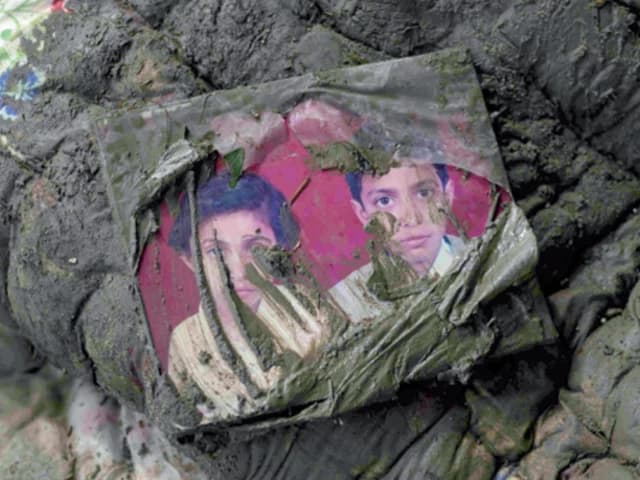
Open manholes have effectively become fatal traps in low-income and densely populated residential areas. Three-year-old Ibrahim of Gulshan-e-Iqbal slipped into an open manhole negligently covered with nothing more than a piece of cardboard. It took a blind, unmapped, 15-hour rescue operation to recover his body, prompting widespread civil protests.
Seven-year-old Jahangir of Moach Goth fell into an open sewer while playing outside his house. Eight-year-old Dilbar of Mehran Town fell into an open gutter outside his home, which neighbours said had remained uncovered for more than a month.
Two-year-old Muskan of Malir lost her life while walking to her grandmother’s house. The Karachi Metropolitan Corporation blames missing manhole lids on local scrap thieves who steal them for metal. Rescue officials, however, have pointed out that the city’s complete lack of underground sewage blueprints can severely delay efforts to locate missing children in time.
Systemic failures will happen. Infrastructure will fail. Municipal authorities will fail.
But where were the parents? That is not to absolve the state of responsibility. It is to ask whether, in a world where we know how many dangers surround children, parents can afford to be anything less than watchful.
The same question becomes even more disturbing when we look at child sexual abuse.
Child protection organisations report that child sexual abuse remains heavily prevalent in Pakistan, although the rise in reported figures also points to something positive: greater community awareness and willingness to report these crimes., a report by a not-for-profit working for child protection, 1,914 cases of child abuse were officially reported across Pakistan in the first six months of the year.
Of these, 1,015 were cases of child sexual abuse, including rape, gang rape and sodomy. On average, roughly 11 children are abused every day in the country. The data confirms another painful reality: the vast majority of perpetrators are not strangers.
They are often people known to the child or family — close relatives, neighbours, teachers or religious figures. Where are the parents? Why are children being left in situations where the adults around them are not being questioned, observed, checked or held accountable?
Pakistan has passed the Zainab Alert, Response and Recovery Act to accelerate state mechanisms when children go missing. Yet grassroots human rights watchdogs say actual justice remains bottlenecked. Low conviction rates, societal stigma that shames victims and their families, and weak forensic infrastructure continue to hinder long-term child safety and deterrence.
We all know this is the environment we live in. Yet we continue to have children at a remarkable rate. An estimated 18,800 to 20,200 children are born in Pakistan every day. population clocks, that translates into approximately 786 to 842 babies born every hour — roughly one child every 4.3 to 4.5 seconds.
Young couples are badgered to have children almost as soon as they have barely finished their valima dinner. When they have one, grandparents and relatives pester them to have another, and then another. Young, well-to-do families who can easily bear the expenses of childbirth and education often have four or more, while three seems to be the average.
One to silence the grandparents. One more son if the first child is a daughter, or a daughter if the first is a son. Then an accident might follow, and there we have the average family of three.
But do parents stop to think that with childbirth, only the easiest part is over? The real test begins afterwards: raising those children, protecting them, educating them, knowing them and being present in their lives.
Despite knowing almost everything happening around us through mainstream and social media, we like to imagine the world is still as safe as it was in our childhood. Wrong. The world has changed.
“Don’t let her out of your sight,” says Shahnaz, a senior teacher who has two grandchildren. “That is what my dad used to tell me when my daughter was a toddler. You can bear as many children as you like, but will you be able to take care of them?
That is my question for young parents today. Vigilance is what parents need to revisit these days. But they are too busy on their phones while children run around unattended, breaking safety and security rules because no one is attending to them.
Security and safety has to be a hundred per cent, otherwise it really doesn’t matter.”Children, including little girls, are often assigned to look after their younger siblings. They play outside their homes unattended past 11pm, sometimes even midnight, particularly on weekends, in streets, parking lots and residential compounds.
No one is watching them except perhaps the wrong element. I don’t see their parents even looking out of the windows.
In the afternoons, one sees boys in their tweens driving cars or riding motorbikes while their parents are napping; male servants holding infants; chauffeurs with babies on their laps as they drive; teenage male domestic staff looking after babies while their mothers walk and talk on the track.
A great health initiative, perhaps, but pushing a stroller around the track would be a better idea — as would spending on a stroller rather than a new outfit for a sister’s wedding.
“In my childhood, my own parents used to scare us by telling us that we would be kidnapped, our limbs broken, and we would be put out on the street to beg,” says 56-year-old Jawaid Sheikh. “That was enough to keep us playing close to home and bring us back the minute we heard the muezzin’s call for Maghrib.
We were categorically from strangers. Twilight meant home time. There were no two ways about these rules.”Those were relatively safer times.
Cities were less crowded. People did not have grills covering every window. Gates often had nothing more than latches.
Boundary walls were low, if they existed at all, or were simply little hedges. Children could play outside with a degree of freedom that would make many parents nervous today. But the physical world is only part of the problem now.
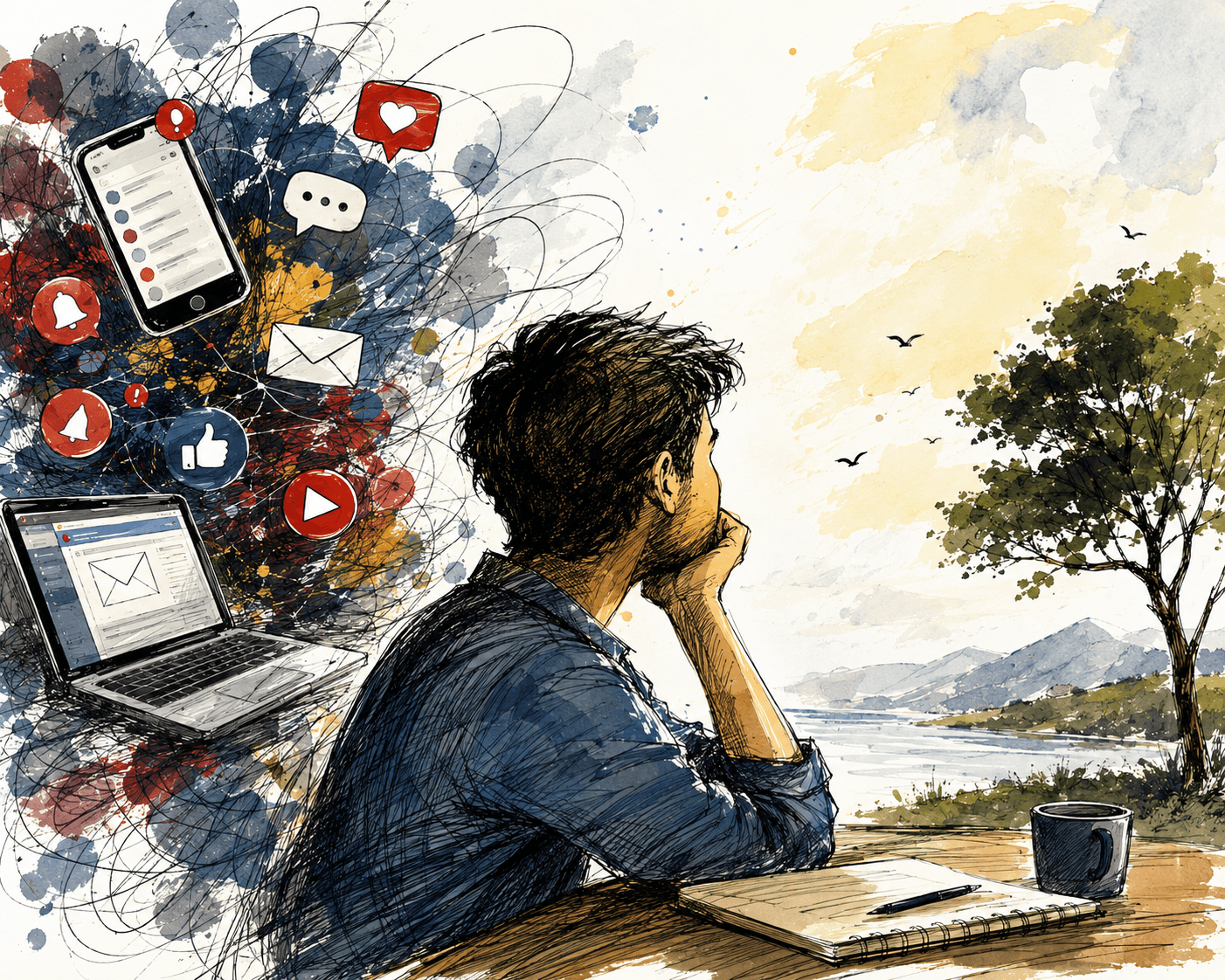
A smartphone can bring an online predator, cyberbullying, explicit content or an unknown stranger directly into a child’s bedroom. Technology companies use persuasive designs, so-called dark patterns and addictive algorithms to capture young attention spans, while rapidly evolving AI-generated content and tracking technologies make the digital world even harder for parents to understand, let alone monitor.
Then there is the youth mental-health crisis. Unmonitored screen time and social-media exposure have been associated with anxiety, depression and body-image problems. A vigilant parent may notice early changes in behaviour — withdrawal, secrecy, anxiety, loss of sleep or sudden changes in friendships — before they become much harder to address.
And the danger does not necessarily come from strangers. Exploitation and boundary violations can emerge from peers, acquaintances and people already embedded in a child’s social world. “Never talk to strangers” is no longer enough.
Parents need to know who their children spend time with, who they trust, what they watch, what they are being, increasingly, who they talk to online. But vigilance does not mean turning a home into a prison.
There is an important difference between vigilance and surveillance. Secretly reading every message, tracking every movement and spying on devices without communication can backfire, making children more secretive and less likely to tell their parents when something genuinely goes wrong.
Healthy vigilance is about parenting with presence: setting clear technology boundaries, teaching digital literacy and initiating difficult conversations about bodies, strangers, bullying, consent and online behaviour. The objective is not total control. It is connection.
Parents can know where their children are, who they are with, what they are watching and talking about. They can teach them what is safe and what is not. They can notice when behaviour changes.
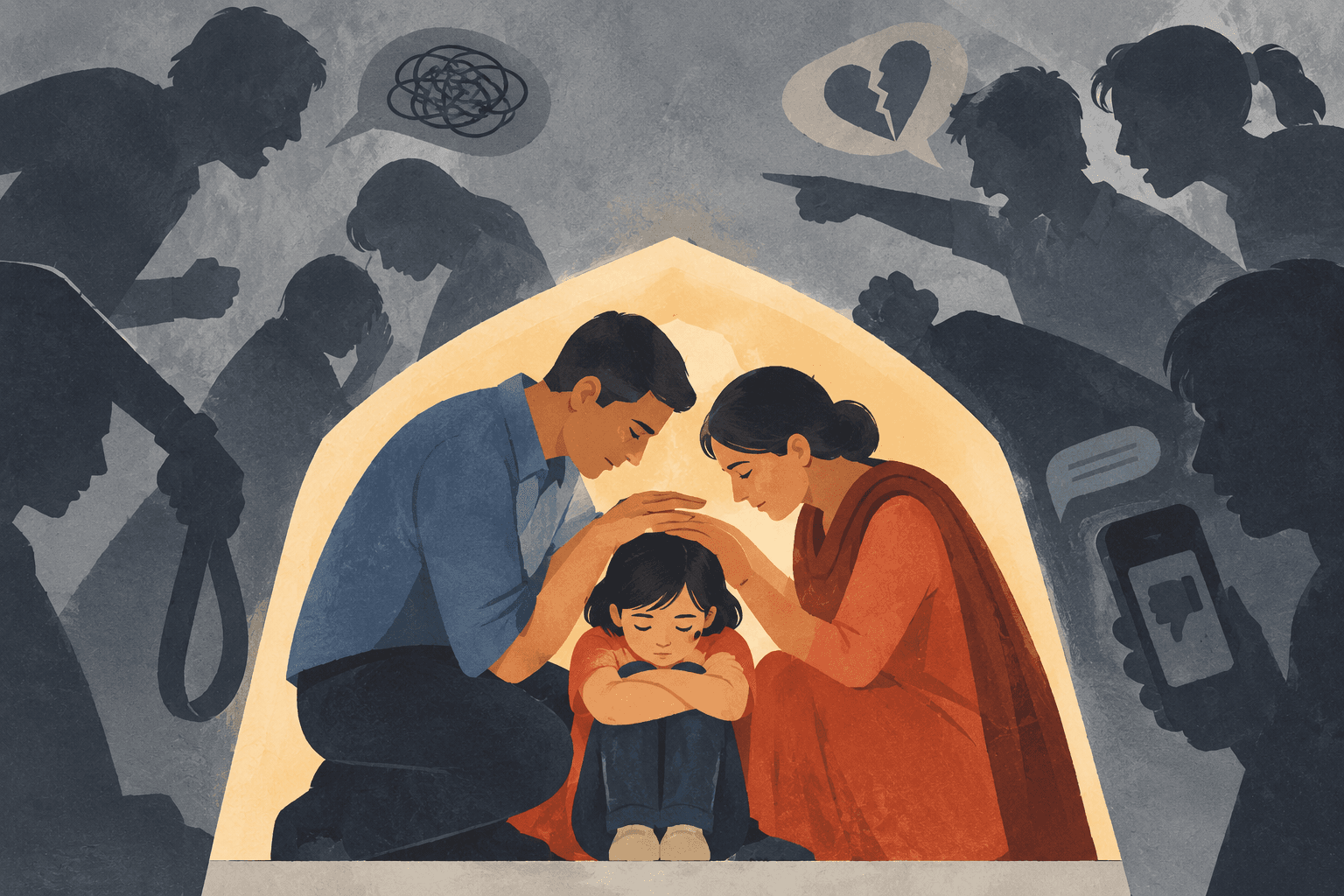
And, most importantly, they can make themselves the people their children turn to when something feels wrong. The world has become far more complicated for children. There are open manholes outside their homes, predators who may be sitting inside homes they trust, and an entire digital universe that can enter their bedrooms without anyone opening a door.
Parents cannot prevent every danger. They cannot watch every second of every day. An open manhole is the responsibility of the authorities; a sexual predator is responsible for his crime; a broken justice system cannot be repaired by parents alone.
But parents cannot outsource vigilance. Pages. Pakistan.
Business. World. Opinion.
Life & Style. Sports. Blogs.
Videos. Our Sites. Express News.
Urdu E-Paper. English E-Paper. Sindhi E-Paper.
Cricket Pakistan. Express Live. Campus Guru.
Express Entertainment. Food Tribune. About Us.
Contact Us. Online Advertising. Privacy Policy.
Copyright. Fuel Prices Pakistan. Gold Prices Pakistan.
Prayer Timing Pakistan. Weather Forecast Pakistanfollow us
Written by Ahad Raza Mir
Aman-e-Pakistan Senior Journalist & Bureau Reporter
Continue Reading: More in Tech
Swipe or click arrows to explore Tech desk coverage