Midterms decide Iran strategy: war or deal?

“President Donald Trump's name was not on the ballot in Tuesday's US midterm elections, but the results could determine how much political control he retains during the remaining two years of his presi…”
Midterm elections are a routine feature of American democracy, but this particular contest has acquired greater significance because of what is at stake. The war with Iran, its economic consequences, rising concerns over the cost of living and questions about Trump's handling of foreign policy have all become part of the political debate.
For countries outside the United States, including Pakistan, Trump's presidency is often assessed through the prism of foreign policy. American voters, however, have a different set of priorities. Their decisions are more likely to be shaped by the price of petrol, food, housing, employment and the broader state of the economy than by Washington's diplomatic standing abroad.
Yet the domestic and international dimensions of this election are increasingly intertwined. The consequences of the vote could extend well beyond Washington, particularly to a region already unsettled by the confrontation between the United States and Iran.
"Stay connected with Aman-e-Pakistan for ongoing live reporting and verified investigative updates."
American political history offers little comfort to a president's party heading into midterm elections. Since 1934, the party controlling the White House has increased its representation in the House of Representatives on only three occasions: 1934, 1998 and 2002.
In 1934, Franklin D Roosevelt's Democrats gained seats amid public support for his New Deal programme. In 1998, Bill Clinton's Democrats made gains despite the impeachment controversy surrounding his presidency, as Republican efforts to remove him proved unpopular with sections of the electorate.
In 2002, George W Bush's Republicans gained seats following the September 11 attacks, benefiting from a wave of national unity and support for his leadership. The pattern is revealing. Midterm elections are generally a referendum on the incumbent president, and the opposition party usually benefits.
The president's party often loses seats because voters use the midterms to express dissatisfaction with the administration without having to wait for the next presidential election. The distinction between the two chambers is important. All 435 House seats are contested every two years, while senators serve six-year terms and only approximately one-third of the Senate faces voters in each midterm.
Republicans entered this election with narrow majorities in both chambers: 218-214 in the House, with two vacancies, and 53-47 in the Senate. Democrats need a net gain of four seats in the House and four in the Senate to secure control of the latter.
The political indicators heading into election day suggested that Republicans were more vulnerable in the House, while the Senate contest remained considerably more difficult for Democrats. The emerging results will therefore be watched not simply for which party wins individual constituencies but for what they reveal about the country's political mood and the extent of Trump's remaining political capital.
If Republicans manage to retain both chambers, Trump will claim a political victory and argue that voters have endorsed his domestic and foreign policy agenda. Such an outcome would give him greater room to pursue his legislative priorities, secure funding for administration programmes and advance presidential appointments.
It would also reduce the prospect of sustained congressional investigations into his administration. More importantly, a Republican-controlled Congress would give Trump greater political flexibility in dealing with Iran. He would face fewer institutional obstacles in seeking additional defence funding and maintaining military pressure on Tehran.
But retaining Congress would not necessarily mean an immediate return to war. Trump has repeatedly presented himself as a president who can end wars rather than become entangled in prolonged military engagements. A conflict that continues to push up petrol prices, disrupt global trade and undermine consumer confidence would contradict the economic message he has offered American voters.
He could instead use military pressure to extract concessions from Tehran and present a negotiated settlement as a victory for his administration. A Democratic takeover of the House would fundamentally change the political environment in Washington.
Democrats would gain control of congressional committees, subpoena powers and the ability to launch investigations into the administration's handling of the Iran war. They could demand explanations over military decisions, scrutinise the financial and human costs of the conflict and challenge the intelligence assessments used to justify military action.
If Democrats also capture the Senate, the consequences would be more significant. They could block or delay presidential appointments and make it harder for Trump to advance his broader agenda. However, there is an important constitutional distinction.
Losing Congress does not automatically strip a US president of his authority to order military action. Trump remains commander-in-chief and retains substantial powers over foreign policy and national security. Congress, meanwhile, controls federal appropriations and has the constitutional authority to declare war.
A Democratic-controlled Congress could therefore raise the political and financial cost of a renewed conflict without necessarily being able to prevent an initial military operation. There is also a potentially dangerous dimension to this scenario.
A president facing domestic political setbacks could be tempted to demonstrate strength abroad. It would be premature to assume that an electoral defeat would automatically make Trump more restrained. Nevertheless, a major military escalation against Iran would carry enormous political and economic risks, potentially giving Democrats further ammunition against the administration.
For Islamabad, the most consequential aspect of the American midterms is not necessarily which party controls Congress. It is whether Trump, after the election, will return to a full-scale military confrontation with Iran or pursue a diplomatic settlement.
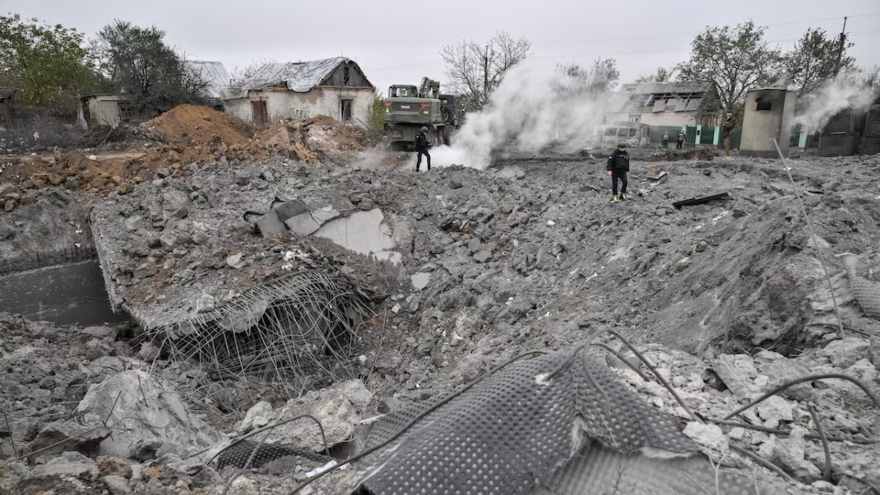
The recent military developments have underlined the contradiction at the heart of Washington's Iran policy. Even as diplomatic channels remain open, military pressure continues and the possibility of another round of strikes cannot be ruled out.
The question is whether the election outcome will change Trump's calculation. If Republicans retain Congress, Trump could interpret the result as an endorsement of his approach and feel more confident about maintaining pressure on Iran.
But the economic consequences of another war could still make diplomacy the more attractive option. If Democrats capture the House, the White House will face greater scrutiny over the objectives, duration and financial costs of military operations.
A Democratic majority could make it politically more difficult to sustain a prolonged campaign, although it would not necessarily prevent limited strikes. The broader calculation will depend on Iran's response, the state of negotiations, the security of American forces and the economic costs of continued confrontation.
For Pakistan, the implications are immediate. Any renewed American military campaign could destabilise an already fragile regional environment, complicate border security and put additional pressure on the country's economic recovery. The energy dimension is particularly important.
Pakistan remains vulnerable to international oil and gas price fluctuations. Any prolonged disruption in the Strait of Hormuz would have serious implications for global energy supplies, shipping costs and the country's import bill. The recent attack on a Pakistani LNG-bound vessel has already demonstrated how directly the confrontation can affect Pakistan's economic interests.
A further escalation could complicate energy procurement and increase the cost of securing supplies. There is also a diplomatic challenge. Pakistan has sought to maintain working relations with Washington, Tehran and the Gulf countries while avoiding entanglement in the conflict.
Another war would make that balancing act considerably more difficult. Ultimately, the midterm elections will offer an indication of how much political capital Trump retains, but they will not necessarily dictate the direction of American foreign policy.
A Republican victory would strengthen his hand, while a Democratic takeover of one or both chambers would constrain his domestic agenda and subject his administration to greater scrutiny. But the presidency carries substantial independent powers in national security and foreign affairs.
The outcome of the congressional elections will not transfer control of the American military to the opposition. For Trump, the challenge will be to demonstrate that he can deliver economic relief at home while managing an increasingly complicated international environment.
A negotiated settlement with Iran would allow him to claim that his policy of pressure has worked. A return to war, on the other hand, could undermine the very economic message on which Republicans have fought this election.
For Pakistan and the wider region, the most important signal may therefore not come from the final electoral tally but from what Trump does in the days and weeks that follow.
Continue Reading: More in International
Swipe or click arrows to explore International desk coverage